
Knowledge application Normal Physical Science Worksheets for Ages 3-7
3 filtered results
Difficulty Level
Grade
Age
-
From - To
Subject
Activity
Standards
Explore our engaging "Knowledge Application Normal Physical Science Worksheets" designed for children aged 3-7. These interactive resources encourage young learners to apply their understanding of essential scientific concepts through fun activities. From exploring buoyancy to discovering different states of matter, our worksheets promote critical thinking and environmental awareness. Perfect for both classroom settings and at-home learning, these materials support early development in physical science while sparking curiosity. With colorful visuals and creative prompts, children will enjoy hands-on experiences that enhance their learning journey. Equip your little scientists with the knowledge and skills necessary to comprehend the physical world around them!
Favorites
With answer key
Interactive
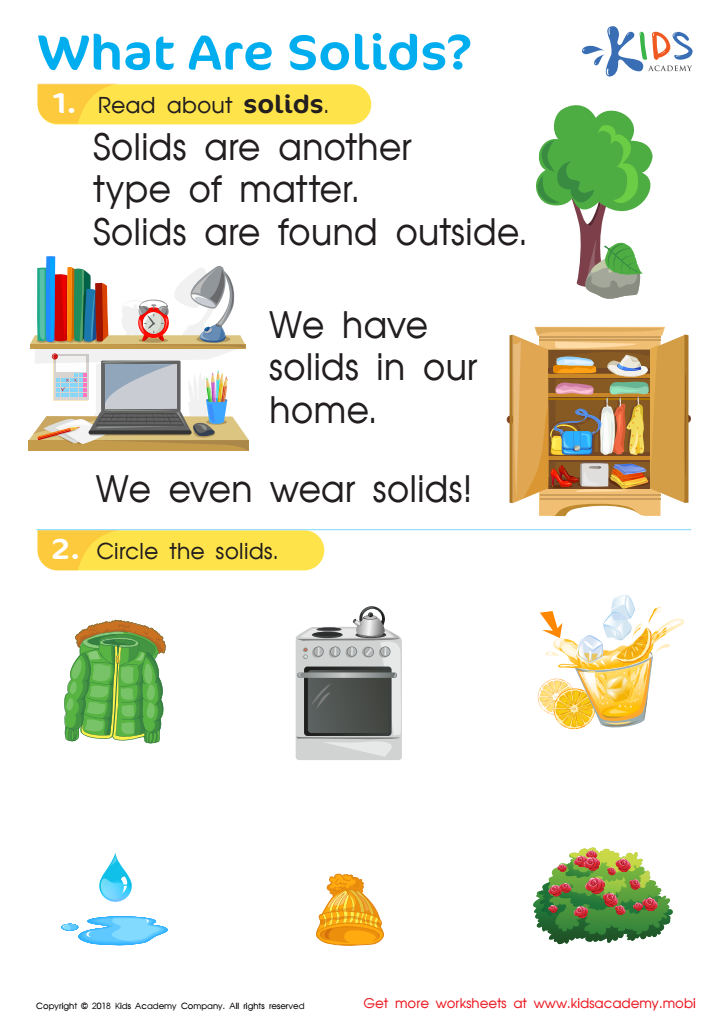
What Are Solids? Worksheet
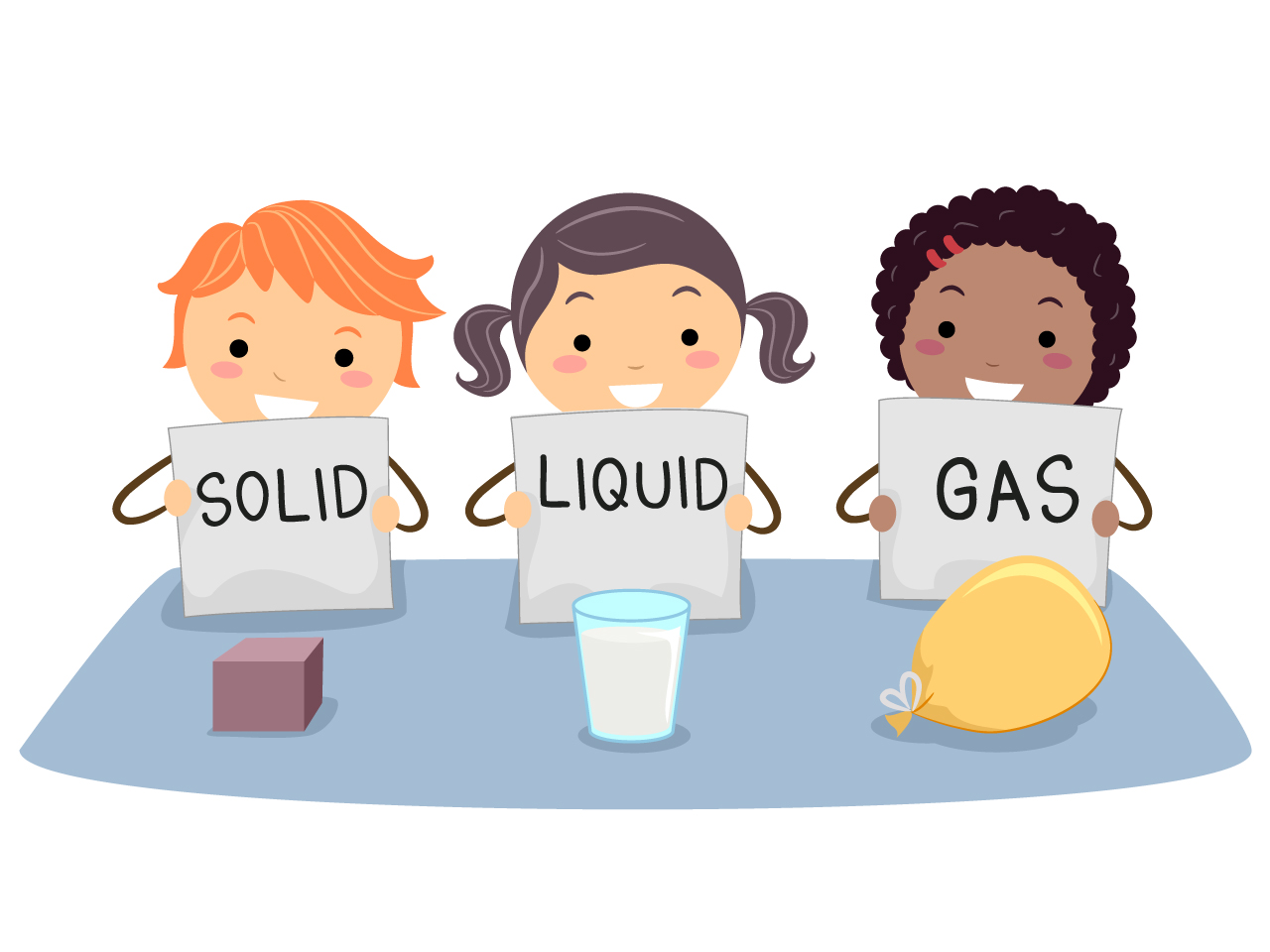
Help your kids understand matter's three forms - solid, liquid, and gas - with examples. Ask them to give their own and where to find them. Then, read and discuss the worksheet's facts about solids. Afterward, have them circle the solids among the provided objects.
 Assign to My Students
What Are Solids? Worksheet
Worksheet
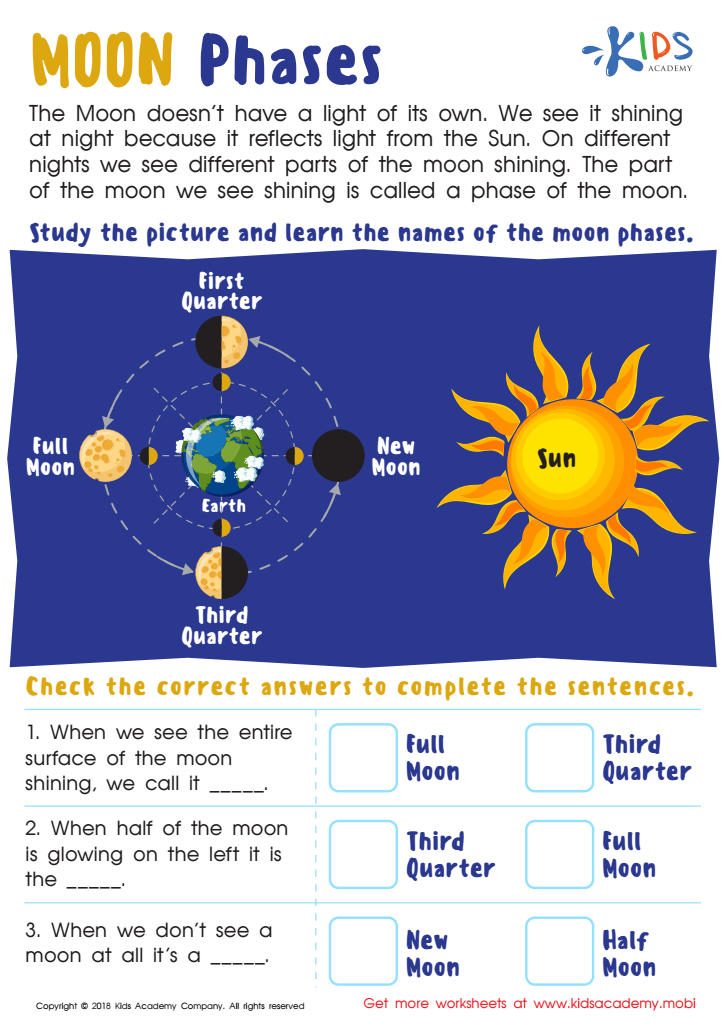
Moon Phases Worksheet
Gaze up at the night sky and the moon's appearance may change from night to night. Encourage your child to learn more about the sun, the moon, and space with this science worksheet. Have them read the text then study the picture. Finally, read the sentences and check the answers to identify the moon's phases.
Moon Phases Worksheet
Worksheet
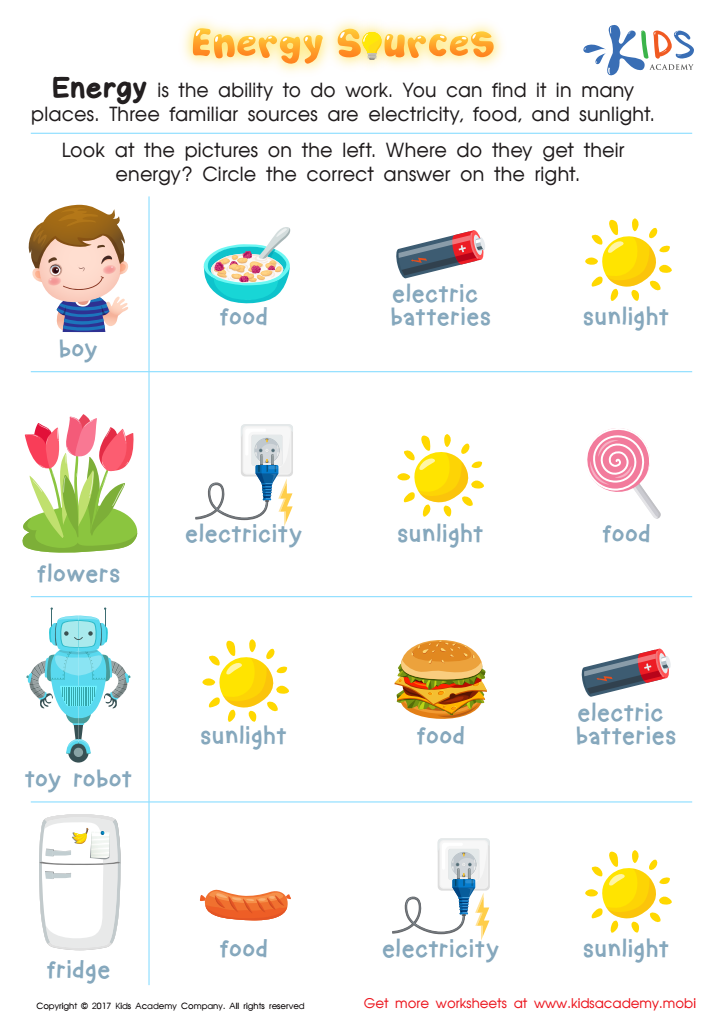
Energy Sources Printable
Introduce energy sources with this worksheet PDF — explore the sun, batteries, and more! Get your mini scientist excited about energy and power up their learning.
Energy Sources Printable
Worksheet
Join Kids Academy for Free
Who is primarily going to use this learning content?





Parents and teachers should prioritize Knowledge Application in Normal Physical Science for children aged 3-7 because this foundation fosters critical cognitive skills essential for lifelong learning. At this stage, children naturally explore their environment, and engaging them through hands-on activities in physical science—like experimenting with water, observing magnetism, or identifying simple machines—encourages curiosity and wonder.
By nurturing these explorative tendencies, adults can enhance problem-solving skills and promote scientific reasoning. Integrated physical science lessons not only broaden a child’s understanding of the world around them but also instill a sense of inquiry and resilience as they learn to ask questions, make predictions, and test hypotheses.
Moreover, applying scientific knowledge allows young learners to connect abstract concepts to real-world experiences, making the material more relevant and memorable. This significance can inspire a love of learning and pave the way for future academic pursuits.
Developmentally appropriate physical science activities also foster social skills through collaborative play and communication among peers. In summary, engaging children in Knowledge Application in Physical Science promotes intellectual development, creativity, and collaborative skills, empowering them to navigate their observant and curious nature in an increasingly complex world.







