Understanding light sources Normal Physical Science Worksheets for Ages 3-7
3 filtered results
-
From - To
Explore our engaging "Understanding Light Sources" worksheets designed for children ages 3-7. This collection introduces young learners to the concept of light and various light sources in a fun and interactive way. Each worksheet features colorful illustrations and simple, age-appropriate activities that encourage curiosity and exploration. Children will learn to identify natural and artificial light sources, fostering foundational knowledge in physical science. Perfect for classroom use or at-home learning, these worksheets promote critical thinking, creativity, and comprehension through hands-on experiences. Download now and illuminate your child's understanding of light in a vibrant and memorable way!
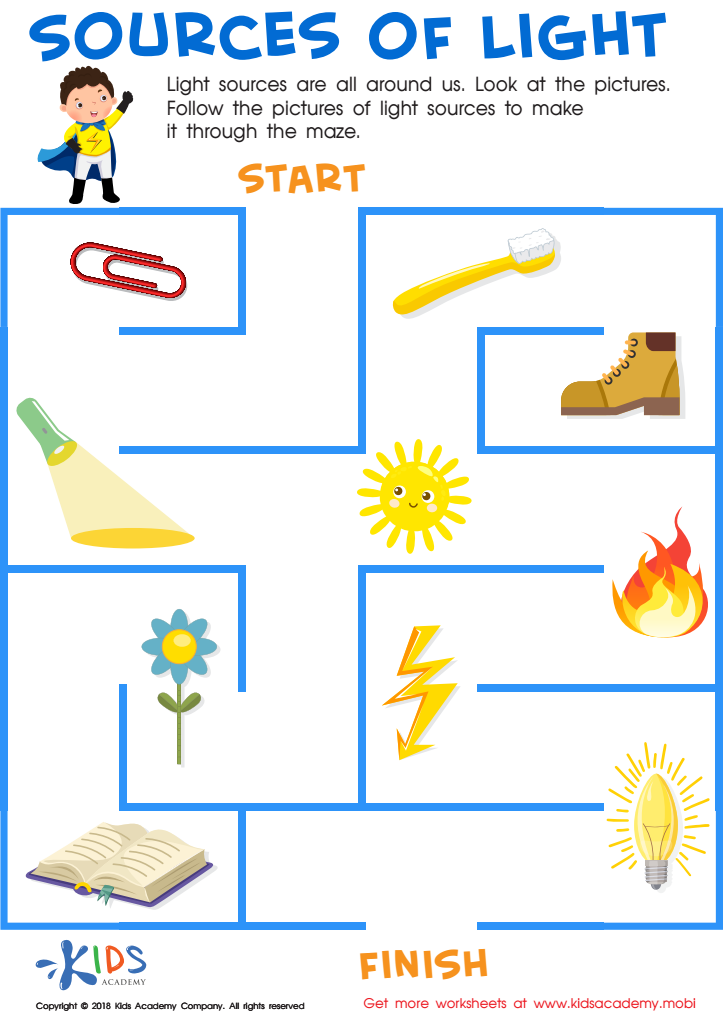
Sources of Light Worksheet
 Assign to My Students
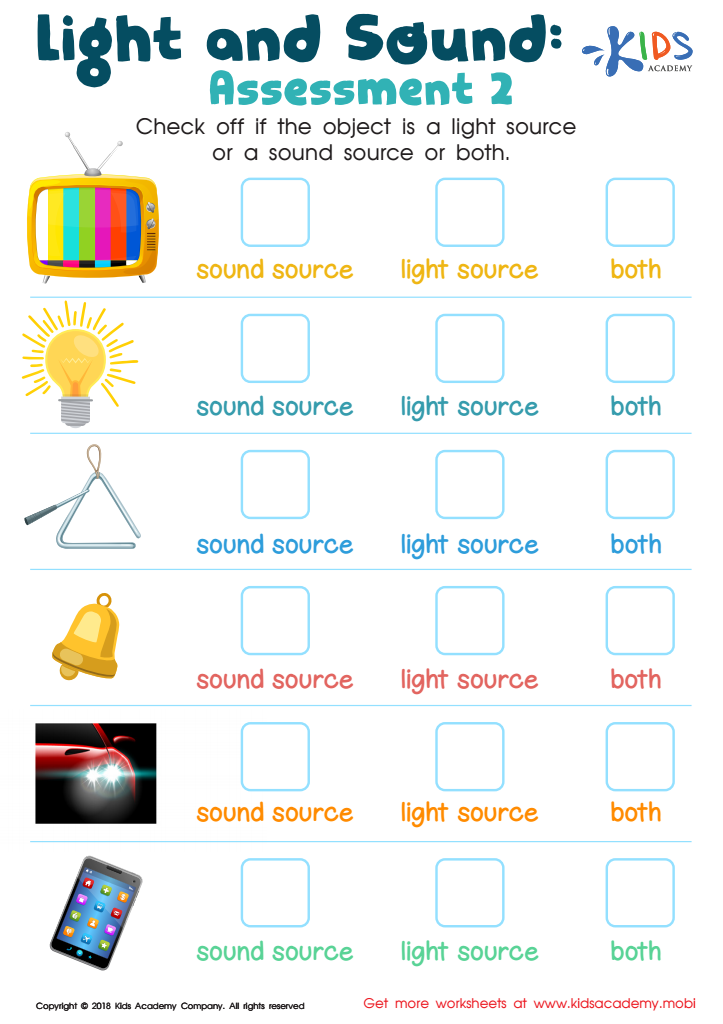
Light and Sound: Assessment 2 Worksheet
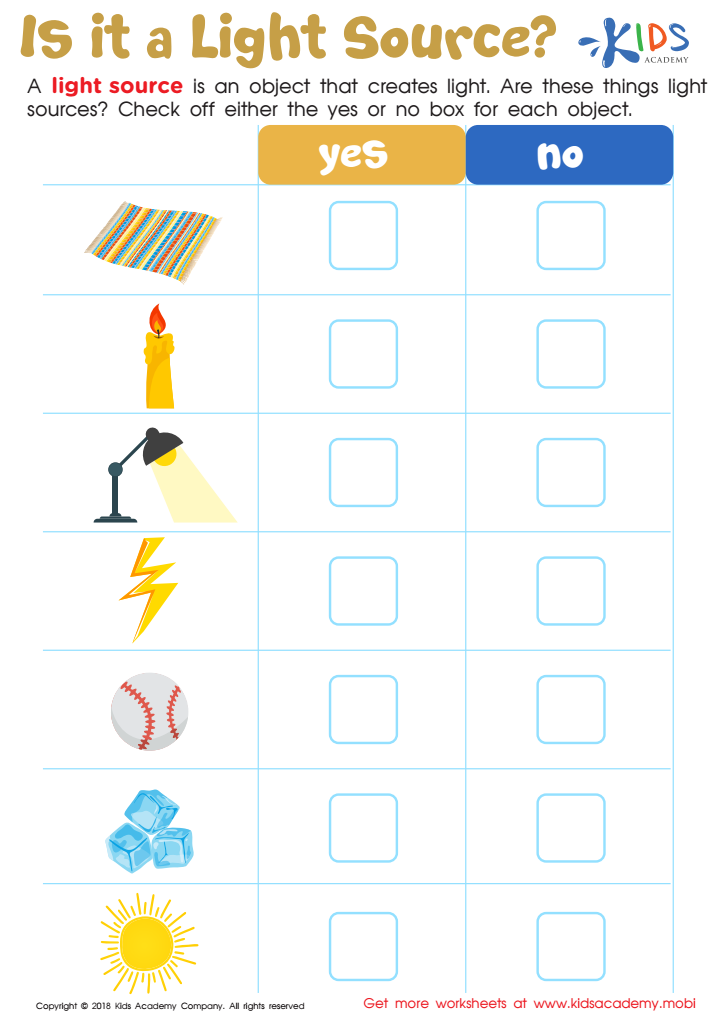
Is It a Light Source? Worksheet








Understanding light sources is essential for young children, as it forms the foundation for their exploration of the world around them. At ages 3-7, children are naturally curious and eager to discover new concepts. Teaching them about light sources helps them develop critical thinking skills as they learn about the various ways light behaves and the different types of light sources, both natural and artificial.
For parents and teachers, engaging children in discussions about light encourages inquiry-based learning. Children can explore questions like “What happens when we turn off the lights?” or “Where does sunlight come from?” These discussions promote problem-solving skills and encourage creativity, as children may try to find innovative ways to create shadows or reflections.
Moreover, learning about light sources enhances children’s understanding of safety, especially regarding how they interact with everyday items such as lamps and the sun. This knowledge helps in fostering awareness of their environment, both indoors and outdoors.
Incorporating activities related to light, such as shadow play or experiments with prisms, reinforces these concepts in a hands-on manner, making learning fun and memorable. As they build a foundational understanding of this fundamental concept, children become more adept thinkers and observers of the world.







