Weather Vocabulary Normal Weather Worksheets for Ages 3-7
3 filtered results
-
From - To
Explore our engaging "Weather Vocabulary Normal Weather Worksheets" designed for young learners aged 3-7! These interactive resources introduce children to essential weather concepts, helping them recognize and describe various weather conditions. Through vibrant illustrations and fun activities, kids will build their vocabulary while enhancing their observational skills. Our worksheets support early childhood education by making learning enjoyable and accessible. Whether it's sunny, rainy, or windy, your little ones will gain confidence in discussing the wonders of the weather. Perfect for home or classroom use, these worksheets foster an early interest in science and nature. Start your weather adventure today!
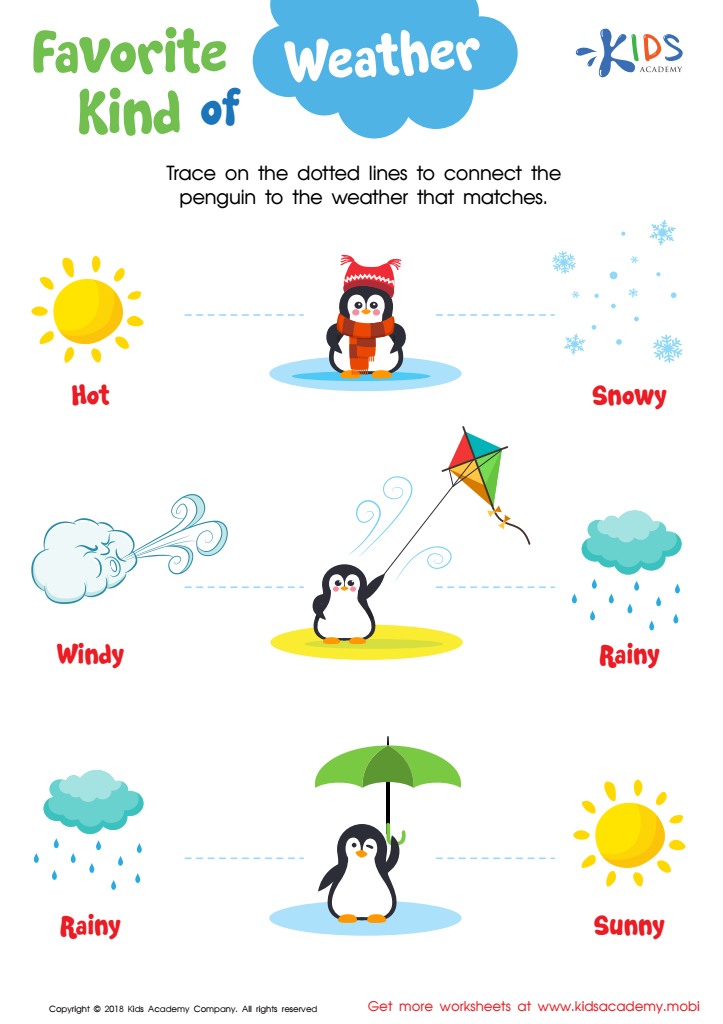
Favorite Kind of Weather Worksheet
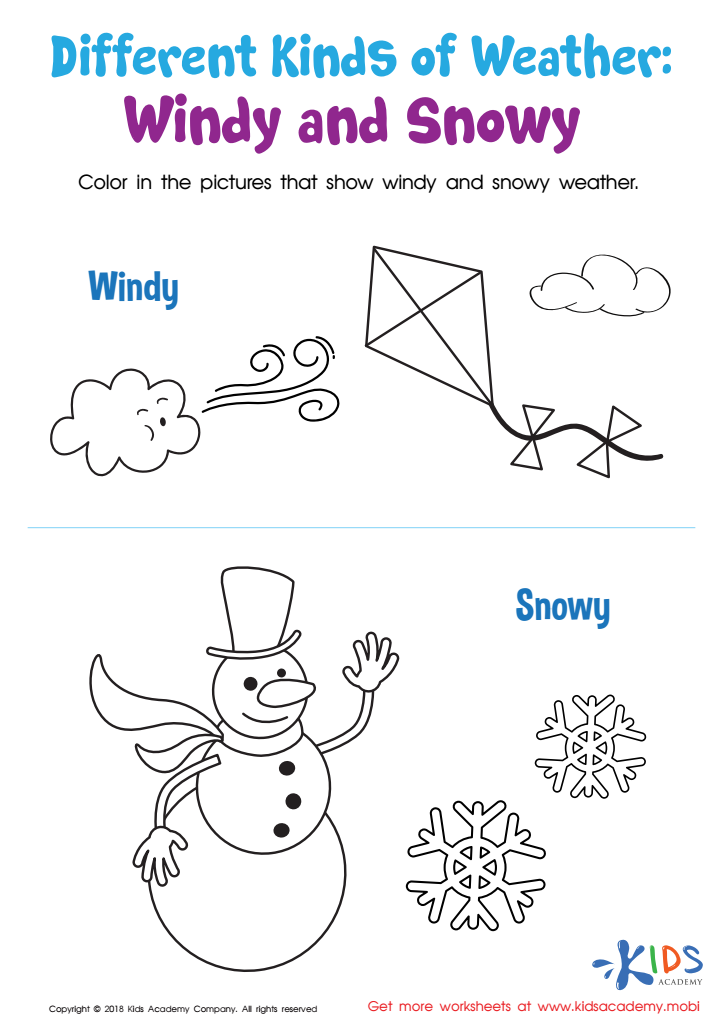
Different Kinds of Weather: Windy and Snowy Worksheet
 Assign to My Students





%20(1).jpg)


Teaching weather vocabulary to children ages 3-7 is crucial for several reasons. Firstly, it enhances their language development. At this age, children are rapidly expanding their vocabulary, and introducing terms like "sunny," "rainy," "cloudy," and "stormy" enriches their linguistic skills. This foundational vocabulary allows them to articulate their observations and experiences related to the weather.
Understanding weather concepts also promotes curiosity and critical thinking. When children learn about the different types of weather, they begin to explore questions like “What causes rain?” or “How do we know when it’s going to be sunny?” This curiosity can lead to discussions about science and the environment, fostering a love for learning.
Moreover, familiarity with weather vocabulary helps children make sense of daily experiences and routines. For example, knowing when it’s going to be cold can influence their clothing choices, while understanding that it might rain can lead to discussions about playing indoors versus outdoors.
Finally, integrating weather vocabulary into daily activities creates opportunities for bonding. Parents and teachers can engage in conversations outdoors or during story time, making learning interactive and fun. By nurturing a solid weather vocabulary, we empower children with essential communication skills and knowledge about the world around them.








