Color Identification Normal Alphabet Worksheets for Ages 3-8
3 filtered results
-
From - To
Introduce young learners to the wonderful world of colors and letters with our Color Identification Normal Alphabet Worksheets for ages 3-8. Designed to make learning fun and interactive, these worksheets help children recognize and match colors while practicing their ABCs. Each activity encourages cognitive development and fine motor skills through engaging, colorful tasks. Perfect for teachers and parents, these printables offer a delightful way to enhance early literacy. Kids will love coloring their way through the alphabet, blending learning with creative expression. Brighten their educational journey with our expertly-crafted color identification worksheets.
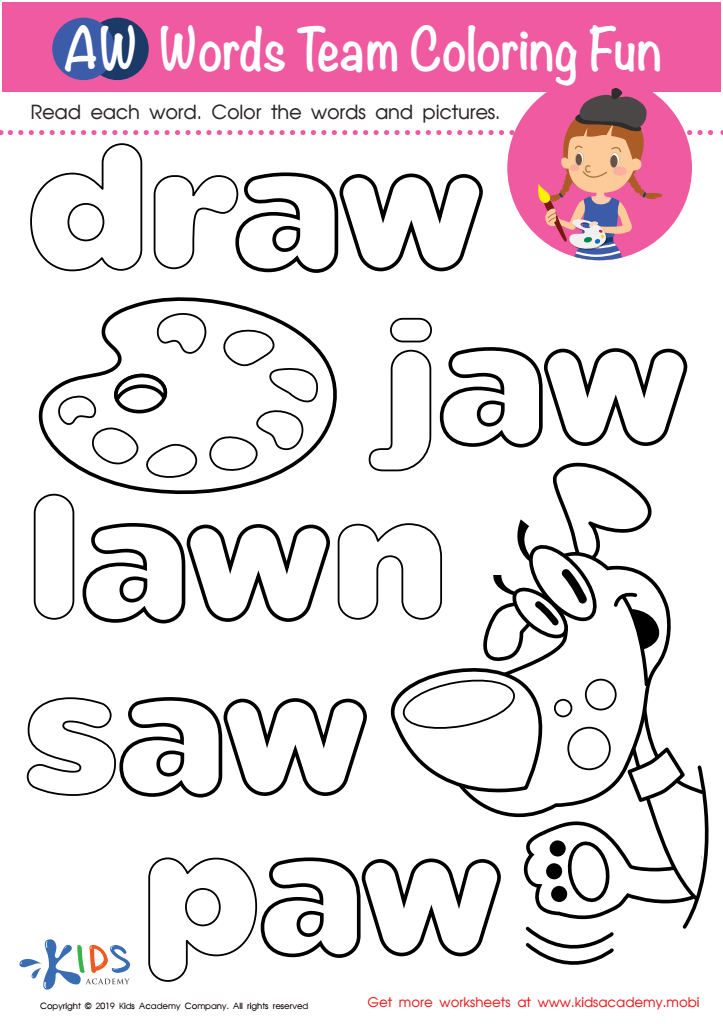
AW Words Team Coloring Fun Worksheet
 Assign to My Students
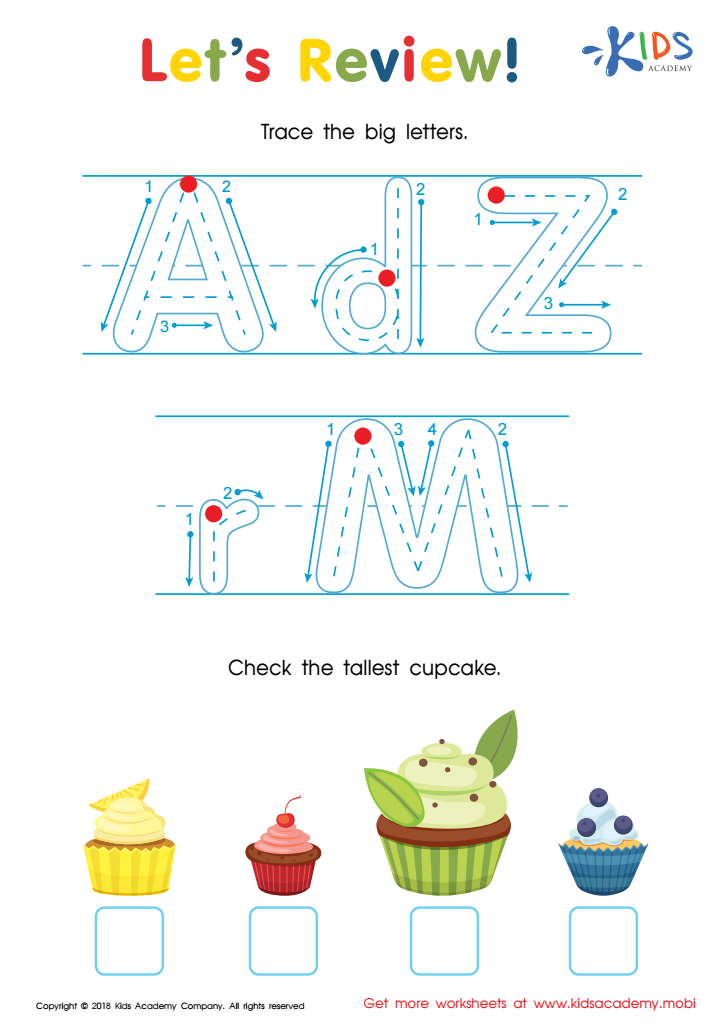
Let's Review! Big Letters Worksheet
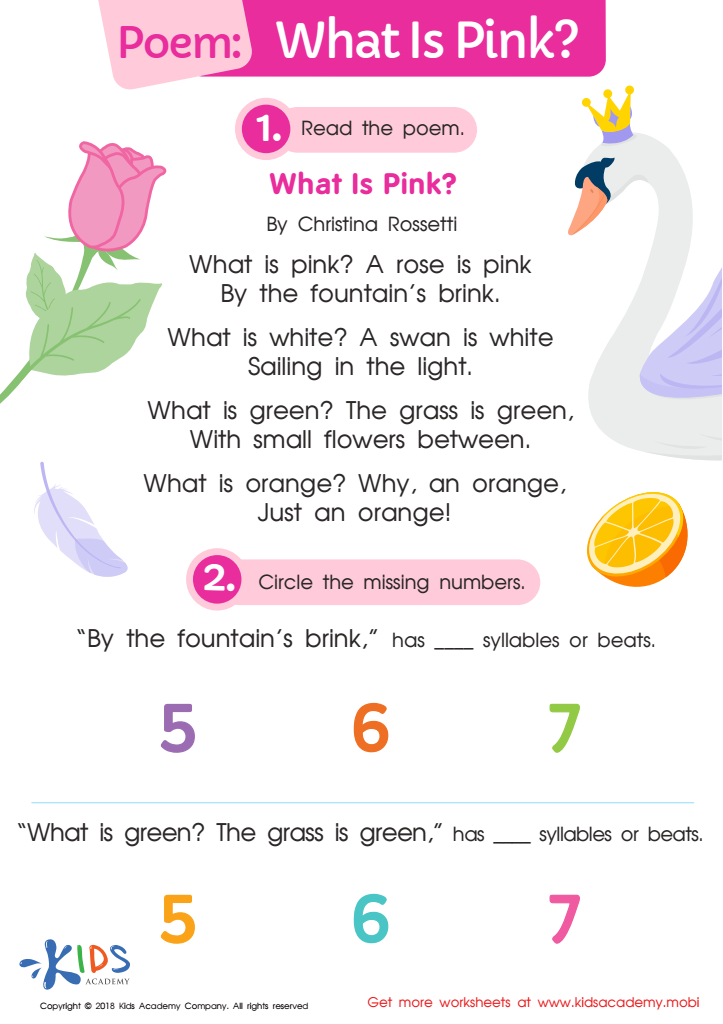
Poem: What Is Pink? Worksheet




Cultivating familiarity with the Color Identification Normal Alphabet in children aged 3-8 is a foundational step in early childhood development that parents and teachers should prioritize. This engaging method merges basic literacy skills with color recognition, rendering learning both enjoyable and educational. At this pivotal age, children are highly perceptive, and blending colors with letter identification can deepen their cognitive abilities while fortifying memory retention.
Colors are powerful visual cues that make abstract concepts more concrete. Associating different colors with each letter can help solidify a child's understanding and recall of the alphabet. This multisensory approach can cater to diverse learning styles, be it visual, auditory, or kinesthetic. For instance, when children see the letter 'A' colored in red repeatedly, they begin to link 'A' with red and can recall the letter more efficiently.
Moreover, involving colors in learning activities promotes creativity and keeps children engaged. It encourages curiosity and active participation, which are crucial for deeper learning. Being proficient in color recognition and the alphabet early on sets a strong groundwork for reading and writing. Therefore, the Color Identification Normal Alphabet isn’t just about letters and colors; it creates a vibrant, interactive environment that nurtures a child’s overall developmental trajectory and love for learning.







