Phonics improvement Normal Alphabet Worksheets for Ages 3-8
3 filtered results
-
From - To
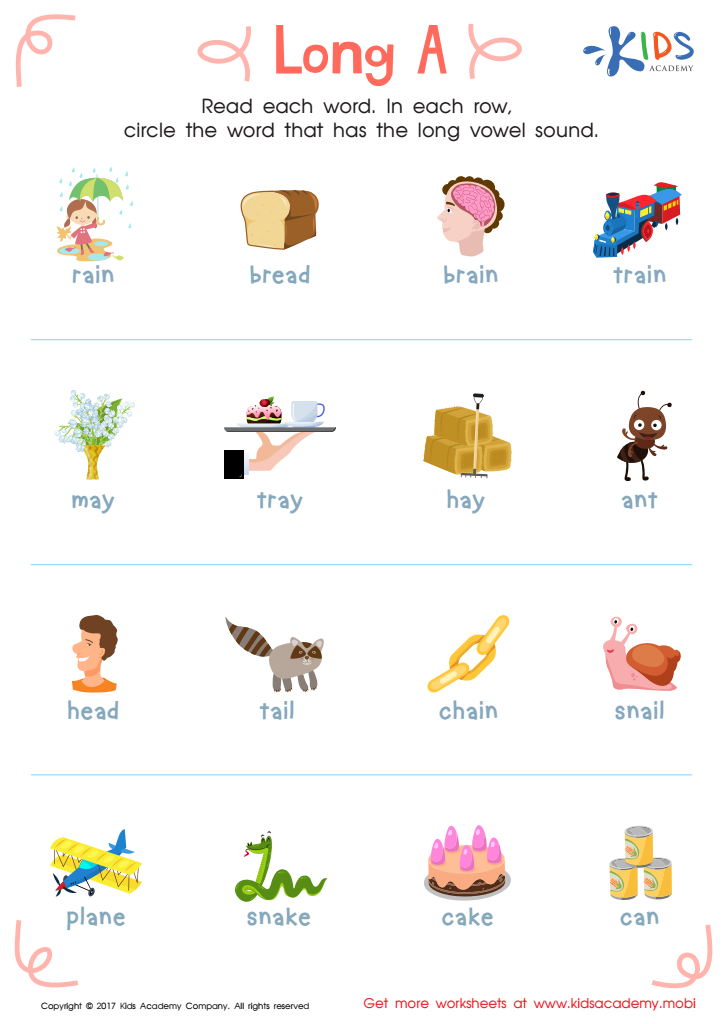
Boost your child's reading skills with our Phonics Improvement Normal Alphabet Worksheets, crafted specifically for ages 3-8. These colorful, engaging worksheets are designed to make learning phonics fun and effective. Through a variety of activities, children can practice letter recognition, sound matching, and early word formation - critical aspects of phonics education. Our worksheets provide a solid foundation that fosters confidence in young readers, supporting their journey toward fluent reading. Ideal for both classroom and home use, these worksheets are an invaluable resource for parents and teachers seeking to enhance phonetic understanding in early learners. Unlock the world of reading today!

I Stands High Worksheet
 Assign to My Students
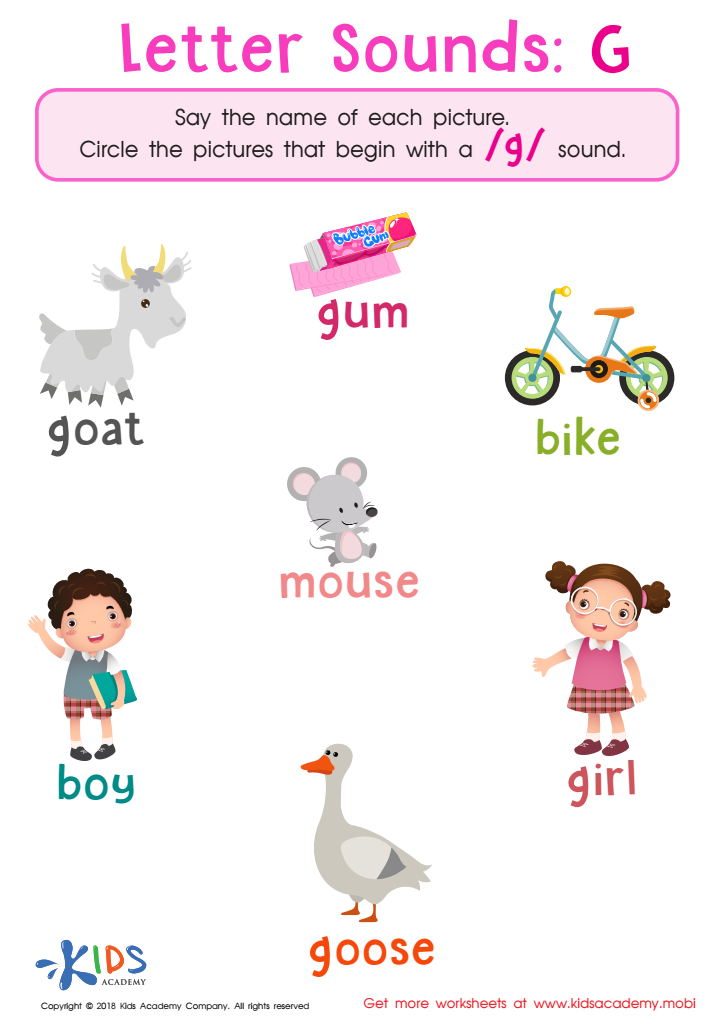
Letter G Sounds Worksheet







Improving phonics using the Normal Alphabet (or standard alphabet) for children aged 3-8 is critical for several reasons. Phonics is a foundational component of early literacy, facilitating the connection between letters and their corresponding sounds. When children grasp phonics early, it equips them with the basic tools needed to decode words, which is essential for reading fluency and comprehension.
Parents and teachers should prioritize phonics improvement because it significantly influences a child's academic success across all subjects. Reading proficiency gained through phonics is linked to higher performance in language arts, science, social studies, and even mathematics. Early mastery of phonics also promotes cognitive development, enhancing children’s vocabulary, communication skills, and overall understanding of written and spoken language.
Furthermore, the ages of 3-8 are a critical period for brain development and language acquisition. During this window, children are remarkably receptive to learning new sounds and symbols. Introducing consistent phonics practices at this stage helps cement these concepts in their long-term memory, allowing smoother progression in future educational phases.
Lastly, improving phonics using the normal alphabet instills a love for reading, making learning an enjoyable and rewarding experience. This positive early engagement with literature fosters a lifelong love for books and continuous learning, essential for personal and academic growth.







