Sound differentiation Normal Alphabet Worksheets for Ages 3-8
3 filtered results
-
From - To
Unlock your child's potential with our Sound Differentiation Normal Alphabet Worksheets, specially designed for ages 3-8. These engaging, interactive worksheets help preschoolers and early learners master the sounds of letters while developing phonemic awareness. Each worksheet incorporates fun activities that promote active learning, making it easy for children to differentiate between similar sounds and enhance their reading skills. Educators and parents will appreciate the variety of exercises to keep young minds engaged and excited about learning. Foster a strong foundation in literacy with these comprehensive, printable resources—perfect for classroom settings or home learning environments. Download today and watch your child thrive!
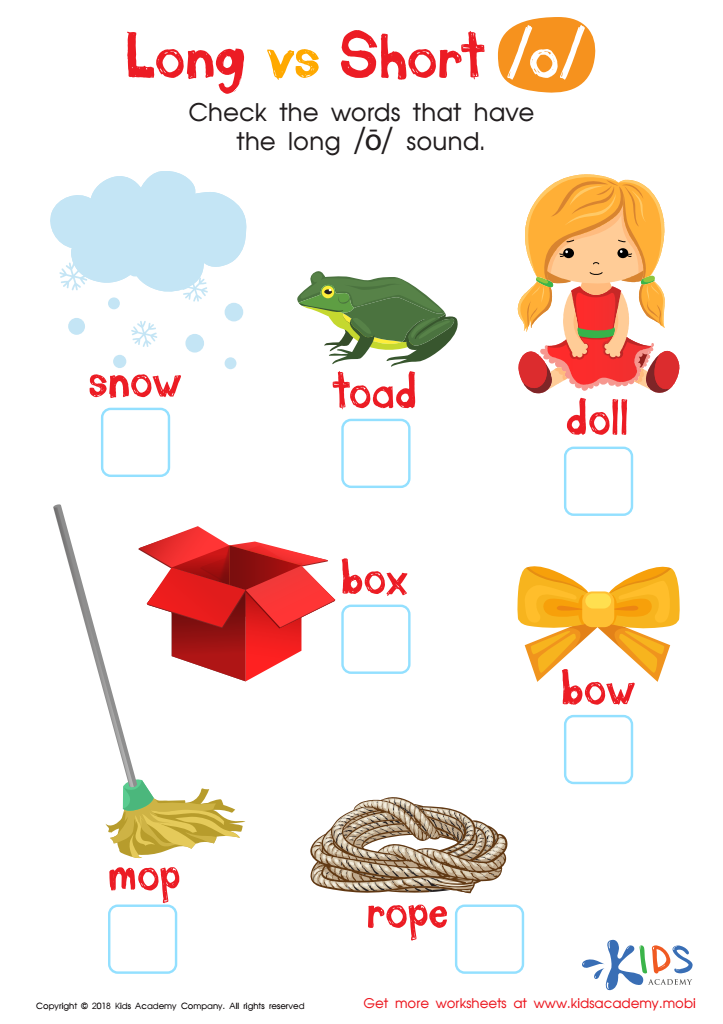
Long vs Short O Reading Worksheet
 Assign to My Students
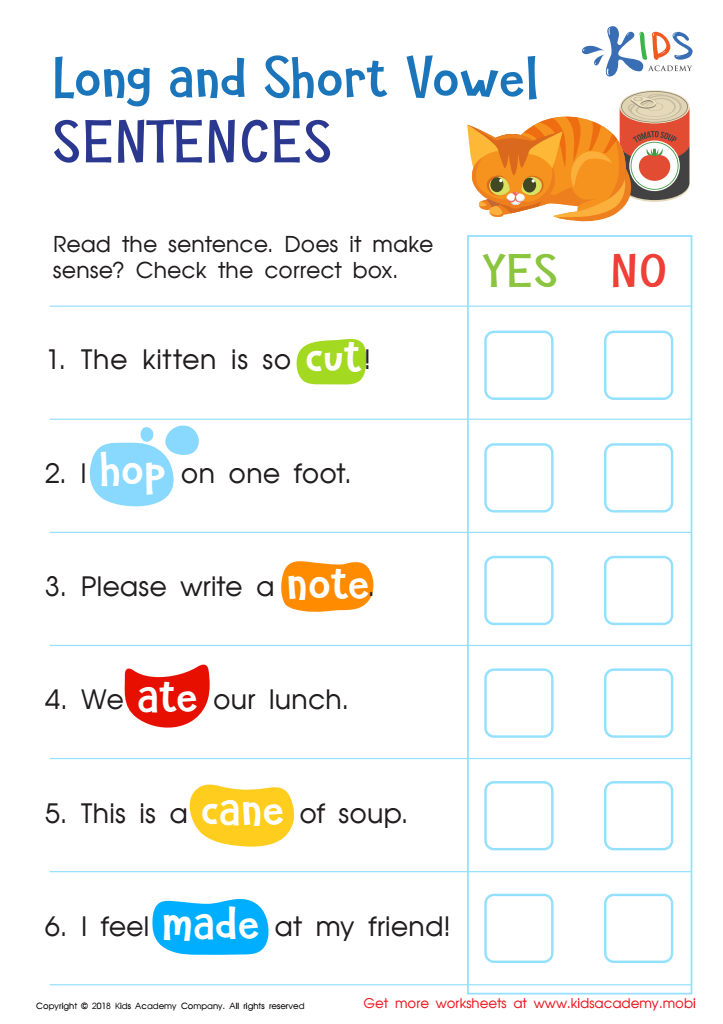
Long and Short Vowel Sentences: Assessment Worksheet
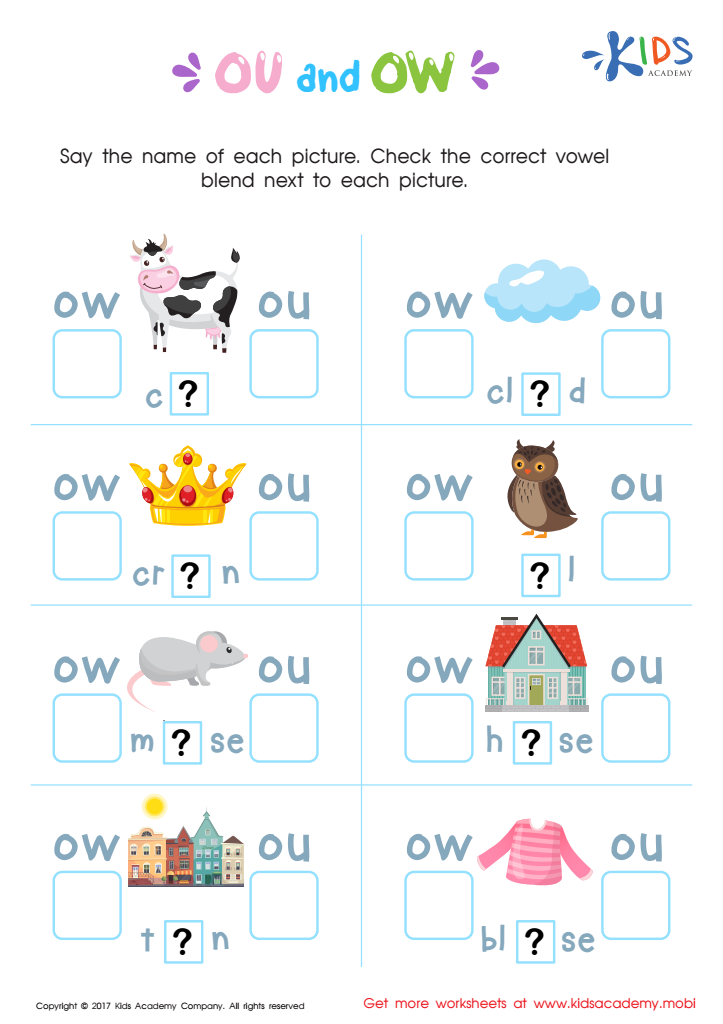
OU and OW Words Worksheet







Sound differentiation using the Normal Alphabet is crucial for children aged 3-8 as it lays the foundation for reading, writing, and effective communication. During these formative years, children develop phonemic awareness, the ability to hear, identify, and manipulate sounds in spoken words. This skill is essential for decoding words and spelling while contributing to literacy and language development.
For parents and teachers, fostering sound differentiation helps children recognize the connection between sounds and letters, making it easier for them to learn the alphabet and develop early literacy skills. Good sound differentiation aids in improving vocabulary, enhancing pronunciation, and encourages children to express themselves clearly.
Additionally, strong phonemic awareness can lead to greater success in school. Children who struggle with sound differentiation may face challenges in reading and comprehension, leading to a negative attitude toward learning. By supporting sound differentiation through engaging activities and resources, adults can create a positive and enriching learning environment, helping children build confidence and proficiency in reading.
Ultimately, investing in the understanding of sound differentiation equips children with the tools they need for academic success and lifetime learning. Parents and teachers play a critical role in guiding this development, making it an essential focus in early education.







