Visual discrimination skills Normal Alphabet Worksheets for Ages 3-8
5 filtered results
-
From - To
Enhance your child's visual discrimination skills with our "Normal Alphabet Worksheets" designed for ages 3-8! These engaging worksheets help young learners differentiate between letters through fun and interactive activities. Perfect for preschool and early grade education, these exercises promote letter recognition and improve concentration as children identify, match, and distinguish varied letter shapes. Our printable resources cater to different learning styles, fostering essential cognitive development in a playful manner. Give your child the tools to succeed in literacy while enjoying the learning process. Explore our variety of worksheets today and watch your little ones build confidence in their alphabet knowledge!
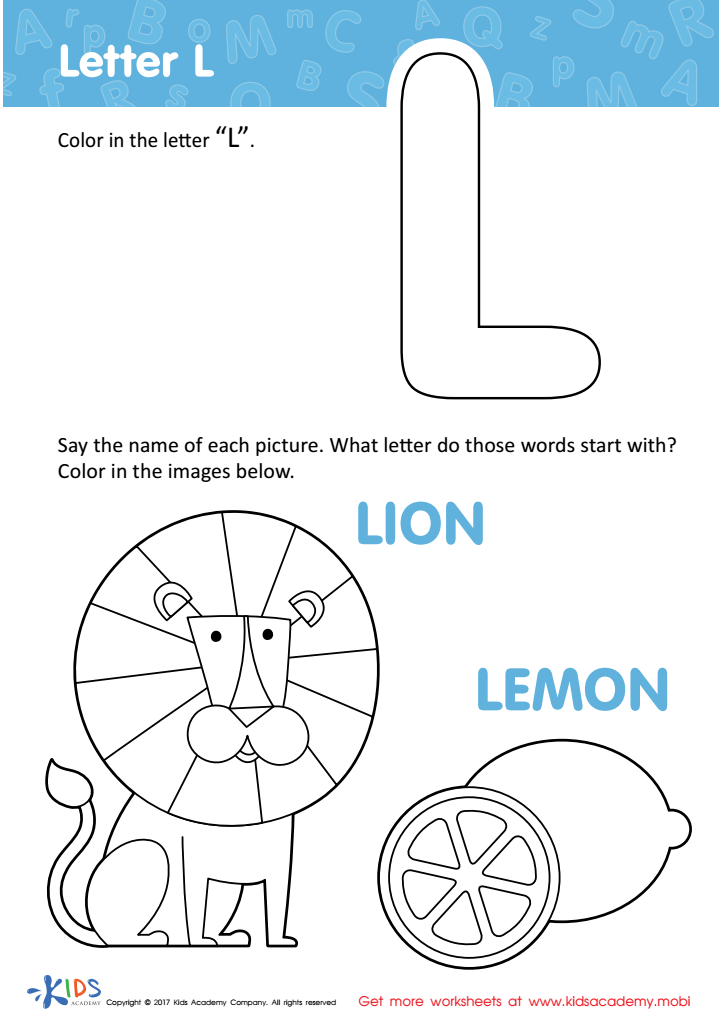
Letter L Coloring Sheet
 Assign to My Students

Find Uppercase Letters A, B, and C Worksheet
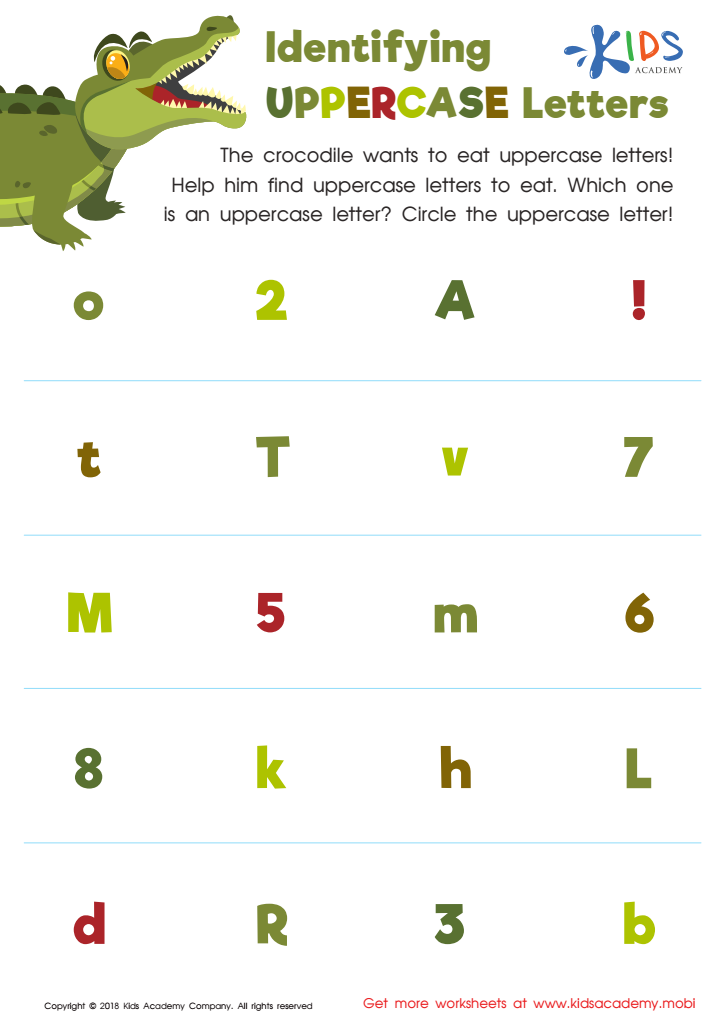
Identifying Uppercase Letters Worksheet
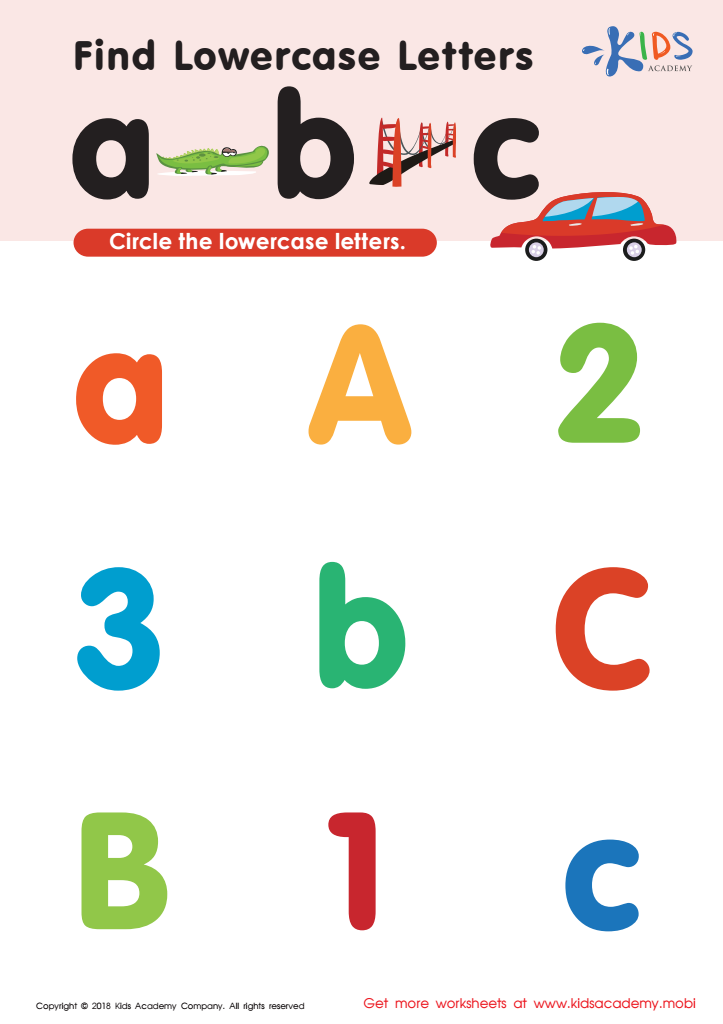
Find lowercase letters a b c Worksheet

Find Lowercase Letters v w x Worksheet








Visual discrimination skills are crucial for children aged 3-8, as they form the foundation for reading, writing, and overall learning. These skills enable children to differentiate between similar letters and shapes, which is essential for recognizing the alphabet's characters accurately. For example, they learn to distinguish "b" from "d" or "p" from "q." Without strong visual discrimination abilities, children may struggle with letter recognition and experience challenges in phonics and spelling, which can hinder their literacy development.
Parents and teachers should care about nurturing these skills because they significantly impact a child's academic success and confidence. Engaging children in activities that promote visual discrimination—such as puzzles, matching games, and sorting tasks—can make learning fun and effective. Moreover, the growth of these skills fosters critical thinking and attention to detail, which are beneficial in all areas of education.
In essence, supporting the development of visual discrimination is not just about improving reading and writing but also about equipping children with the essential cognitive tools to thrive in their education and beyond. By prioritizing these skills, parents and teachers can set the stage for lifelong learning and success.







