Vocabulary enhancement Normal Alphabet Worksheets for Ages 3-8 - Page 3
50 filtered results
-
From - To
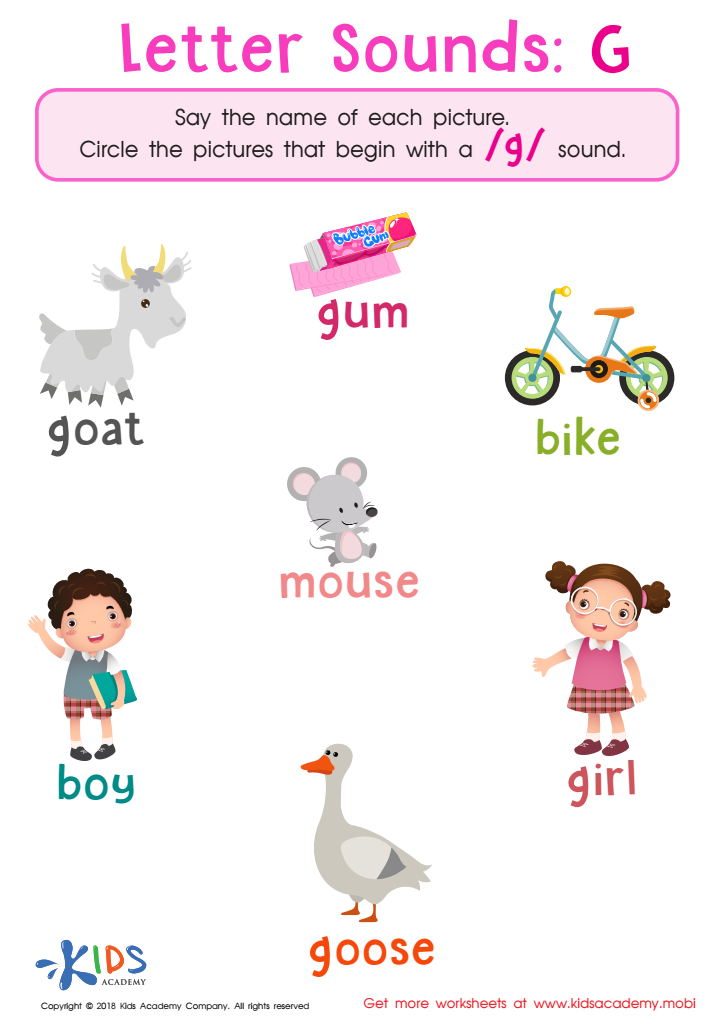
Letter G Sounds Worksheet
 Assign to My Students
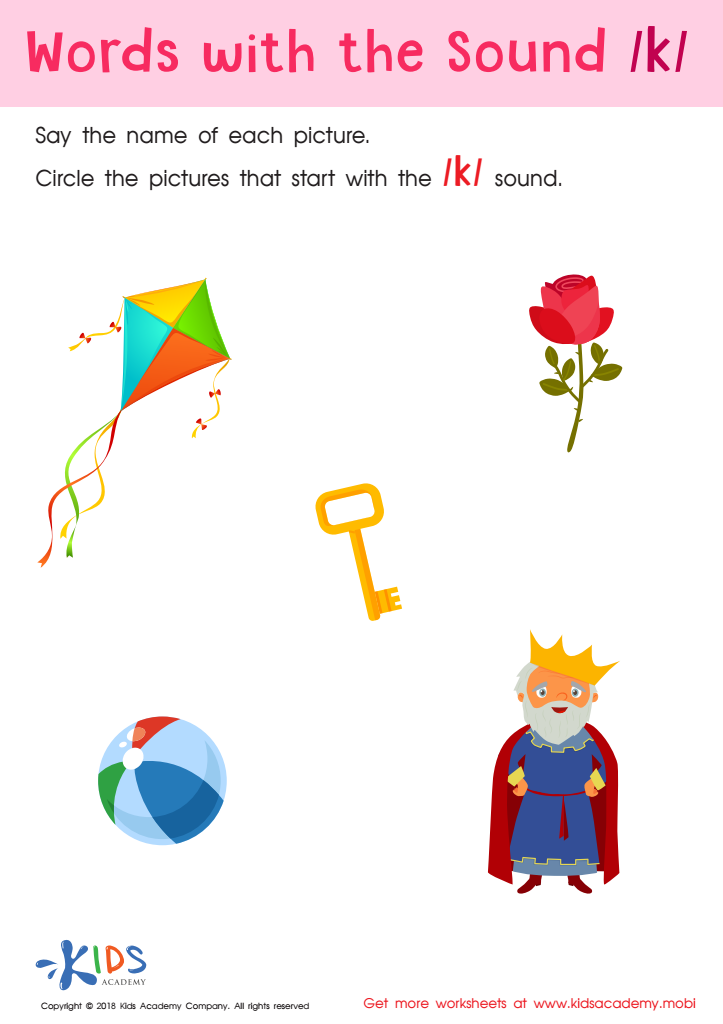
Words with sound k Reading Worksheet






Vocabulary enhancement is crucial for children aged 3-8 as it lays the foundation for their overall language development, literacy skills, and future academic success. At this formative age, young learners are rapidly expanding their linguistic abilities, making it essential for parents and teachers to actively engage in vocabulary-building activities.
A robust vocabulary helps children express themselves more clearly and understand others better, fostering communication skills that are vital for social interactions and relationship-building. The more words children know, the more effectively they can comprehend stories, follow instructions, and engage in discussions. This not only boosts their confidence but also encourages a love for reading and learning.
Additionally, enhanced vocabulary is linked to improved performance in school. As children encounter more complex texts age-appropriately, a well-developed vocabulary allows them to grasp concepts and ideas more readily, making subject matter more accessible. Furthermore, vocabulary skills also support critical thinking and problem-solving abilities.
By fostering an environment that emphasizes vocabulary enhancement, whether through reading together, playing word games, or discussing new concepts, parents and teachers play an integral role in equipping children with the language tools they need to thrive both academically and socially, setting the stage for lifelong learning.







