Discover our engaging Word Identification Normal Alphabet Worksheets, specifically designed for children aged 3-8. These interactive resources support early literacy development by helping young learners recognize and identify words in a fun, playful manner. Each worksheet is crafted to enhance spelling skills, improve vocabulary, and strengthen phonetic awareness through visually stimulating activities. Perfect for classroom use or at-home learning, our worksheets encourage children to explore the world of letters and words, fostering a love for reading from a young age. Download the worksheets today and embark on an exciting educational journey that will boost your child’s confidence and literacy skills!

Check out this FREE Trial Lesson on Alphabet for age 3-8!

Identify Prefixes, Suffixes, and Base Words

Favorites
With answer key
Interactive
  • 3-8
  • Word identification
  • Alphabet
  • Normal
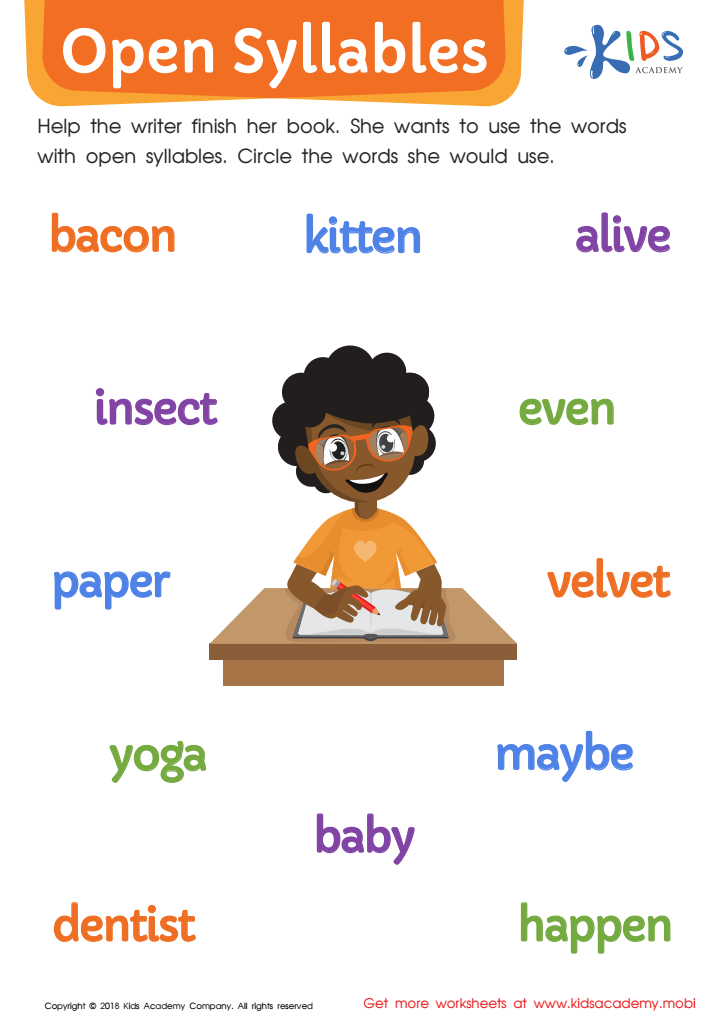
Open Syllables Worksheet

Open Syllables Worksheet

Before beginning this worksheet, make sure your child knows what open syllables are. If not, take time to teach them with examples. Then, help the writer finish her book by circling words with open syllables. She needs your child's help!
Open Syllables Worksheet
Worksheet
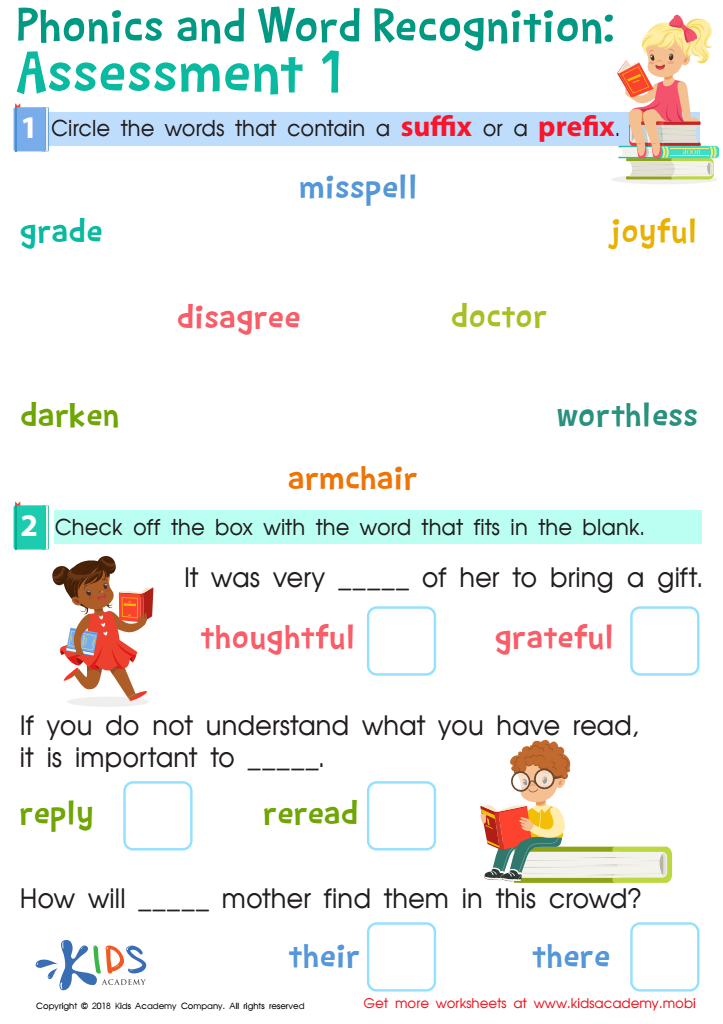
Phonics and Word Recognition: Assessment 1 Worksheet

Phonics and Word Recognition: Assessment 1 Worksheet

Explain prefixes (words added to start of another word to give it a new meaning) and suffixes (added to end of word to change its meaning) to your kids with examples like 'unhappy' (prefix) and 'forgetful' (suffix). Now, help your child complete this worksheet, including circling words and checking boxes.
Phonics and Word Recognition: Assessment 1 Worksheet
Worksheet
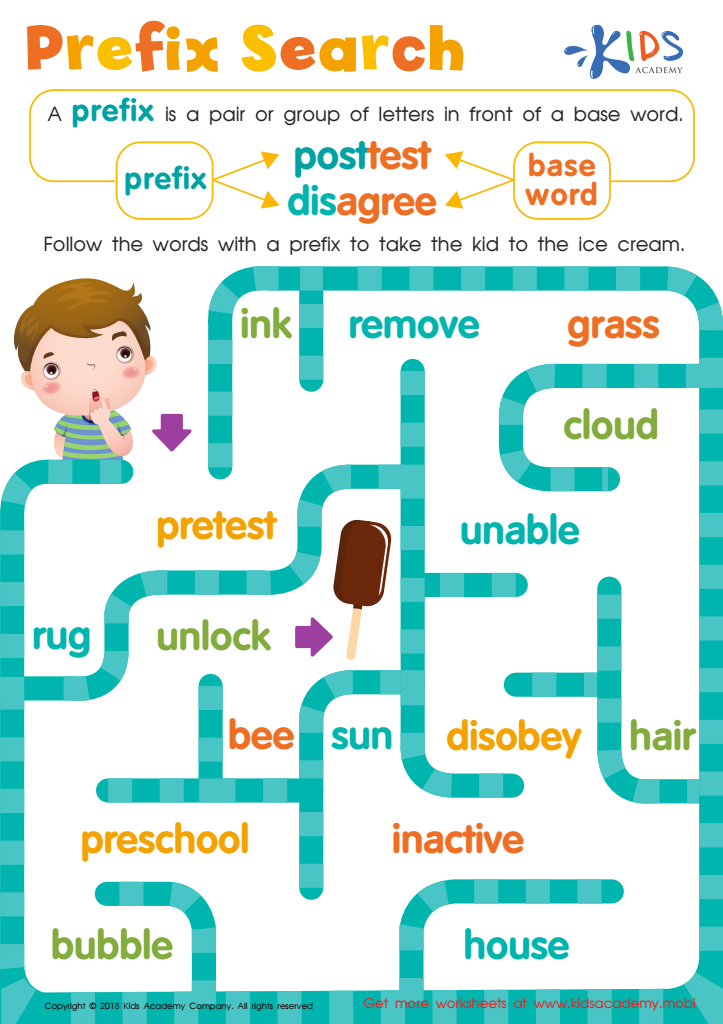
Reading: Prefix Search Worksheet

Reading: Prefix Search Worksheet

Maze your way through prefixes! This worksheet helps students practice reading new words with a prefix and figuring out the base word. An understanding of prefixes gives students the skills to comprehend new words. A fun and useful activity for the reading classroom!
Reading: Prefix Search Worksheet
Worksheet
Long I Vowel Team Coloring Worksheet

Long I Vowel Team Coloring Worksheet

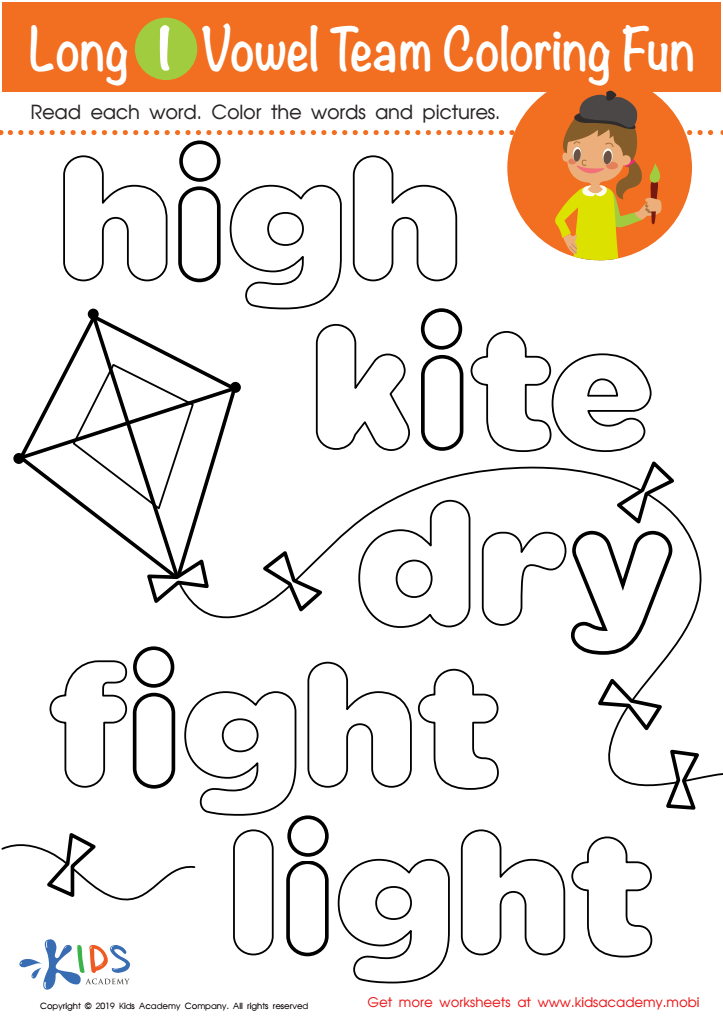
This worksheet provides practice with letter combinations that make the long "i" sound while enhancing creativity and motor skills with a fun coloring activity. Unknowingly, new readers learn key phonics skills while having fun!
Download (PDF)
Assign to My Students
Long I Vowel Team Coloring Worksheet
Worksheet
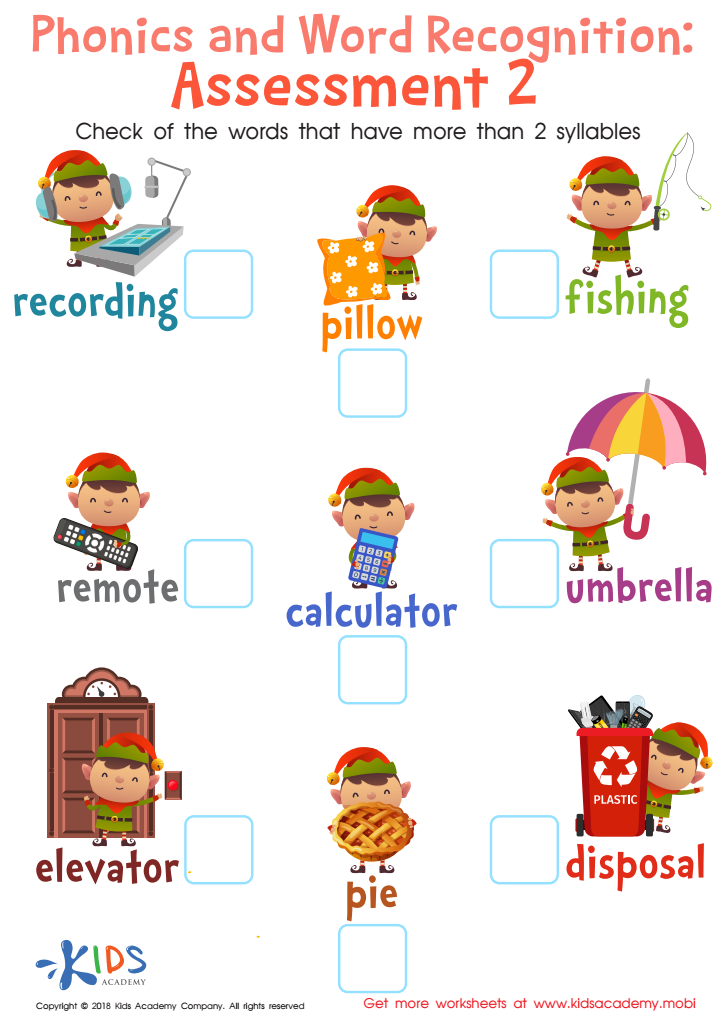
Phonics and Word Recognition: Assessment 2 Worksheet

Phonics and Word Recognition: Assessment 2 Worksheet

Help your kids learn proper pronunciation by counting syllables. Most words they'll encounter have 1-3 syllables, making them simple to say. Have them repeat the words in your worksheet after you. Focus on longer words with more than two syllables.
Phonics and Word Recognition: Assessment 2 Worksheet
Worksheet
Phonics and Word Recognition: Assessment 1 ELA Worksheet


Phonics and Word Recognition: Assessment 1 ELA Worksheet

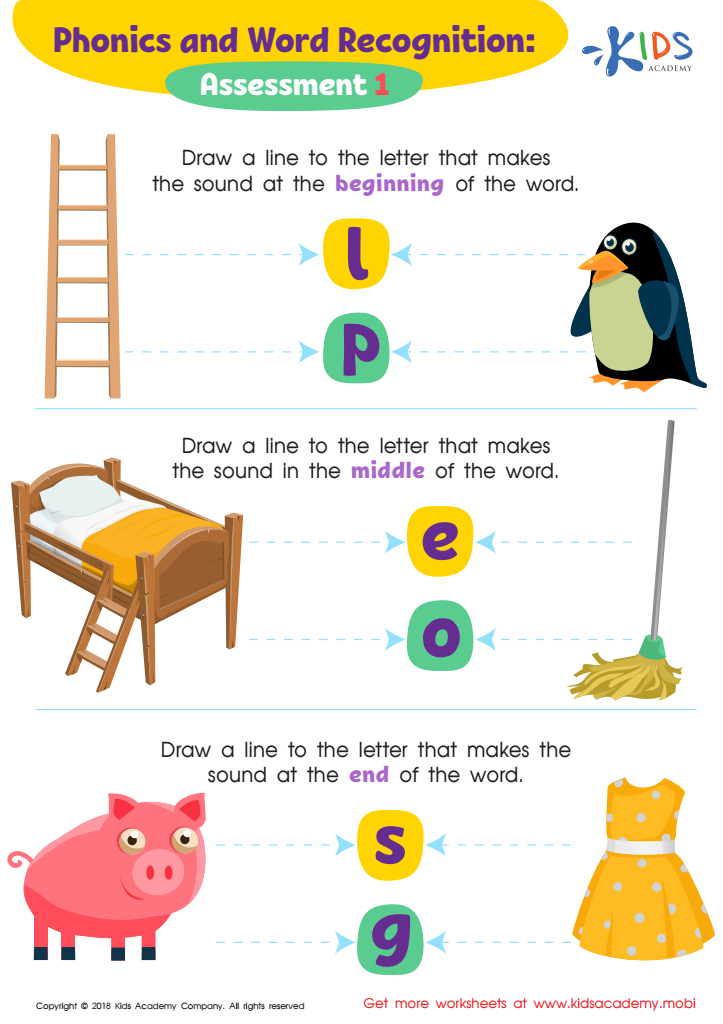
This fun worksheet tests your child's sound recognition skills for each part of a word. Ask your child to name each image and trace the line to match it with the corresponding letter. Listen for beginning sounds on 1st, middle sounds on 2nd, and ending sounds on 3rd. Encourage learning with this colorful and interactive activity!
Phonics and Word Recognition: Assessment 1 ELA Worksheet

Worksheet


Word identification plays a crucial role in early literacy development for children aged 3-8, making it a focal point for both parents and teachers. At this age, children are developing foundational reading skills that will serve them throughout their educational journey and beyond. Learning the normal alphabet and being able to identify words enables children to decode text, understand meanings, and, ultimately, foster a love for reading.

Ultimately, effective word identification contributes to better vocabulary acquisition, enhances comprehension skills, and builds confidence in young learners. When children can recognize letters and form words, they gain access to a world of knowledge, imagination, and creativity. Furthermore, mastering word identification lays the groundwork for fluent reading, which is critical for academic success in subjects beyond literacy.

Moreover, engaged parents and educators can provide targeted support and fun, engaging activities to reinforce these skills. For instance, incorporating songs, games, and interactive lessons can make learning enjoyable, fostering a positive attitude towards literacy. By prioritizing word identification, parents and teachers can help pave the way for lifelong readers and learners, making it a vital focus in early childhood education.