Letter-sound association Normal Letter Recognition Worksheets for Ages 3-8
5 filtered results
-
From - To
Unlock your child's potential with our Letter-Sound Association Normal Letter Recognition Worksheets designed for ages 3-8! These engaging, printable worksheets help young learners master the connection between letters and their corresponding sounds—an essential skill for early literacy. Each worksheet features fun activities that reinforce letter recognition through colorful illustrations and hands-on exercises. Perfect for both home and classroom use, our resources nurture critical thinking and build a solid foundation for reading success. Empower your child’s learning journey and make education enjoyable with our thoughtfully designed letter-sound association worksheets! Explore our collection today and watch them thrive!
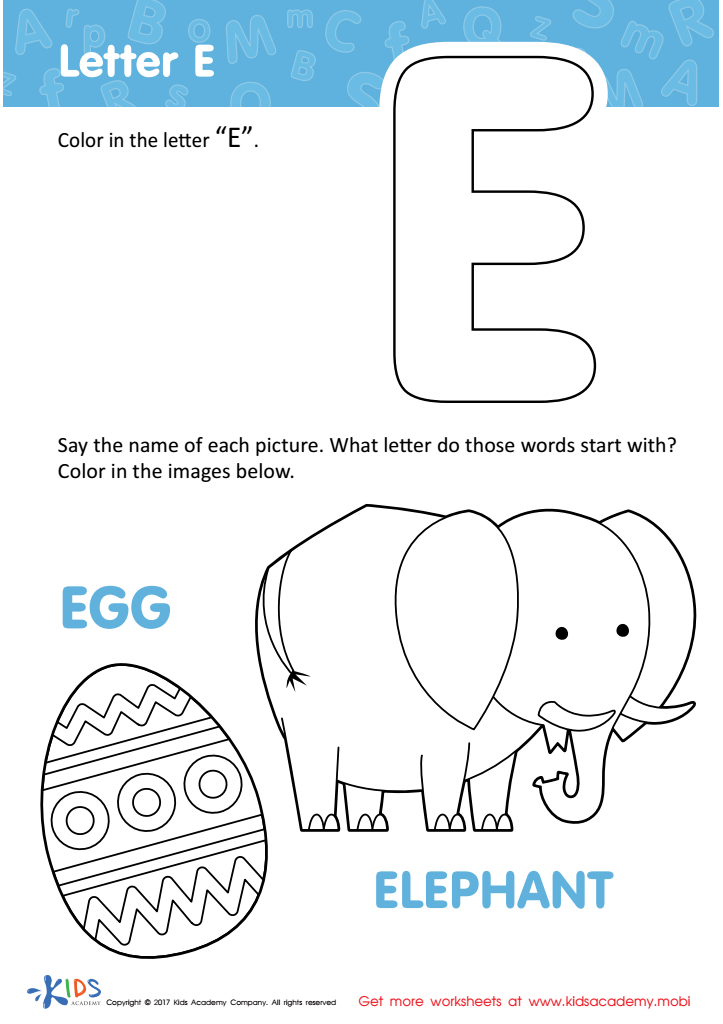
Letter E Coloring Sheet
 Assign to My Students
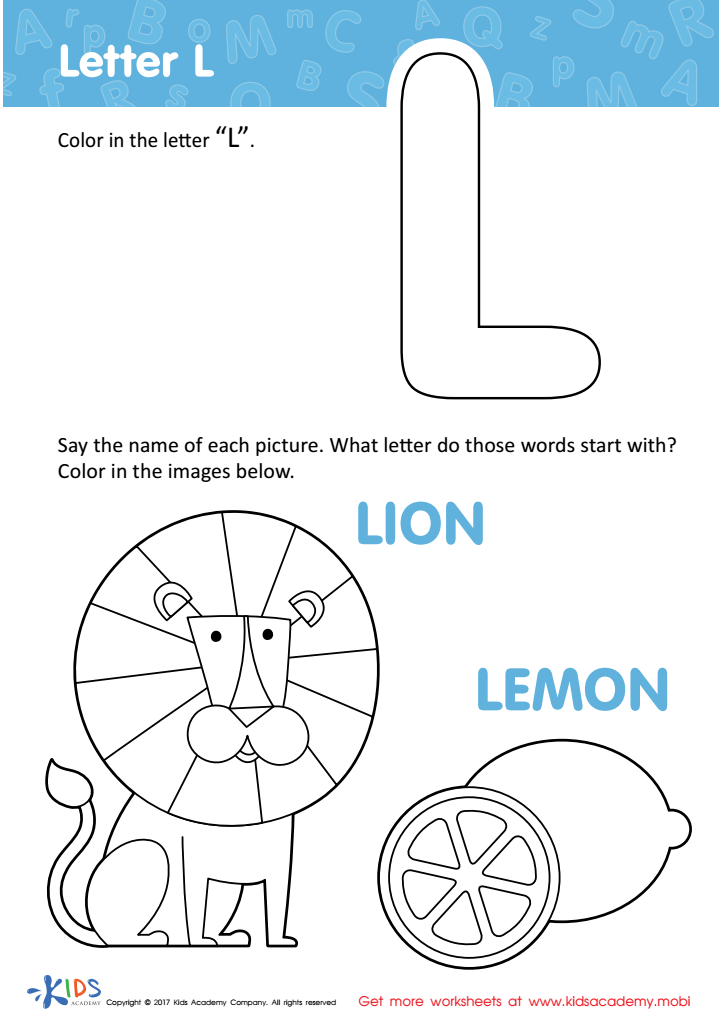
Letter L Coloring Sheet
Assign to My Students

Lowercase Letters m n o Worksheet
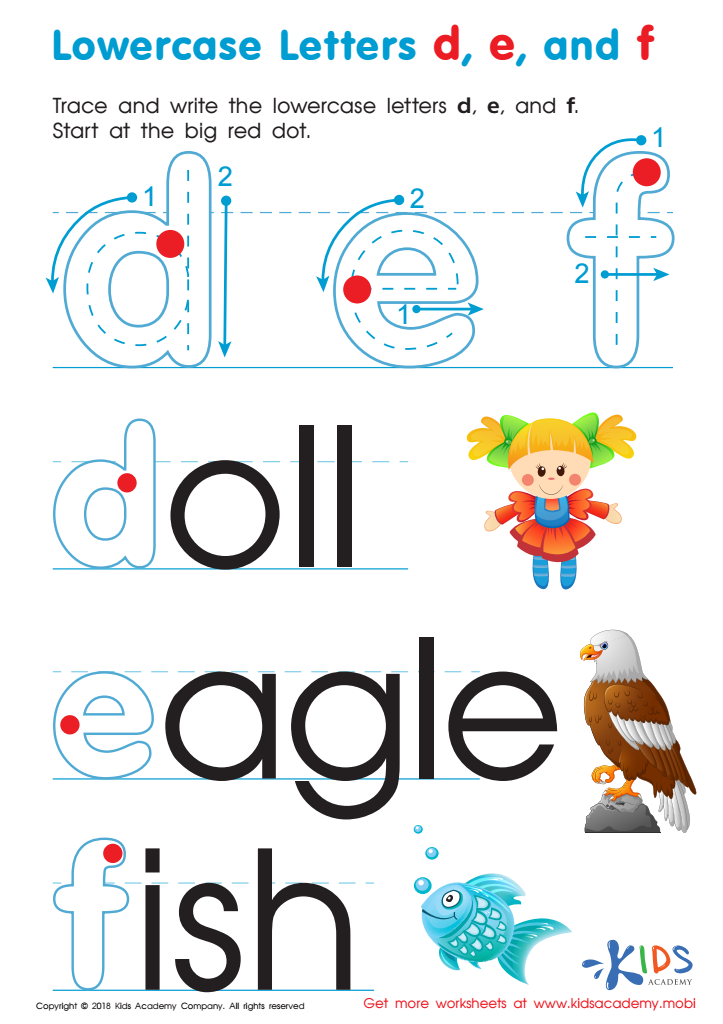
Lowercase Letters d e f Worksheet
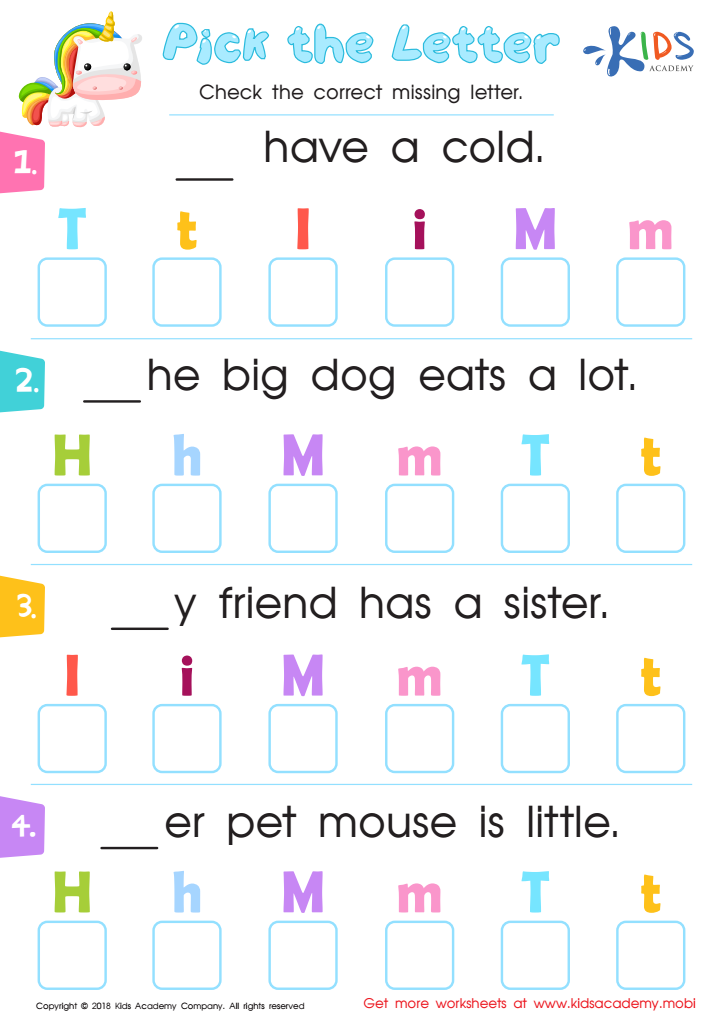
Pick the Letter Worksheet








Parents and teachers should prioritize letter-sound association and letter recognition for children aged 3-8 because these foundational skills are crucial for early literacy development. Mastering the connection between letters and their corresponding sounds directly influences a child's ability to read and write effectively. At this age, children are particularly receptive to learning, making it an ideal time to cultivate phonemic awareness and alphabet recognition.
Early literacy skills not only support academic achievement but also foster a love for reading. Recognizing letters and associating them with sounds helps children decode words, leading to better comprehension and communication skills. Additionally, these competencies enhance vocabulary development, setting the stage for future language skills.
Furthermore, understanding that letters have specific sounds aids in various activities, from storytelling to spelling, ultimately contributing to a child's overall confidence in their abilities. Engaging in activities focusing on letter-sound association, such as games and books, can make learning fun and interactive, further emphasizing the importance of family and school collaboration in fostering early literacy. Therefore, investing time and resources in these skills can significantly impact a child's educational journey, equipping them for lifelong learning and success.








