Visual discrimination skills Normal Letter Recognition Worksheets for Ages 3-8
5 filtered results
-
From - To
Enhance your child's visual discrimination skills with our engaging Normal Letter Recognition Worksheets, designed for ages 3-8. These worksheets foster crucial early literacy development by helping children identify and differentiate letters through fun activities. By practicing with colorful, interactive exercises, young learners build the foundation for reading and writing success. Our materials target key skills while keeping learning enjoyable and accessible. Ideal for home or classroom use, these worksheets can effectively support your child’s educational journey. Discover a variety of letter recognition activities that will captivate your child’s imagination and encourage skill mastery today!
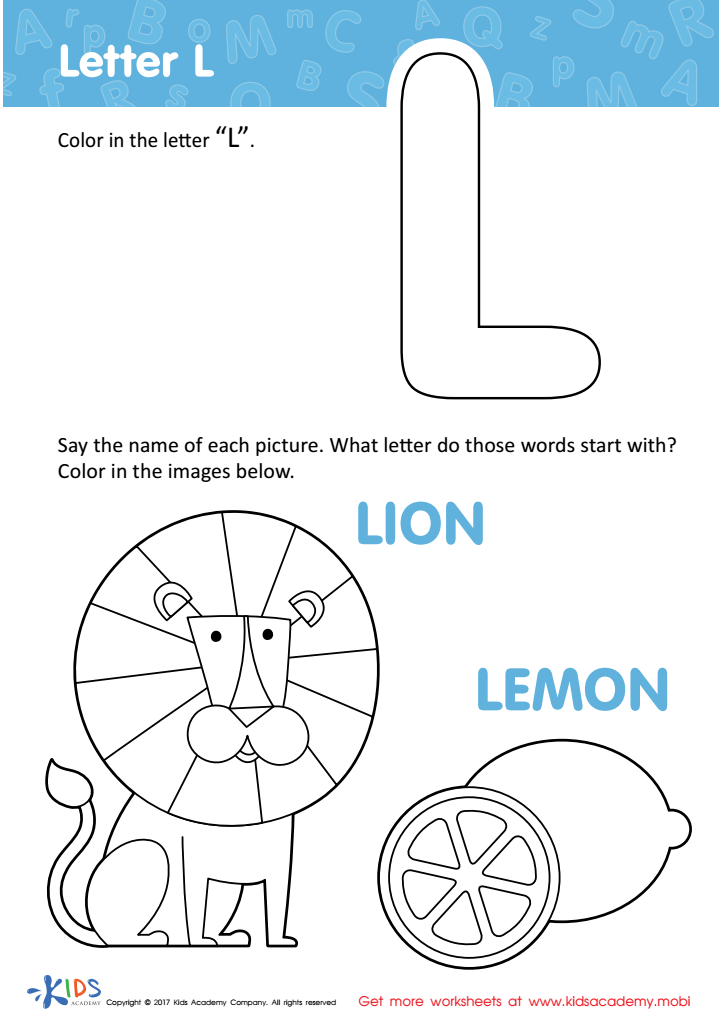
Letter L Coloring Sheet
 Assign to My Students
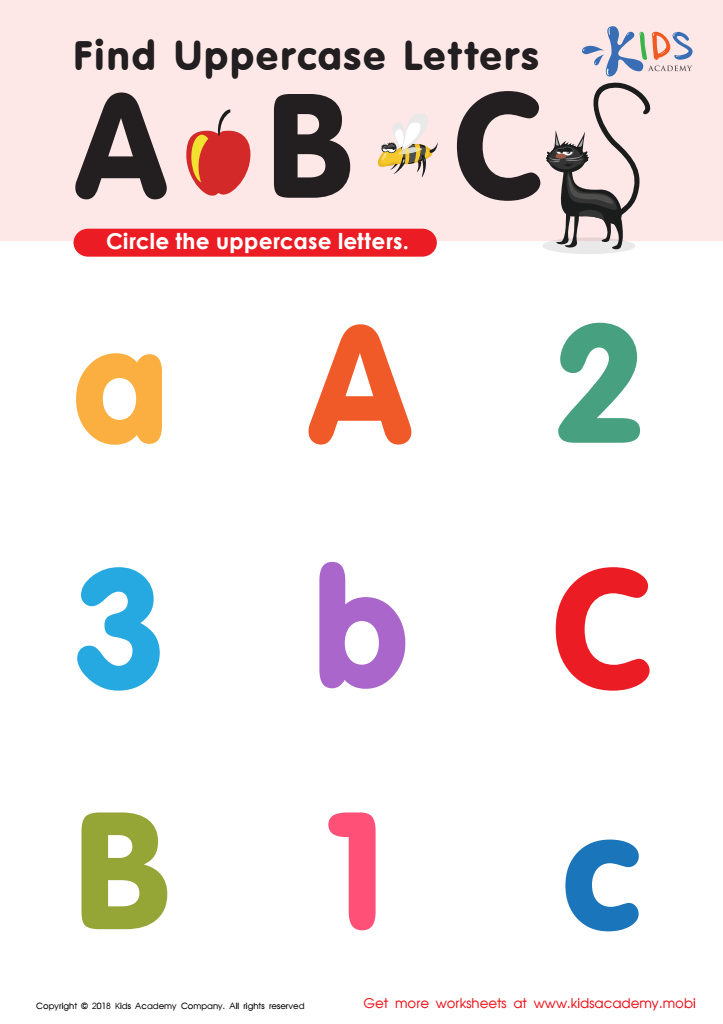
Find Uppercase Letters A, B, and C Worksheet
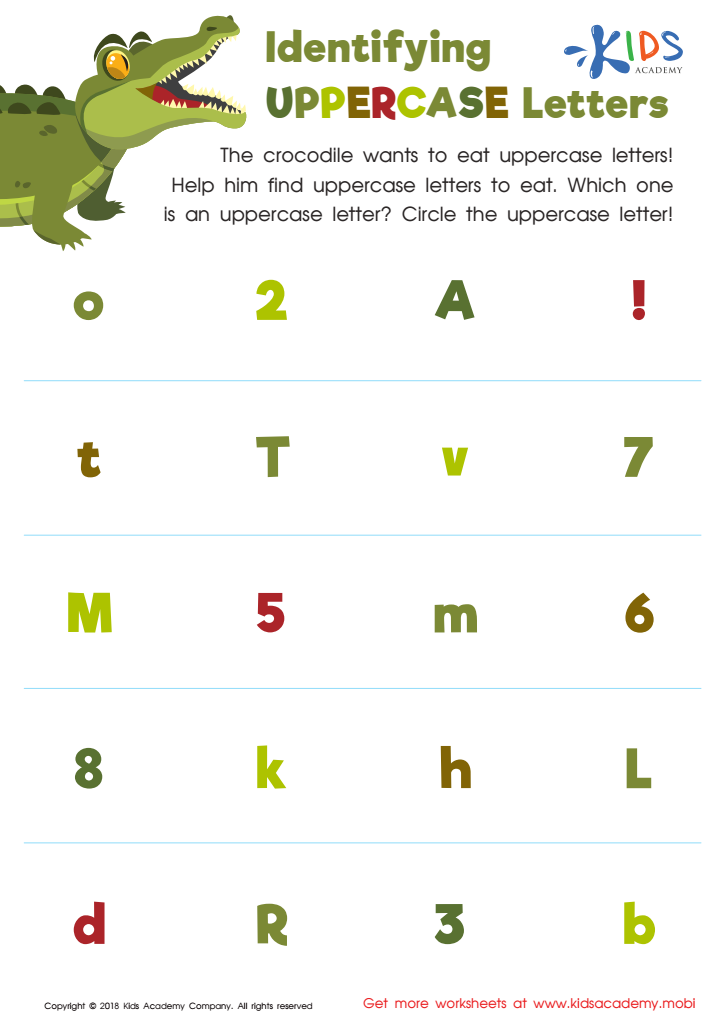
Identifying Uppercase Letters Worksheet

Find lowercase letters a b c Worksheet
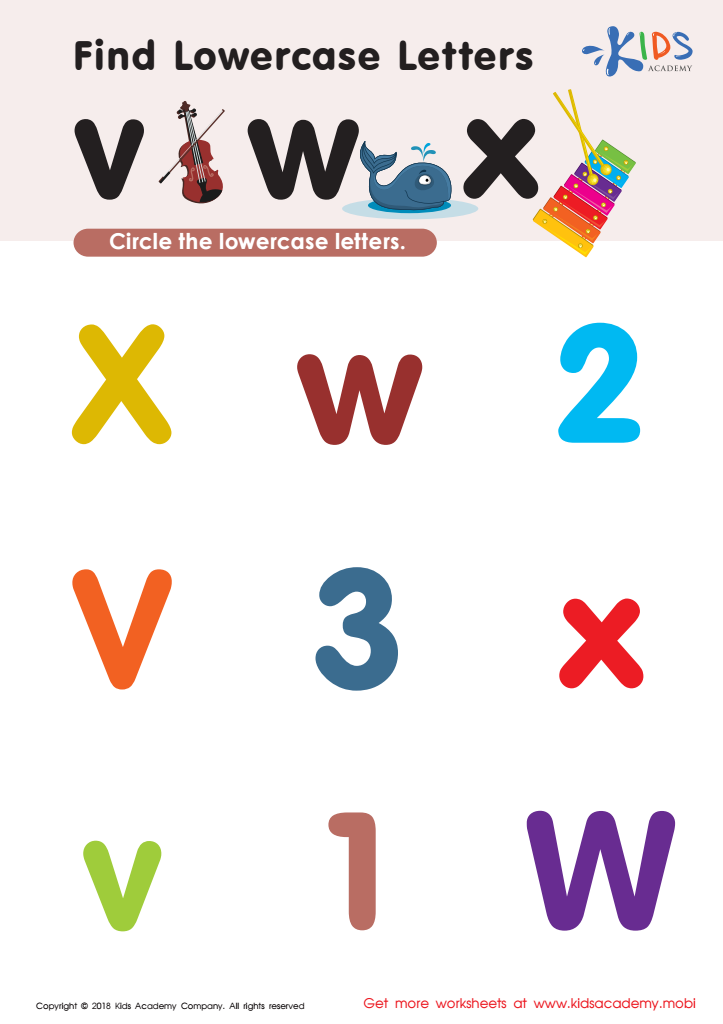
Find Lowercase Letters v w x Worksheet








Visual discrimination skills and letter recognition are crucial developmental milestones for children aged 3-8. Parents and teachers should prioritize these skills as they form the foundation for literacy and academic success. Visual discrimination refers to the ability to observe differences and similarities in shapes, colors, sizes, and patterns. This skill is vital for young learners as it enables them to distinguish between letters and words, leading to more effective reading and writing.
Normal letter recognition—recognizing and naming letters of the alphabet—is essential for early literacy. It helps children understand that letters represent sounds, a critical concept for their phonemic awareness. Recognizing letters is also the first step in being able to decode words, making reading accessible and enjoyable.
By fostering visual discrimination and letter recognition, parents and teachers can boost children's confidence in their abilities, enhancing their motivation to learn. Engaging activities like sorting games, matching letters, and letter-based puzzles can make these skills enjoyable. As children progress during this formative period, they build essential literacy skills, setting the stage for academic achievement and lifelong learning. Ultimately, investing in these foundational skills equips children with the tools necessary for a successful educational journey.








