Spelling practice Normal Long And Short Vowel Worksheets for Ages 3-8
5 filtered results
Difficulty Level
Grade
Age
-
From - To
Subject
Activity
Standards
Help your child master spelling with our Spelling Practice Normal Long and Short Vowel Worksheets, designed for ages 3-8. These expertly crafted worksheets provide fun and engaging activities to reinforce phonics and vowel sounds. Our collection covers both long and short vowels in a variety of educational contexts, supporting early reading and writing skills. Bright and colorful, they maintain your child's interest while enhancing language development. Easily downloadable and printable, these worksheets make learning accessible anywhere. Give your young learner a head start in spelling and phonics with our comprehensive collection. Nurturing lifelong readers starts here!
Favorites
With answer key
Interactive
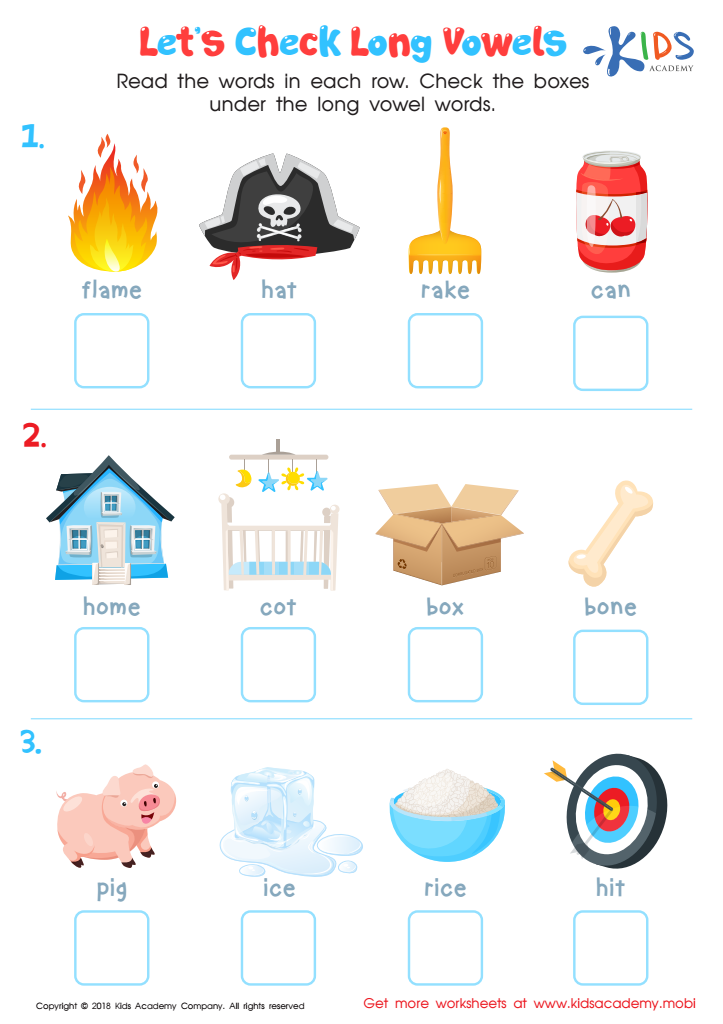
Let's Check Long Vowels: Assessment Worksheet
This worksheet helps your child identify objects and learn long vowel sounds. Ask them to say the names of the four objects in each row. Then, help them check the boxes to confirm they know the long vowel sounds. This will help them develop their reading skills.
 Assign to My Students
Let's Check Long Vowels: Assessment Worksheet
Worksheet
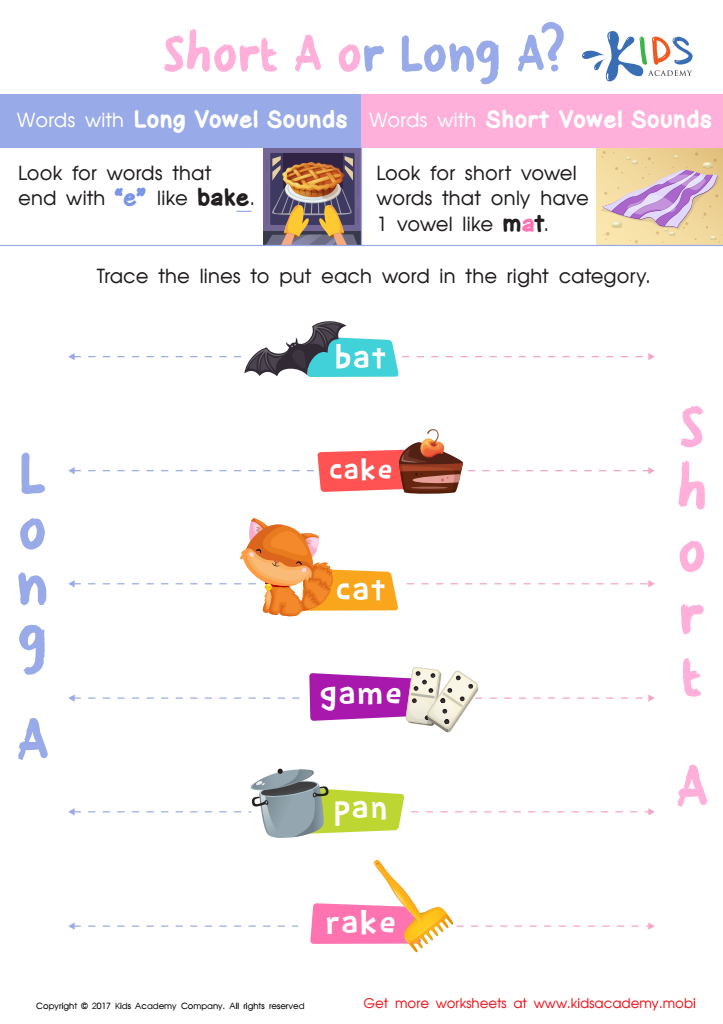
Short /a/ or Long /a/? Worksheet
Phonetics and its sounds can be tricky for kids. They can read and spell, but long and short vowels might be difficult. Use this phonetic worksheet to teach them to identify words with the short /a/ or long /a/ sound. Kids have to find the words ending with 'e' (long sound) and words with one vowel (short sound, e.g. 'mat'). Colourful printout makes it fun and easy to learn!
Short /a/ or Long /a/? Worksheet
Worksheet
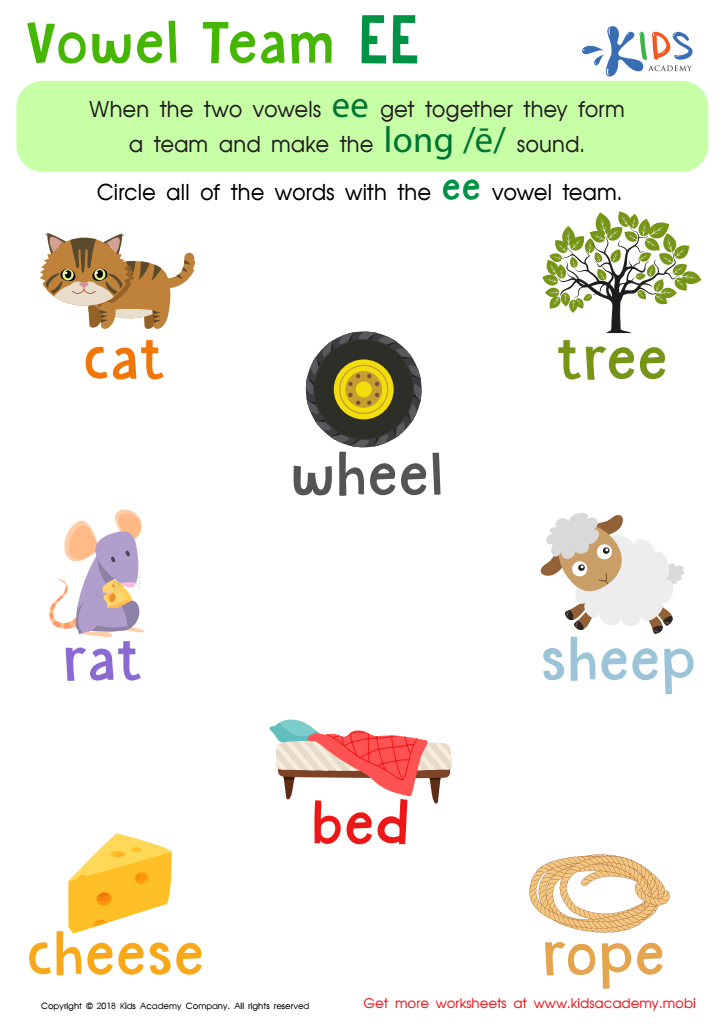
Reading: Vowel Team EE Worksheet
This worksheet is perfect for helping young learners master the /ee/ vowel team. It shows the first vowel with a long sound and the second vowel silent. It also provides pictures for unfamiliar words for readers of all levels. It's an ideal resource for teaching phonics skills.
Reading: Vowel Team EE Worksheet
Worksheet
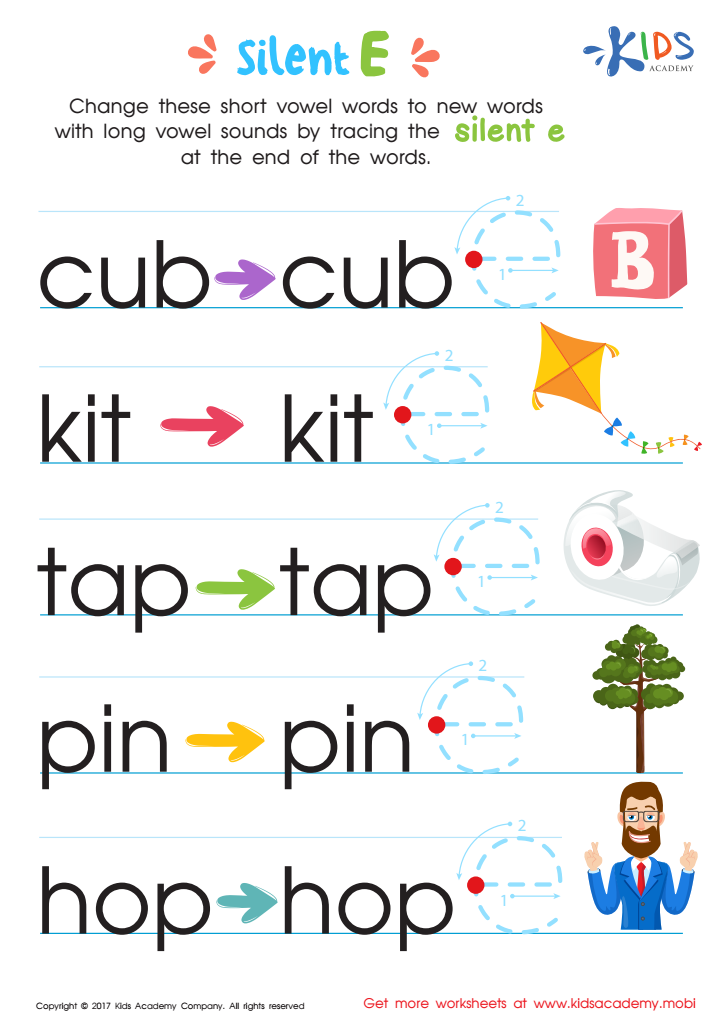
Silent E Words Worksheet
The letter e is amazing - it changes words without making a sound! Boost spelling and phonics with this Silent e worksheet from Kids Academy - fun and colorful!
Silent E Words Worksheet
Worksheet
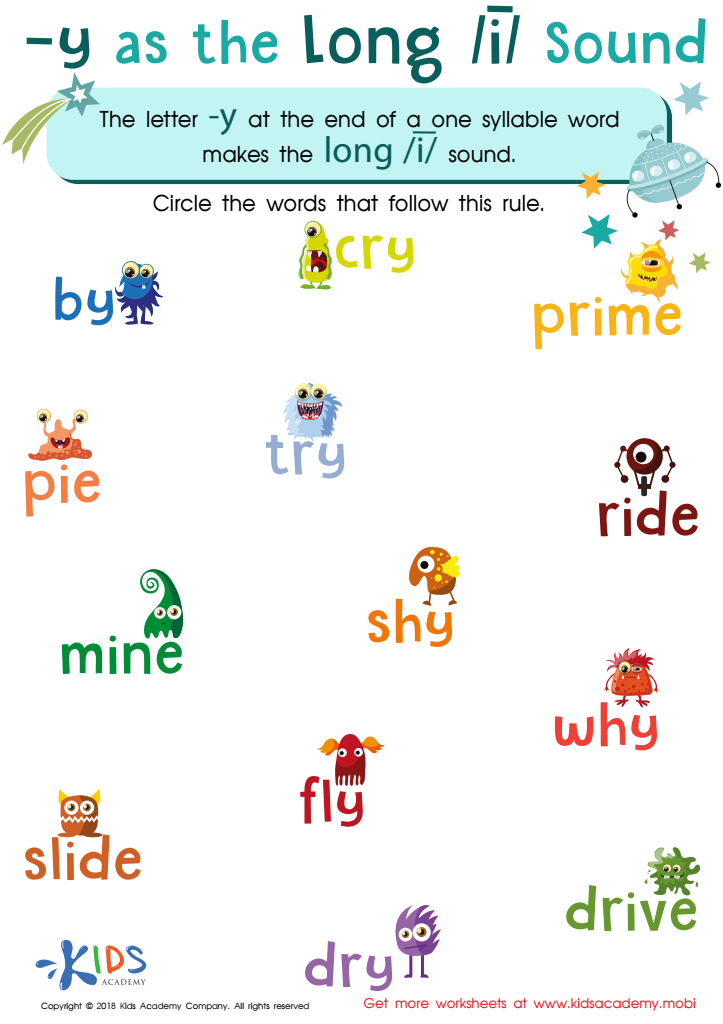
Reading: Y as Long I Worksheet
Students need practice and exposure to letters that make different sounds for decoding and reading success. This printable is a great resource for language arts classes: it explains that words ending with Y and having only one syllable make the long I sound. Students will circle all words with Y that have this sound.
Reading: Y as Long I Worksheet
Worksheet
Join Kids Academy for Free
Who is primarily going to use this learning content?




For children ages 3-8, engaging in spelling practice that emphasizes the use of normal, long, and short vowel sounds is crucial for several reasons.
Firstly, it builds foundational literacy skills. Understanding and differentiating between vowel sounds helps children grasp the basic structure of the English language, making it easier for them to decode and spell words accurately. This early knowledge paves the way for proficient reading and writing, which are essential for academic success.
Secondly, mastering vowel sounds enhances phonemic awareness. By recognizing how vowels sound and function in different contexts, children develop a more acute sense of how words are formed and how phonetic patterns work. This, in turn, improves their ability to break down unfamiliar words, boosting their confidence and fluency in reading.
Additionally, early spelling practice encourages cognitive development. It sharpens memory and concentration and hones fine motor skills through the act of writing. These skills are transferable to other academic areas and everyday tasks, fostering well-rounded intellectual growth.
Finally, engaging regularly in spelling activities often leads to a love of language and learning. When parents and teachers make these activities fun and interactive, they create a positive and stimulating learning environment. This nurtures curiosity and a lifelong interest in reading and writing, essential skills in our information-rich world.