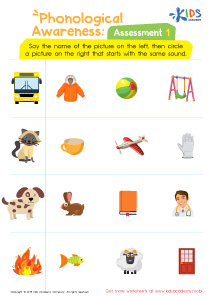
Rhyming skills development Normal Rhyming Worksheets for Ages 3-8
4 filtered results
-
From - To
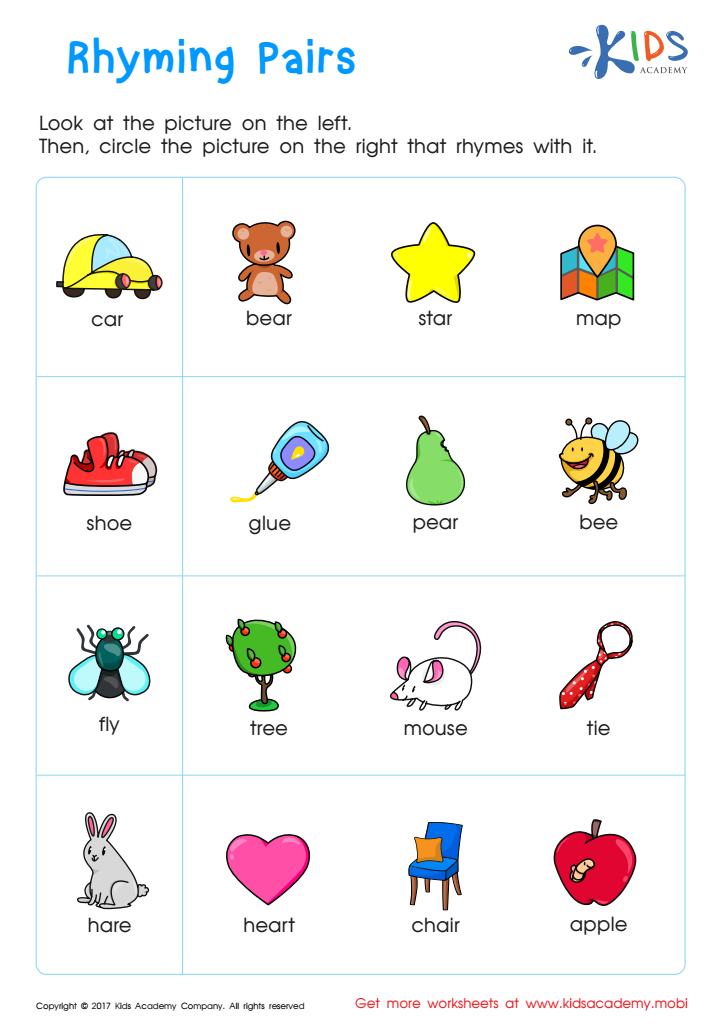
Are you looking to boost your child's early reading and comprehension skills? Our "Rhyming Skills Development Worksheets" designed for kids aged 3-8 offer engaging, age-appropriate exercises to help your little learner grasp the concept of rhyming words. These fun-filled, colorful worksheets not only entertain but also enhance phonemic awareness, crucial for early literacy success. Through playful activities like matching and filling in the blanks, children will develop their vocabulary and improve their sound recognition. Perfect for preschoolers and early grade school kids, these worksheets are your go-to resource for effective and enjoyable learning. Unlock their potential today!
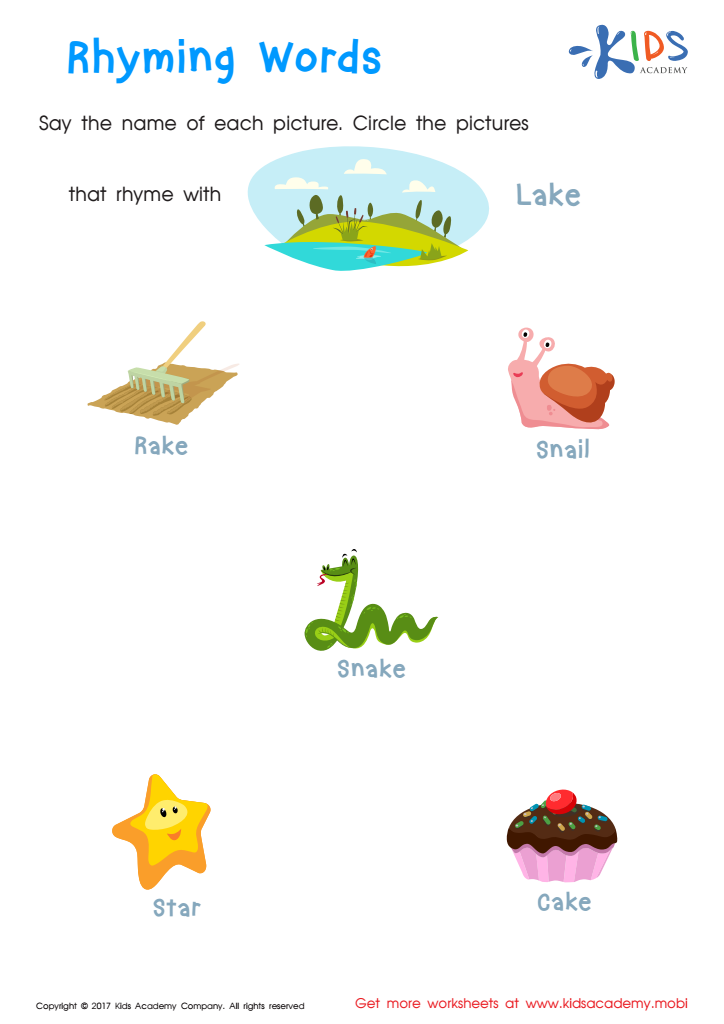
Rhyming Words Rhyming Worksheet
 Assign to My Students
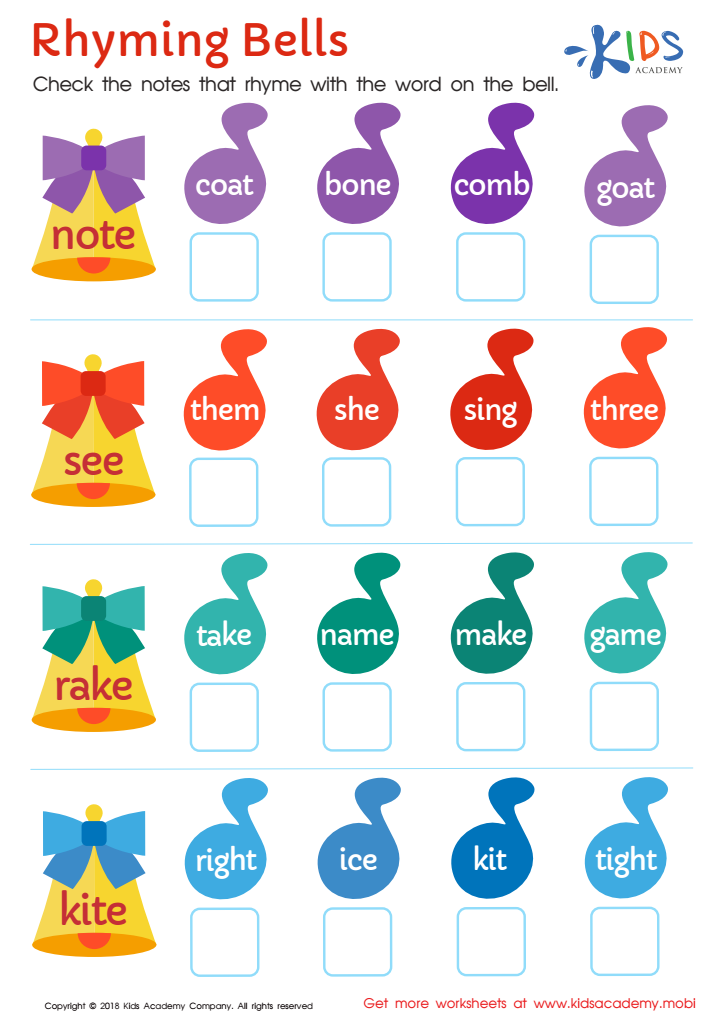
Rhyming Bells Worksheet
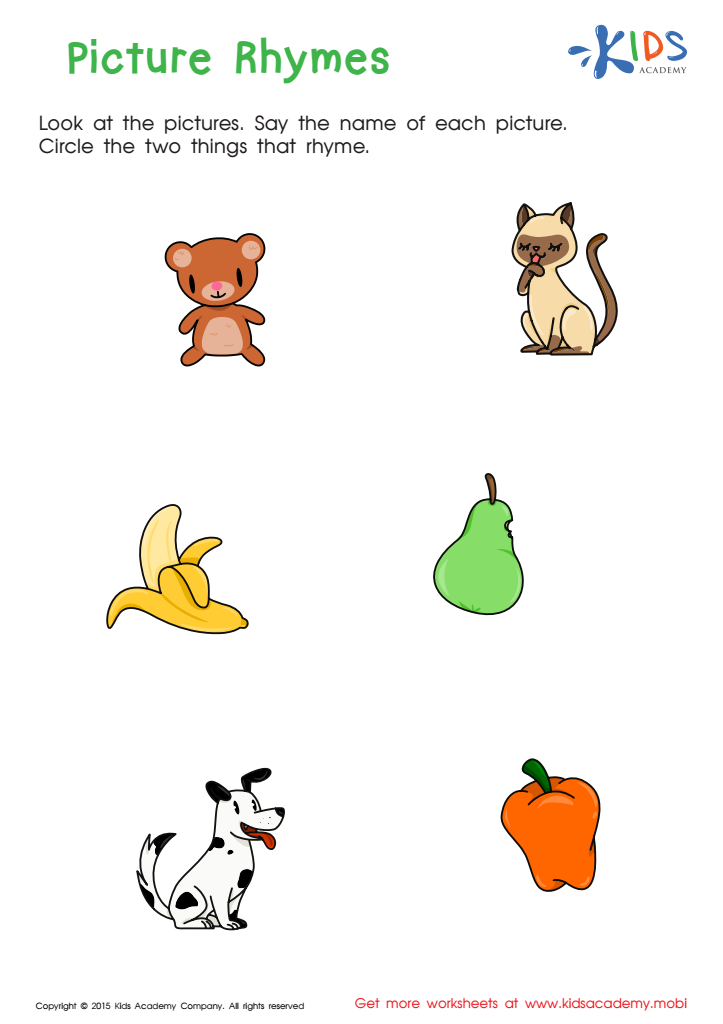
First Words: Picture Rhymes Worksheet







Rhyming skills are crucial for young children's literacy development, particularly for ages 3-8. These skills play a foundational role in phonological awareness, which is the ability to recognize and manipulate sounds within words. When children familiarize themselves with rhymes, they start to detect patterns in sound, making it easier for them to learn how to decode and spell words later on. Rhyming is also great for vocabulary expansion; as children are exposed to different rhyming words, they naturally acquire new words and their meanings.
From an emotional perspective, rhyming makes learning enjoyable and engaging. Storytime or singing nursery rhymes can foster a love for reading and create positive associations with learning. Additionally, rhyming helps in developing memory and cognitive skills. The rhythm and repetition involved in rhymes aid children in better recollection and understanding of concepts.
Moreover, early development of rhyming skills can indicate readiness for more complex literacy tasks, acting as a diagnostic tool for parents and teachers. Identifying difficulties in this area early on allows for timely intervention, helping to bridge any gaps before they become more significant issues.
Therefore, both parents and teachers should prioritize incorporating rhymes into daily activities. This simple yet impactful practice supports a child's language development, cognitive skills, and overall readiness for future academic success.