Phonics practice Normal Short Vowels Worksheets for Ages 3-8
4 filtered results
-
From - To
Enhance your child's reading foundation with our "Phonics Practice: Normal Short Vowels Worksheets" tailored for ages 3-8. These engaging worksheets are meticulously crafted to reinforce the understanding of short vowel sounds in a fun and interactive way. By focusing on key phonics skills, children develop the ability to recognize and pronounce short vowels accurately, paving the way for fluent reading and improved literacy skills. Perfect for both classroom and home use, these worksheets combine playful illustrations with effective exercises to keep young learners motivated. Give your child the essential tools for phonemic success with our delightful short vowels practice.
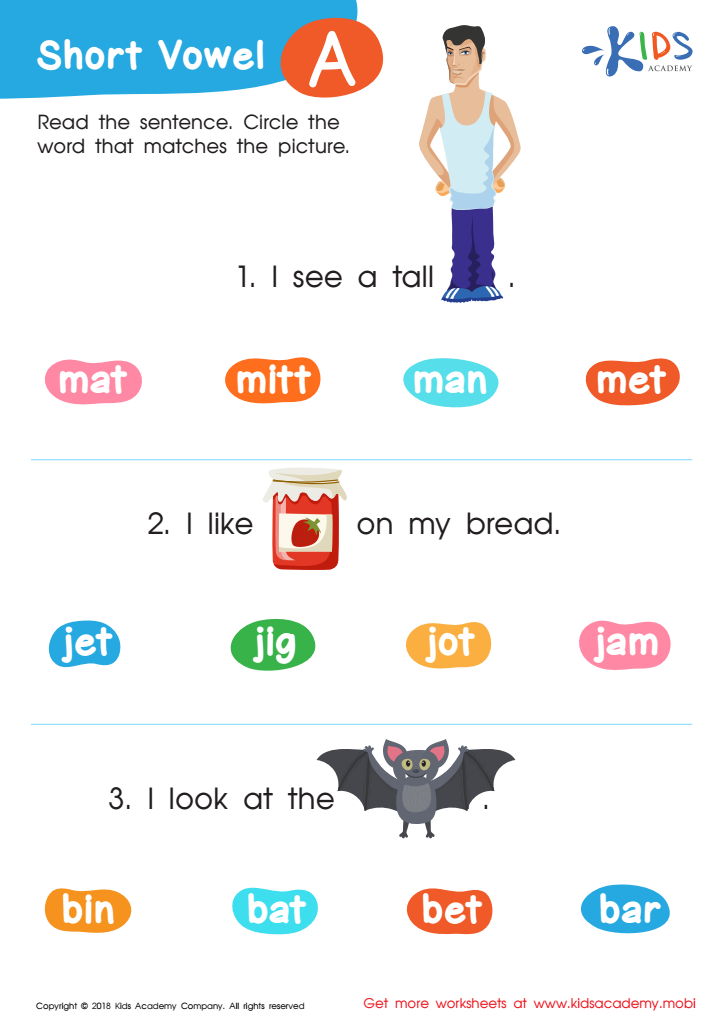
Short Vowel /a/ Worksheet
 Assign to My Students
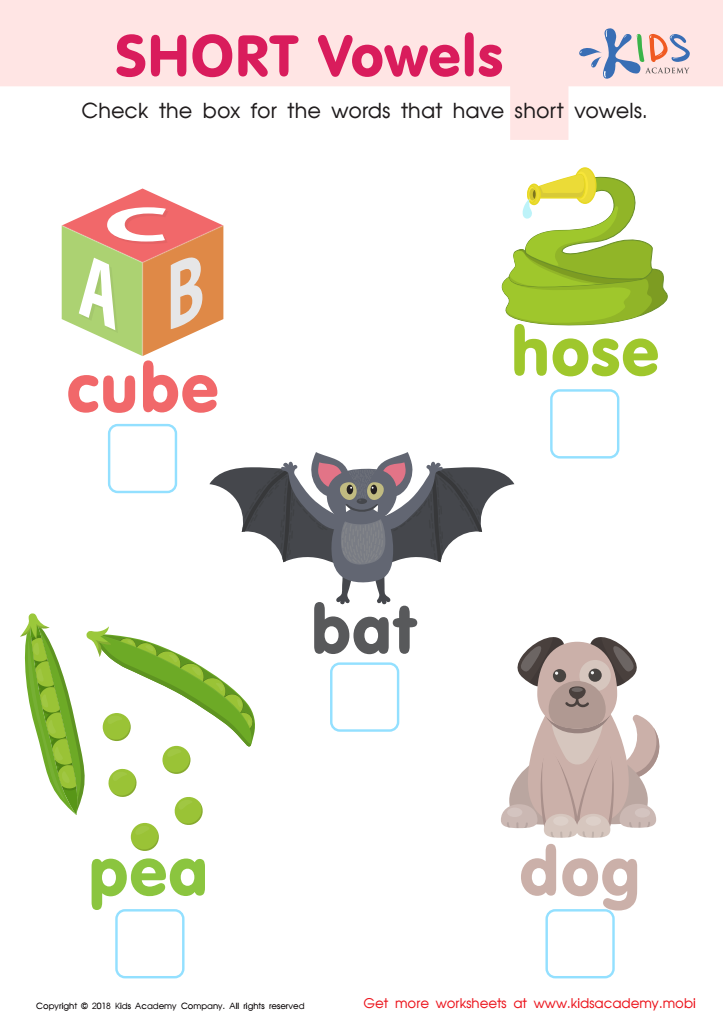
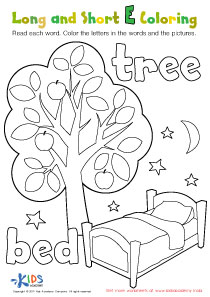
short vowels Worksheet
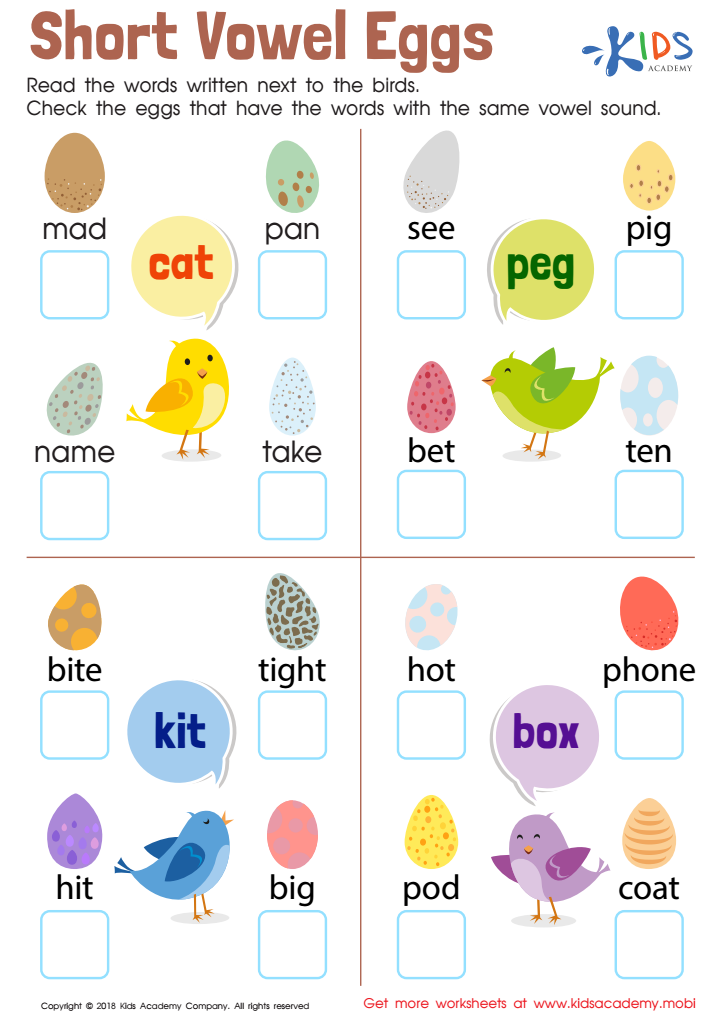
Short Vowel Eggs Worksheet
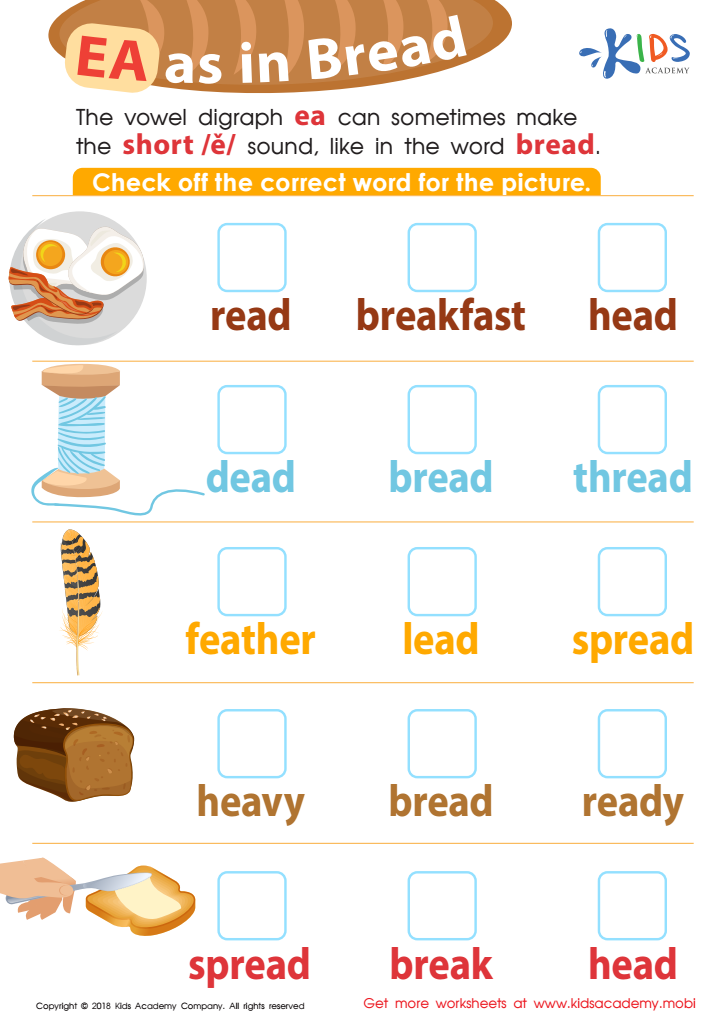
Reading: EA as in Bread Worksheet



Phonics practice for normal short vowels is essential for children ages 3-8 as it lays the foundational blocks for reading and literacy skills. Understanding short vowels—sounds like "a" in "cat," "e" in "bed," "i" in "sit," "o" in "top," and "u" in "cup"—is crucial because these sounds appear frequently in early reading materials. Proficiency in recognizing and decoding these common phonetic elements enables children to read simple words confidently, which bolsters their ability to progress to more complex reading.
For parents and teachers, investing in phonics practice ensures children develop strong, effective reading strategies. This early competence reduces the frustration often associated with learning to read and cultivates a sense of achievement and excitement towards books. It's not just about reading but also vocabulary building, comprehension, and overall academic performance. Early and consistent exposure to phonics helps prevent future reading difficulties and contributes to positive long-term educational outcomes.
Furthermore, phonics practice supports auditory discrimination skills, improves spelling by teaching word structure, and instills a deeper understanding of the language. In an age where literacy is critical for almost every learning area, solid phonics skills underpin the capability to navigate increasingly complex literary challenges, well beyond early schooling years.