Filters

6 filtered results

Clear all filters
Favorites
With answer key
Interactive

6 filtered results

Difficulty Level

Grade


Enhance your child's vocabulary with our engaging Normal Short Vowels Worksheets, designed specifically for ages 3 to 8. These printable resources focus on developing essential vocabulary skills through fun activities centered around short vowel sounds. Each worksheet is thoughtfully crafted to promote phonemic awareness, helping young learners recognize and use short vowels in various contexts. With colorful illustrations and interactive exercises, children will enjoy expanding their word bank and understanding of language while mastering short vowel pronunciation. Perfect for home or classroom use, these worksheets foster a love for learning and set the foundation for future literacy success. Start exploring today!

Check out this FREE Trial Lesson on Short Vowels for age 3-8!

Distinguish between Long U and Short U

Favorites
With answer key
Interactive
  • 3-8
  • Vocabulary expansion
  • Short Vowels
  • Normal
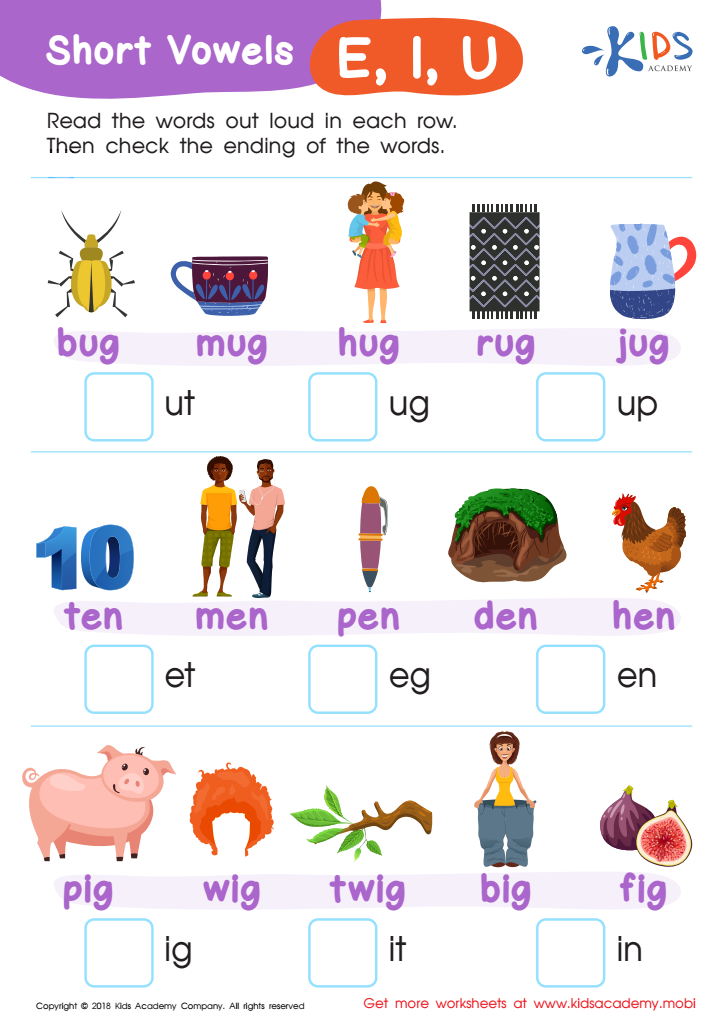
Reading: Long O and Short O Sounds Worksheet

Reading: Long O and Short O Sounds Worksheet

Students practice distinguishing between short and long O sounds with this reading worksheet. They sound out each word, then circle the pictures with the long O sound. Perfect for individual practice or to work with peers! Improves understanding of this skill and helps avoid confusion.
Reading: Long O and Short O Sounds Worksheet
Worksheet
Short Vowels /e/, /i/, and /u/ Worksheet


Short Vowels /e/, /i/, and /u/ Worksheet

Your emergent reader can have fun while practicing their short vowel sounds with this free, brightly colored worksheet. They'll identify one-syllable words by their pictures, then match the correct ending for each. They'll gain an understanding of how short vowel sounds vary in closed syllables with different endings, without even realizing it!
Short Vowels /e/, /i/, and /u/ Worksheet
Worksheet
Long and Short U Worksheet

Long and Short U Worksheet

Revised: Spice up your lesson on long and short vowels with this fun printout! Kids read the words "tube" and "tub," then reinforce the sound by coloring in the words and pictures. It's a great way to make phonics class enjoyable!
Download (PDF)
Assign to My Students
Long and Short U Worksheet
Worksheet
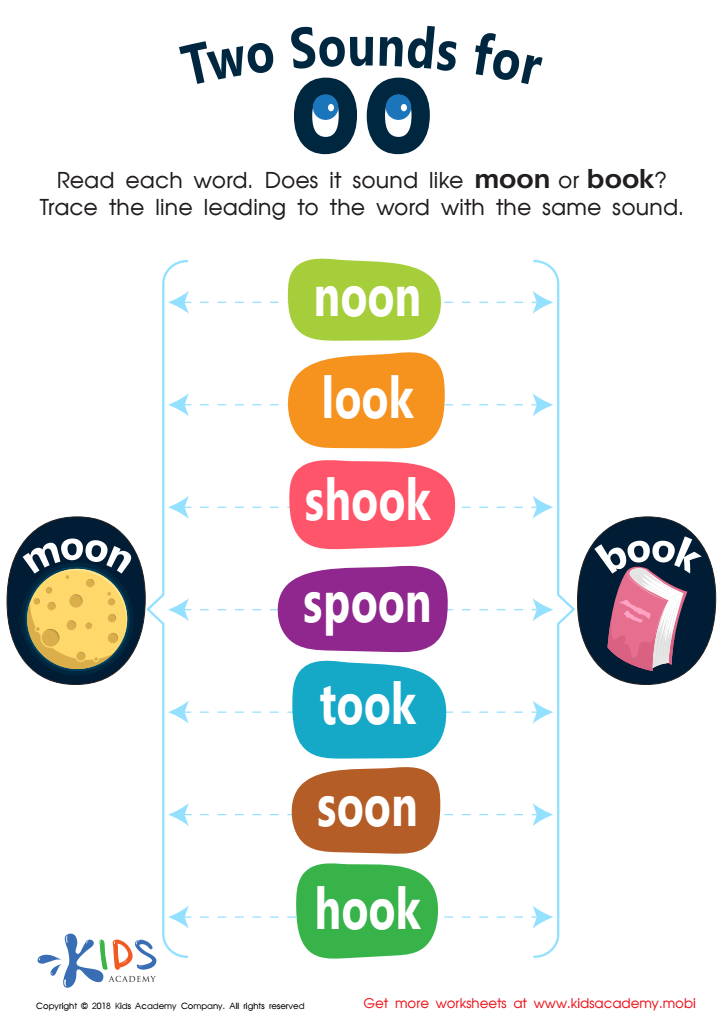
Two Sounds for OO Worksheet

Two Sounds for OO Worksheet

This worksheet helps kids learn the different sounds of the -oo digraph. They match words based on whether they sound like moon or book, plus practice fine motor skills tracing lines. Fun and educational!
Two Sounds for OO Worksheet
Worksheet
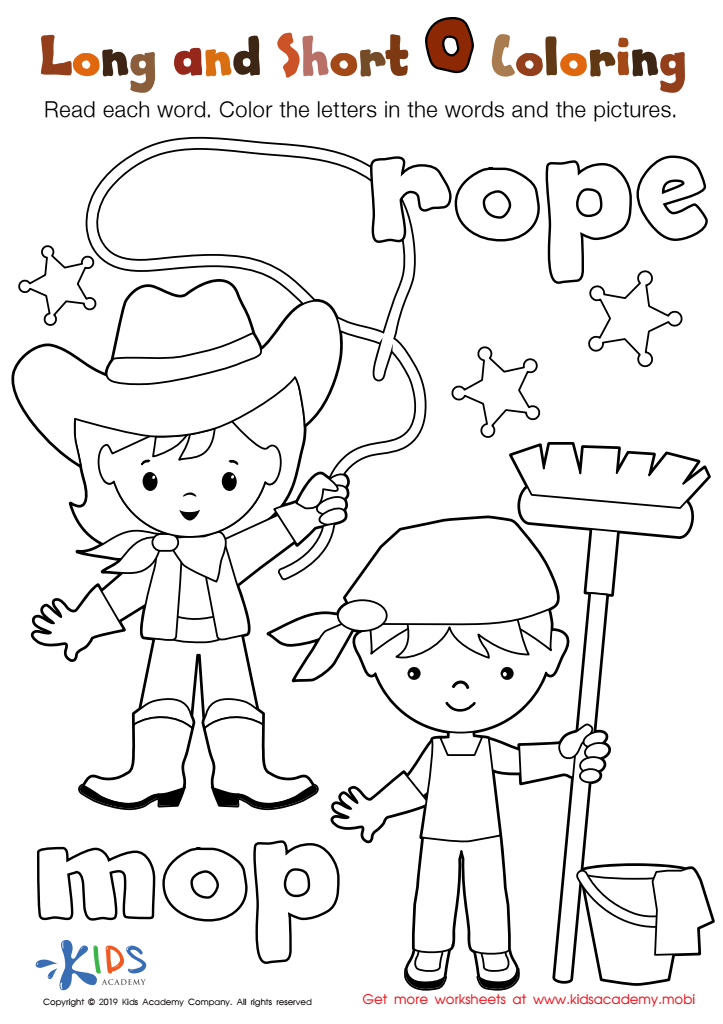
Long and Short O Worksheet

Long and Short O Worksheet

Help your students recognize the difference between long and short «Os» with this fun printout. Let them read and color-in "rope" and "mop" simultaneously. Listen to the different sounds, then color the words and pictures. Great for classes, it'll make your phonics lesson memorable and enjoyable.
Download (PDF)
Assign to My Students
Long and Short O Worksheet
Worksheet
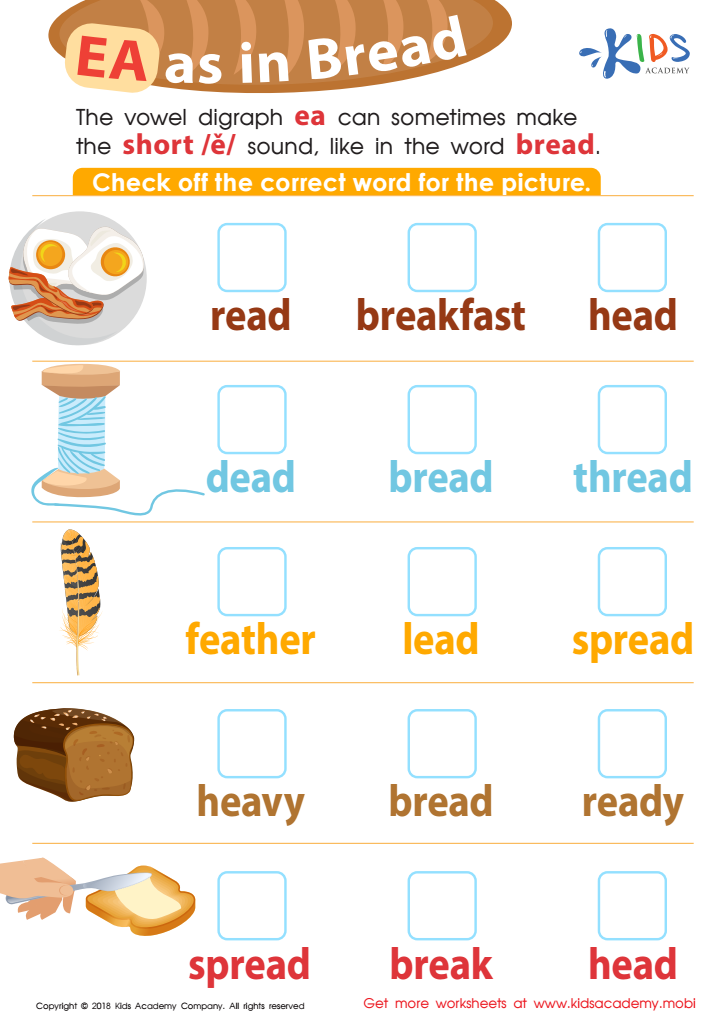
Reading: EA as in Bread Worksheet

Reading: EA as in Bread Worksheet

The vowel digraph ea can be read in two ways. Examples of the long sound are "read" and "lead"; examples of the short sound are "bread" and "head". Ask your kids to give you more examples and then have them check off the correct word for the pictures on this worksheet. This will help them understand the ea sound.
Reading: EA as in Bread Worksheet
Worksheet


Vocabulary expansion, specifically focusing on normal short vowels, is crucial for children aged 3-8 because it lays the foundation for their overall literacy development. Early language skills are integral to children's cognitive growth, allowing them to express their thoughts and connect with others effectively.

Short vowels, such as those in words like "cat," "bed," and "hot," serve as building blocks for phonetic awareness. By familiarizing children with these sounds, parents and teachers help them decode words, enhancing reading proficiency. A strong grasp of short vowels not only aids in pronunciation but also encourages early reading and writing skills, making them more confident learners.

Furthermore, vocabulary expansion improves comprehension and creative expression. As children learn to associate short vowels with various words, their ability to convey ideas and understand others also improves. It influences their performance in school, as a robust vocabulary is a predictor of future academic success.

Beyond academics, effective communication boosts children's social interactions and emotional development. When parents and teachers prioritize vocabulary expansion with short vowels, they empower children with essential tools that will benefit them throughout their lives, fostering a love for learning and exploration.