
Vocabulary enhancement Normal Vowel Diphthongs Worksheets for Ages 3-8
4 filtered results
Difficulty Level
Grade
Age
-
From - To
Subject
Activity
Standards
Discover our engaging Vocabulary Enhancement Normal Vowel Diphthongs Worksheets designed specifically for children ages 3-8. These interactive resources foster language development by aiding young learners in mastering vowel diphthongs through fun activities. Each worksheet encourages exploration of sounds and pronunciation while expanding vocabulary. Perfect for early grade teachers and parents, these worksheets ensure a playful yet educational experience, helping children build essential reading and speaking skills. Enhance your child’s learning journey with colorful illustrations, exciting exercises, and a variety of games that make mastering diphthongs enjoyable. Start building a strong foundation in language with our thoughtfully crafted worksheets today!
Favorites
With answer key
Interactive
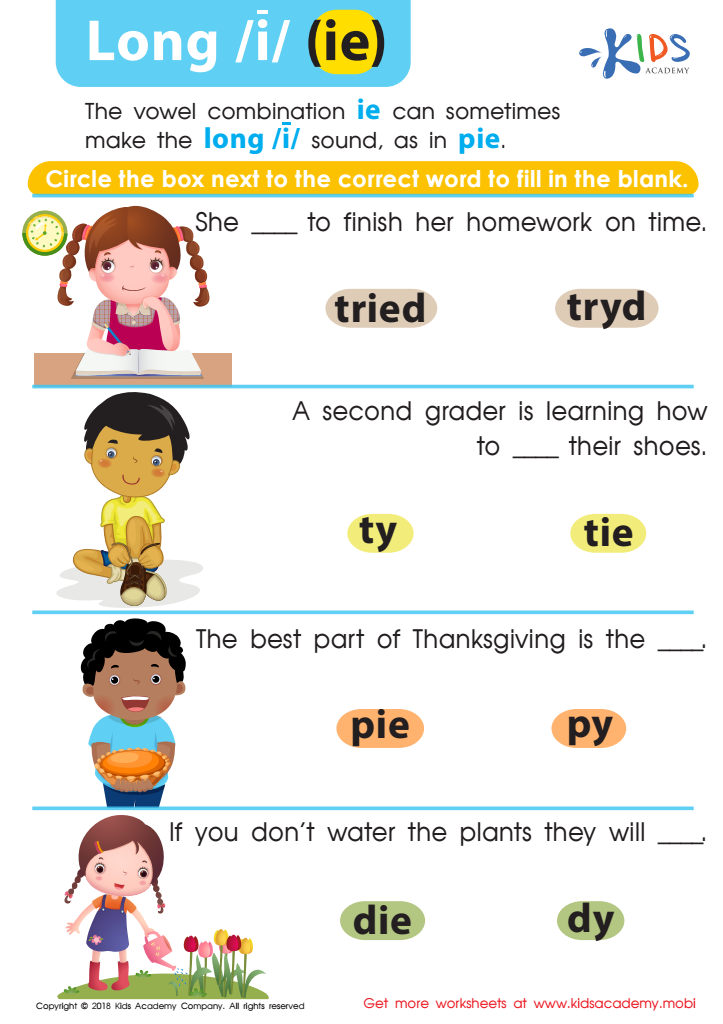
Reading: Long I and IE Worksheet
Have your child list words with the long /i/ sound (eg. 'pie'), and if needed, help them out with some examples. Read each word in the worksheet together and check their answer by having them circle the correct word.
 Assign to My Students
Reading: Long I and IE Worksheet
Worksheet
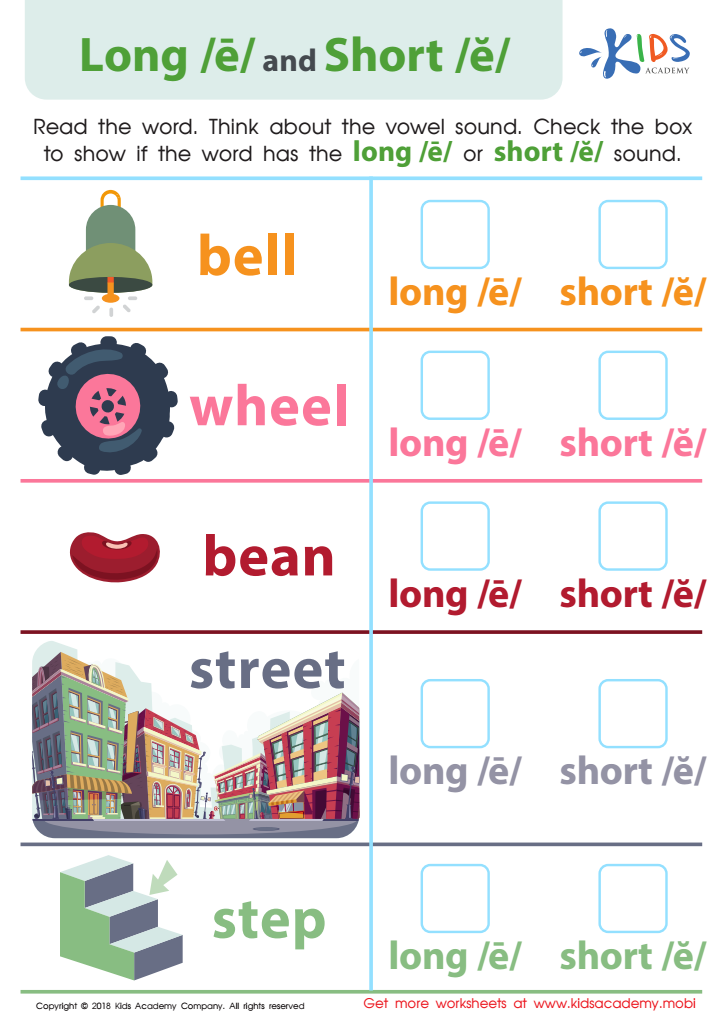
Reading: Long E and Short E Worksheet
Provide your students with valuable practice in distinguishing long and short E sounds with this worksheet. They'll look at pictures and read the words, then decide which sound is being used. It's an effective tool to help them master a difficult concept.
Reading: Long E and Short E Worksheet
Worksheet
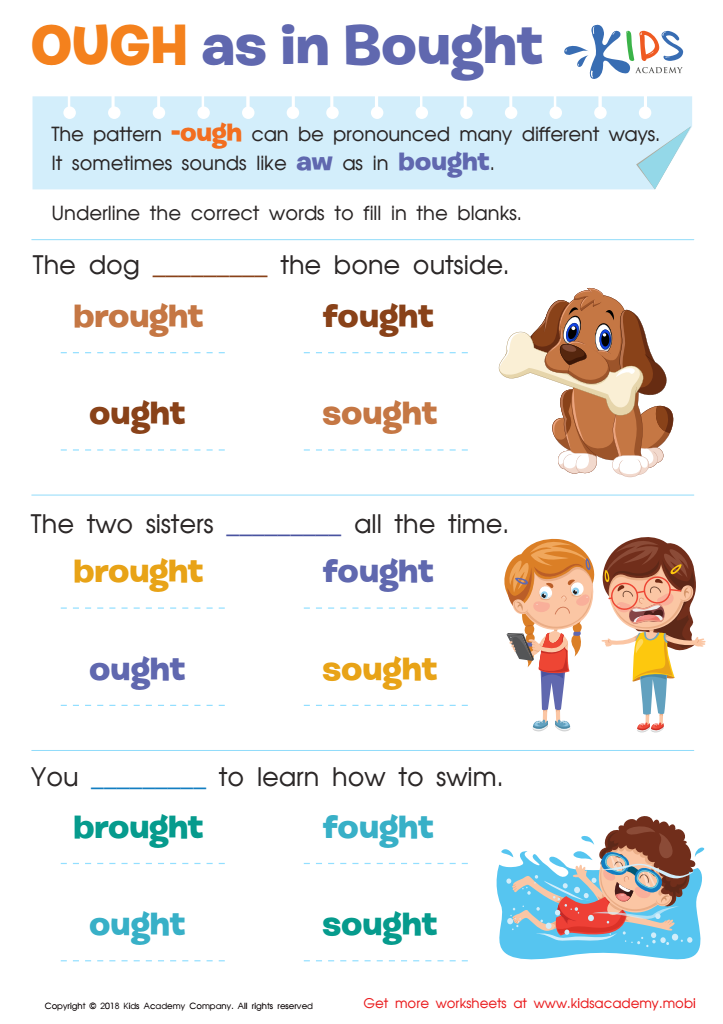
OUGH as in Bought Worksheet
Use this worksheet to teach your child the different pronunciations of -ough. For example, -ough can sound like ‘aw’ in ‘bought’. Ask your child to give more examples and help them underline the correct answers to fill in the blanks.
OUGH as in Bought Worksheet
Worksheet
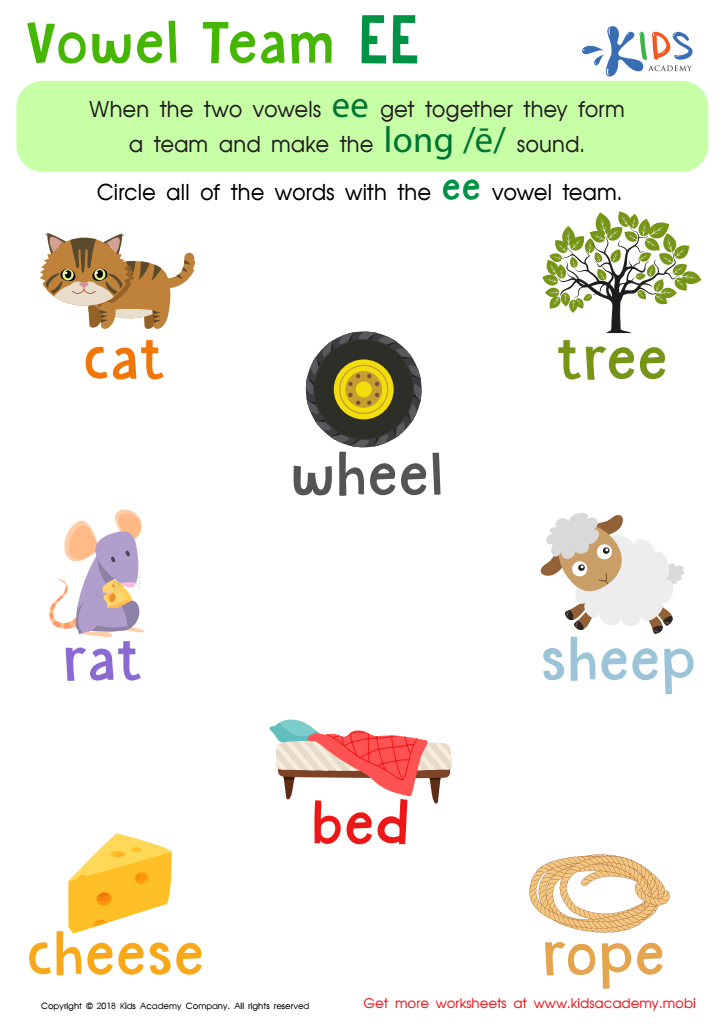
Reading: Vowel Team EE Worksheet
This worksheet is perfect for helping young learners master the /ee/ vowel team. It shows the first vowel with a long sound and the second vowel silent. It also provides pictures for unfamiliar words for readers of all levels. It's an ideal resource for teaching phonics skills.
Reading: Vowel Team EE Worksheet
Worksheet
Join Kids Academy for Free
Who is primarily going to use this learning content?


Vocabulary enhancement, particularly focusing on normal vowel diphthongs, is crucial for children ages 3-8 for several reasons. First, mastering diphthongs helps improve phonetic awareness, which is foundational for early reading skills. These two-vowel sounds, like "oi" in "boil" or "ow" in "cow," promote better decoding abilities, enabling young learners to recognize words more easily.
Second, a richer vocabulary enhances communication skills, allowing children to express themselves more clearly and confidently. It fosters their ability to engage in conversations, participate in storytelling, and convey emotions effectively, which is vital for social development.
Furthermore, engaging with vocabulary also supports cognitive growth; children begin to understand nuances in meaning, fostering critical thinking abilities. As they learn about diphthongs, they also develop a greater appreciation for language, creativity, and storytelling, which enhances overall literacy development.
Finally, parents and teachers play a pivotal role in this process by providing diverse linguistic experiences. By nurturing vocabulary enhancement related to diphthongs, they set the stage for academic success and lifelong language skills, ultimately empowering children in their learning journeys and everyday interactions. Engaging them early ensures they are better prepared for future literacy challenges.








