Vocabulary enhancement Normal Vowel Team Worksheets for Ages 3-8
5 filtered results
Difficulty Level
Grade
Age
-
From - To
Subject
Activity
Standards
Enhance your child’s vocabulary with our engaging Normal Vowel Team Worksheets, designed specifically for ages 3-8. These interactive resources make learning fun and effective, helping young learners master essential vowel combinations. Our engaging activities improve phonics skills while expanding word recognition and usage in everyday conversations. Each worksheet supports playful learning, ensuring children develop a solid foundation in vocabulary through vibrant illustrations and relatable word examples. Perfect for homeschoolers and classroom settings alike, our worksheets instill a love for reading and language. Unlock your child’s potential today and watch them grow into confident communicators with our valuable learning tools!
Favorites
With answer key
Interactive
Vowel team ee Worksheet
Revised:
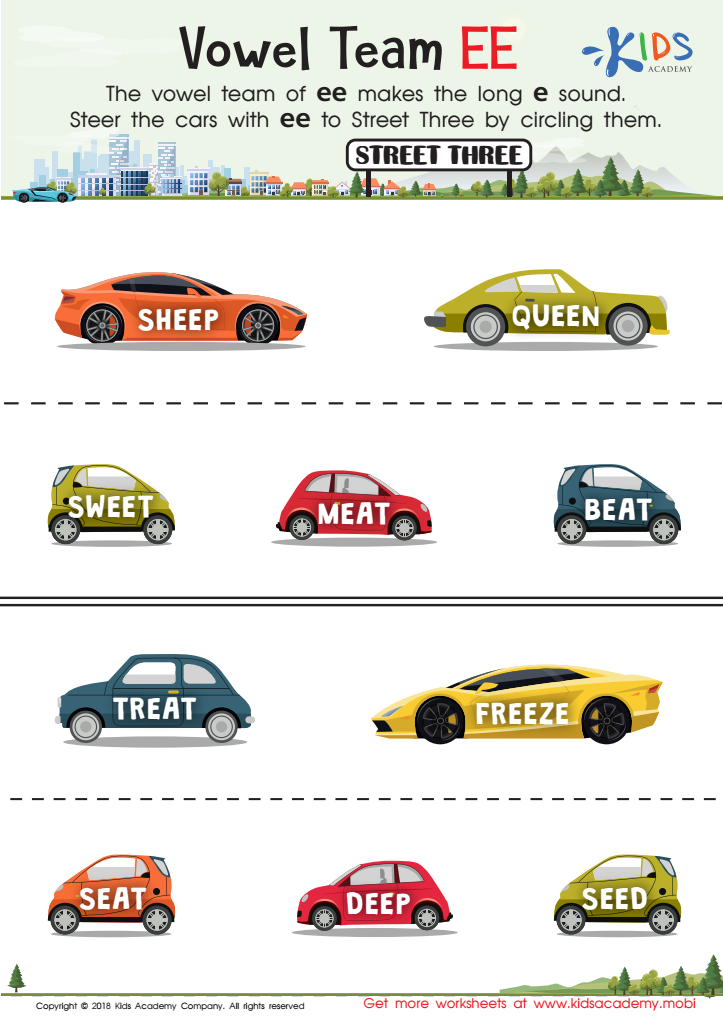
Kids will have a blast steering cars with the -ee digraph towards Street Three! This fast-paced worksheet reinforces that -ee makes the long -e sound while boosting fine motor skills. Kids will love the bright colors and stay engaged with this fun printable. Get ready for hours of off-road excitement!
 Assign to My Students
Vowel team ee Worksheet
Worksheet
Reading: Long E and IE Worksheet
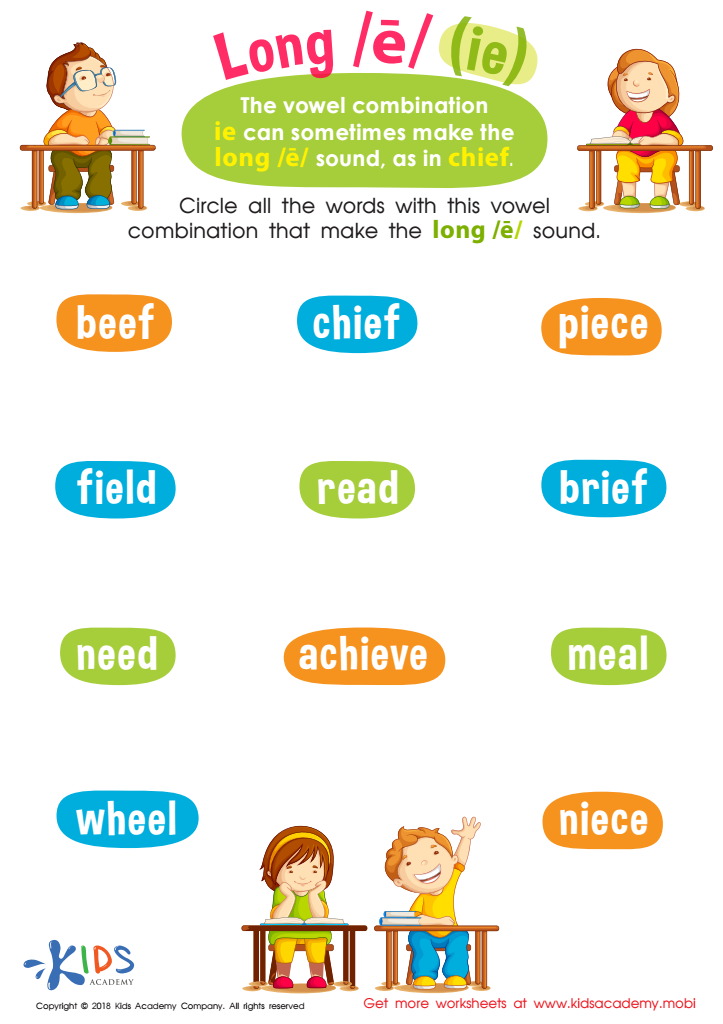
Ask your child to name some words with the long /e/ sound they hear every day. Then, read aloud all the words in the worksheet with them. Ask them to circle the words containing ie that make this sound.
Reading: Long E and IE Worksheet
Worksheet
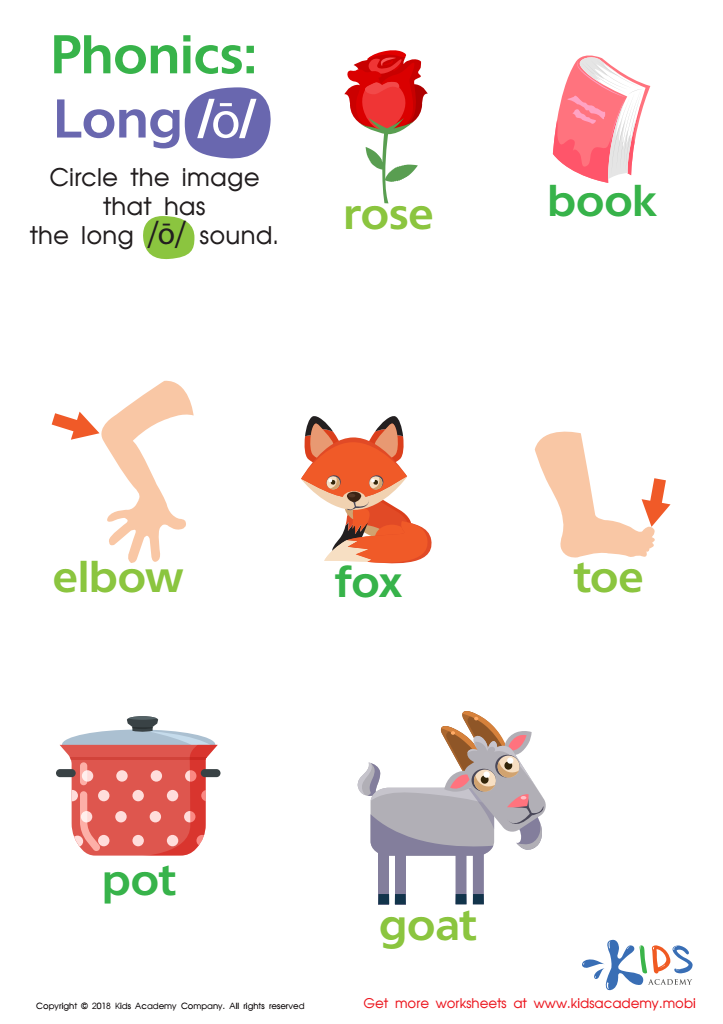
Phonics Long O Reading Worksheet
Are you ready to help your child learn the phonics long «o» sound? This worksheet is designed to aid them in getting familiar with the sound. After completing the exercise, your child should be able to differentiate letters, and recognize words with the long «o» sound. Encourage them to circle the images that have the sound.
Phonics Long O Reading Worksheet
Worksheet
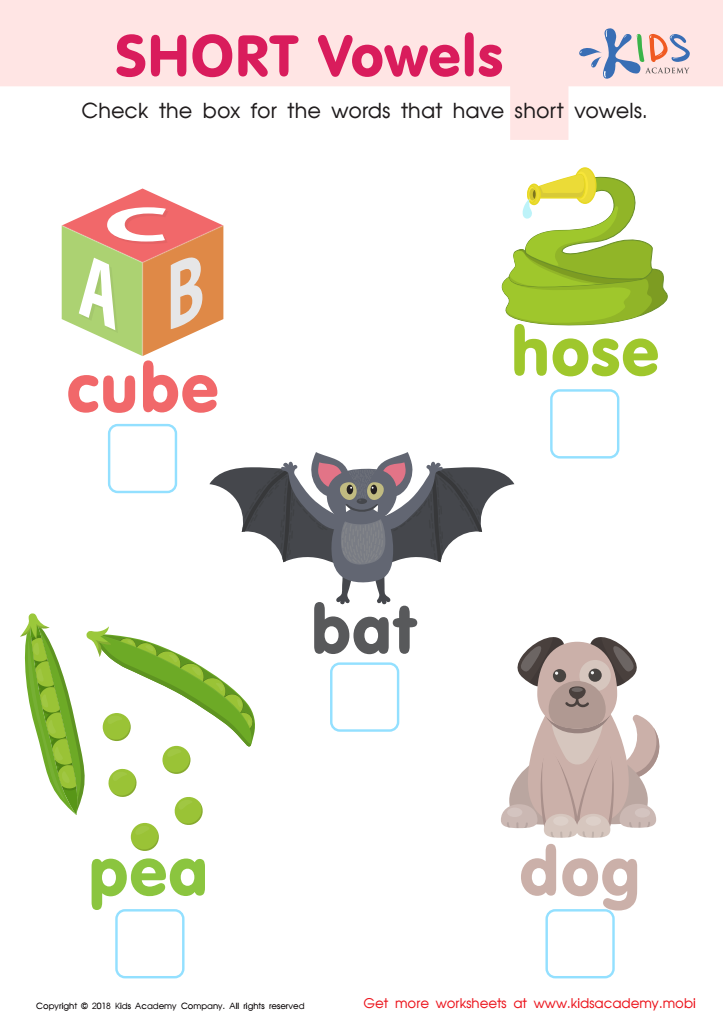
short vowels Worksheet
Say "dog" and notice how long it takes to pronounce the vowel. Is it short or long? Compare it to "pea" and use this worksheet to quickly assess your child's mastery. Have them name each picture and listen for the vowel sounds. Only check the boxes for words with short vowel sounds.
short vowels Worksheet
Worksheet
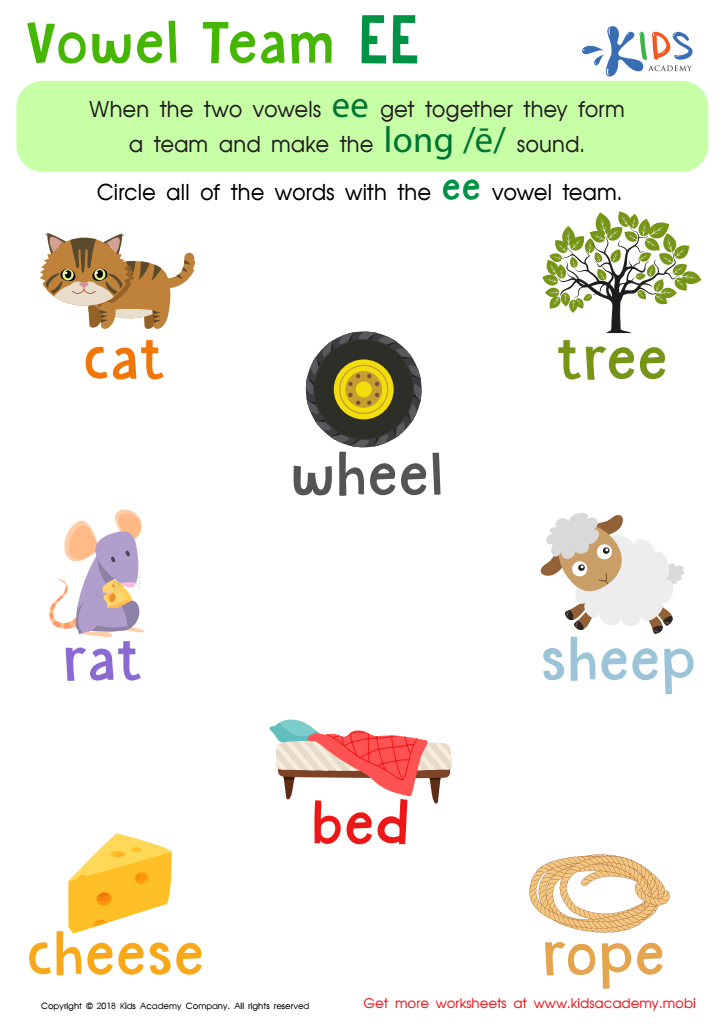
Reading: Vowel Team EE Worksheet
This worksheet is perfect for helping young learners master the /ee/ vowel team. It shows the first vowel with a long sound and the second vowel silent. It also provides pictures for unfamiliar words for readers of all levels. It's an ideal resource for teaching phonics skills.
Reading: Vowel Team EE Worksheet
Worksheet
Join Kids Academy for Free
Who is primarily going to use this learning content?



Vocabulary enhancement through the normal vowel team methodology is crucial for children aged 3-8 as it lays the foundational building blocks for reading and comprehension. In these formative years, children's brains are incredibly receptive to language and phonetics, making it an ideal time to introduce phonemic awareness and vowel sounds. Normal vowel teams, such as 'ai,' 'ea,' and 'oo,' allow children to recognize patterns in words, helping them decode unfamiliar terms more easily as they progress in their reading journey.
When parents and teachers prioritize vocabulary enhancement, they foster not only better recognition of sight words but also improve overall literacy skills. A rich vocabulary boosts children's confidence in communication—both verbal and written—and promotes their ability to express thoughts and emotions accurately. Moreover, enhanced vocabulary is linked to academic achievement and critical thinking abilities, setting children on a path to success in school.
Engaging in fun and interactive activities that focus on normal vowel teams can make learning enjoyable. This foundational phonetic knowledge instills a lifelong love for reading, ultimately cultivating curious, enthusiastic learners. By investing time in vocabulary enhancement, parents and teachers play a vital role in shaping the future literacy skills of children.