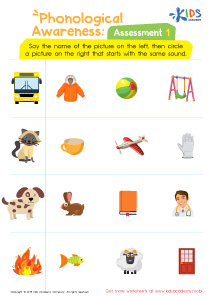
Vocabulary development Normal Vowels Worksheets for Ages 3-8
6 filtered results
-
From - To
Enhance your child's vocabulary with our engaging normal vowels worksheets, designed for ages 3-8. These interactive printable resources focus on developing essential language skills while helping young learners identify and use vowels correctly. Each worksheet features age-appropriate activities that blend fun with education, making vocabulary expansion enjoyable. From matching words to filling in blanks, your child will explore a variety of tasks that strengthen their understanding of vowel sounds and enhance reading readiness. Perfect for parents and teachers, our worksheets support early literacy development and encourage independent learning. Unlock the potential of your little ones' vocabulary with our fun, effective tools today!
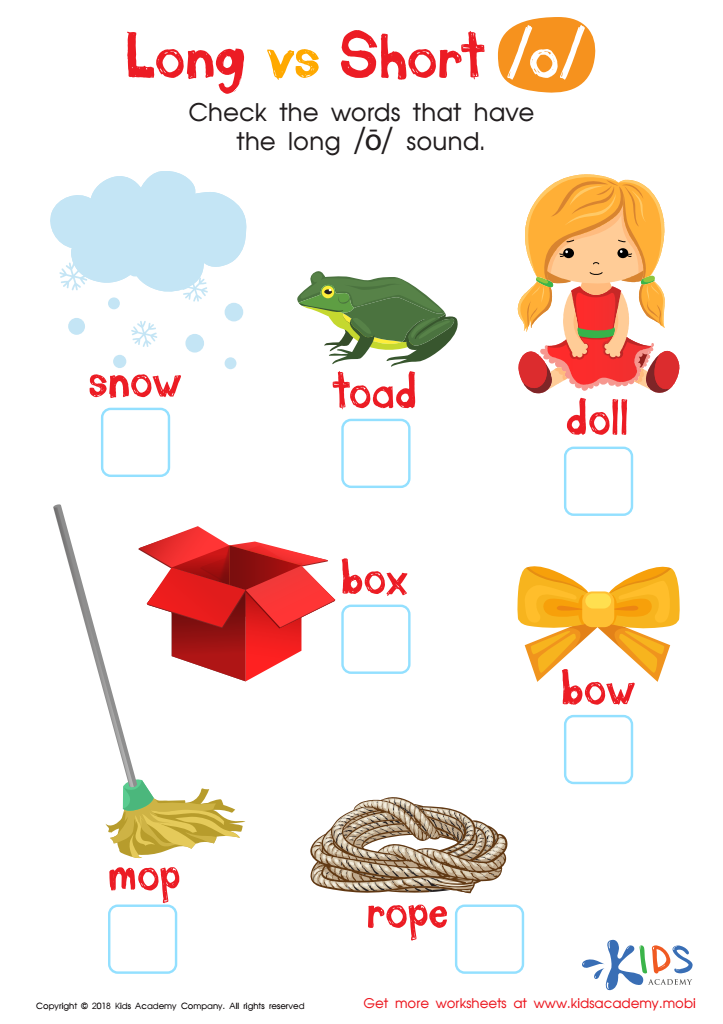
Long vs Short O Reading Worksheet
 Assign to My Students
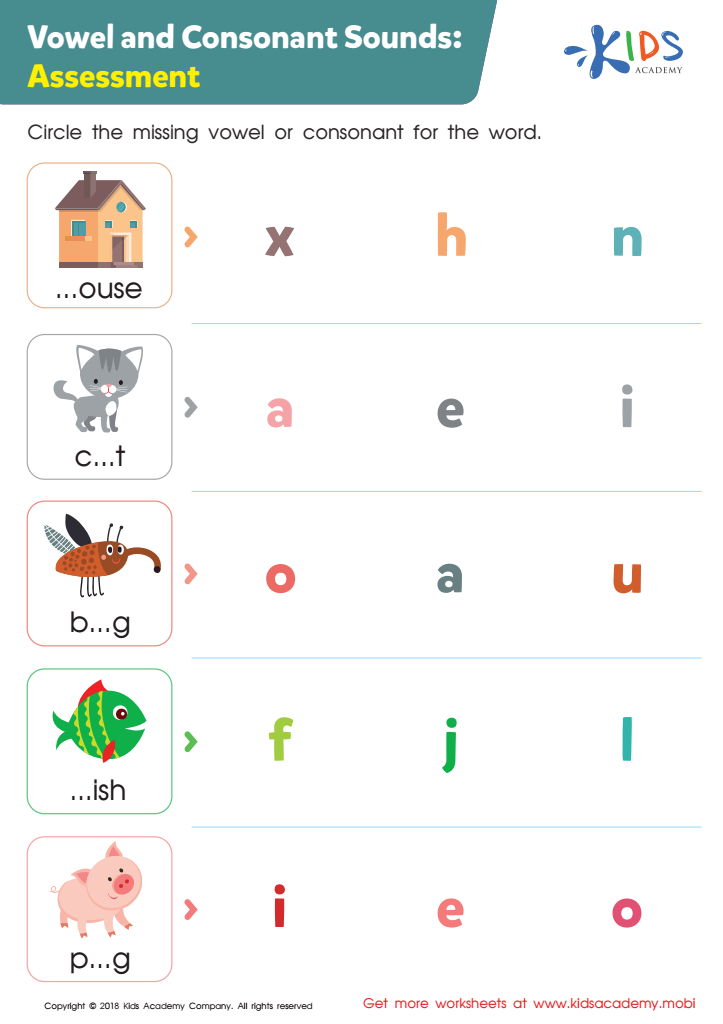
Vowel and Consonant Sounds: Assessment Worksheet
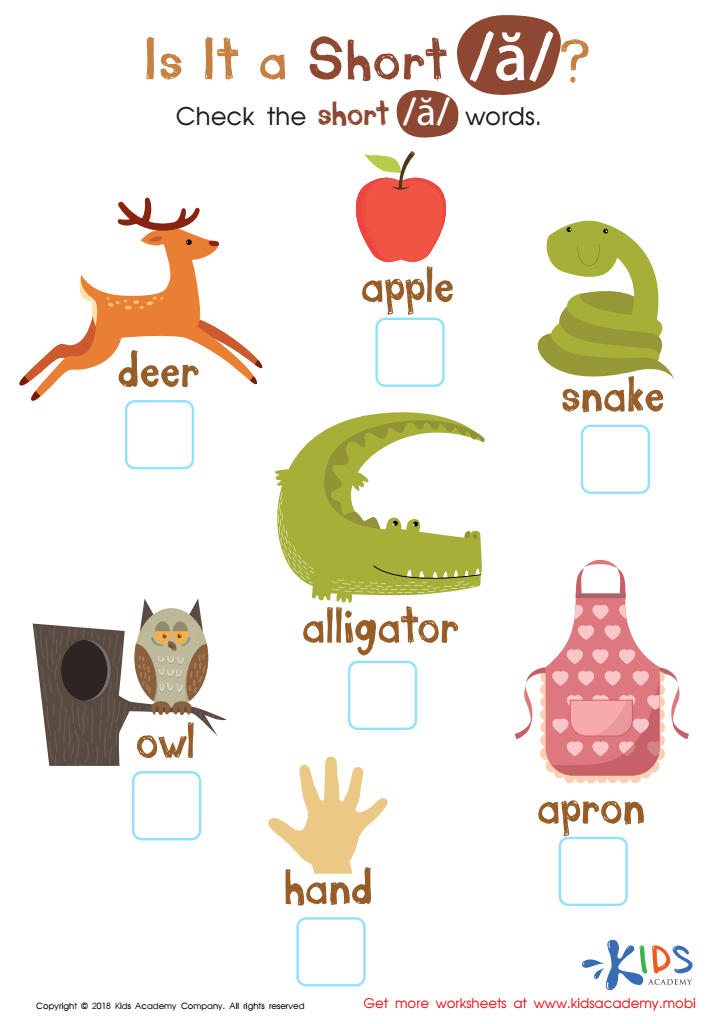
Is It Short A? Reading Worksheet
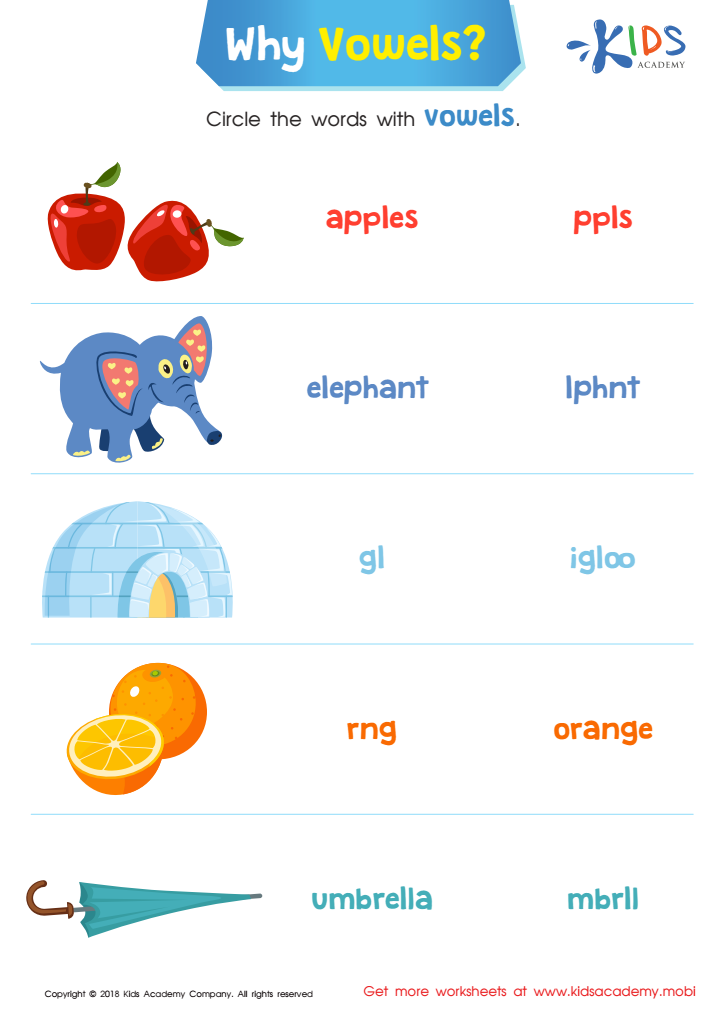
Why Vowels? Reading Worksheet
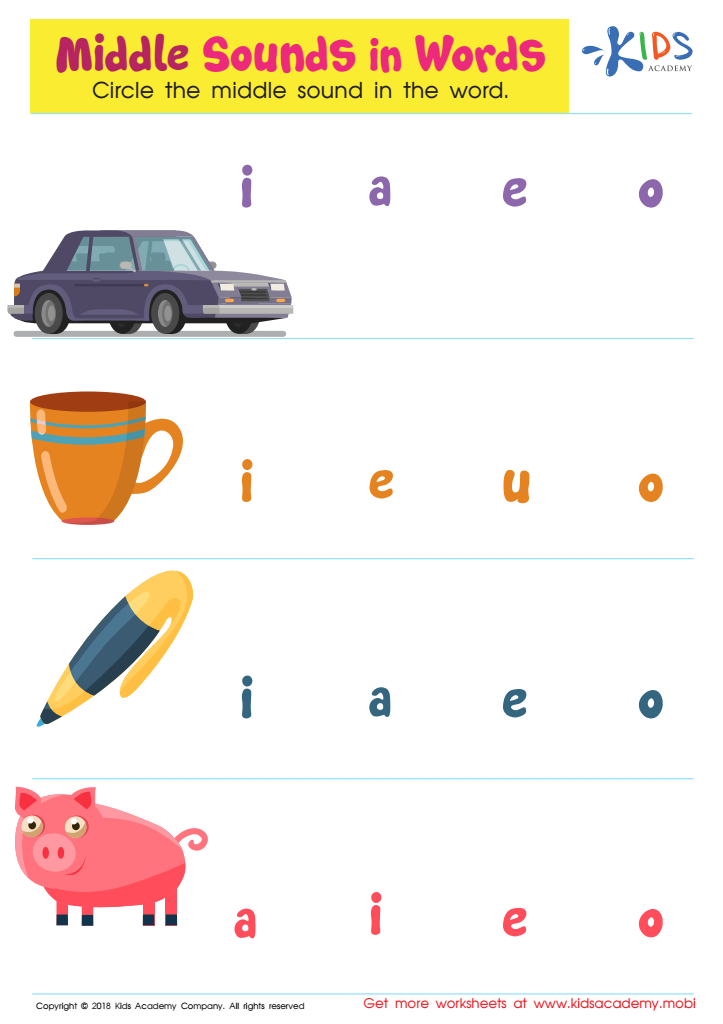
Middle Sounds in Words Worksheet
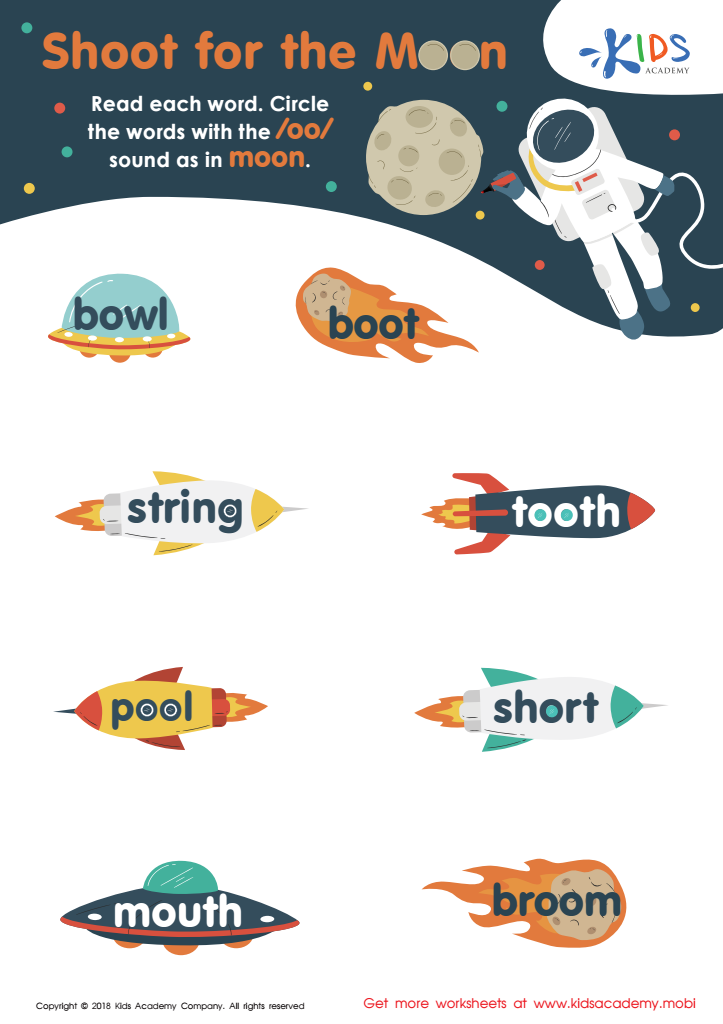
Reading: Shoot for the Moon Worksheet





Vocabulary development, particularly in the early years, is crucial for children aged 3-8, as it forms the foundation for effective communication, reading comprehension, and overall academic success. During this critical period, children are rapidly acquiring language skills, including understanding and producing normal vowels—a key aspect of phonetics that greatly influences their ability to articulate words clearly.
When parents and teachers prioritize vocabulary development that includes normal vowels, they equip children with essential tools for expressing their thoughts and ideas. A robust vocabulary enables children to engage in conversations, follow directions, and interact socially with peers. This not only enhances their communicative abilities but also builds confidence, fostering a positive self-image.
Additionally, a strong vocabulary is directly linked to literacy. Children who grasp vowel sounds and their applications tend to read more proficiently, which further enhances their learning across all subjects. Parents and teachers can support this development through engaging activities like singing songs, playing rhyming games, and reading age-appropriate books that emphasize vowel sounds. By actively participating in this aspect of language development, adults play a vital role in shaping children's futures, enabling them to become effective communicators and lifelong learners.