Filters

80 filtered results

Clear all filters
Favorites
With answer key
Interactive

80 filtered results

Difficulty Level

Grade


Check out this FREE Trial Lesson on English for Beginners for age 3-8!

D

Favorites
With answer key
Interactive
  • 3-8
  • English for Beginners
  • Normal
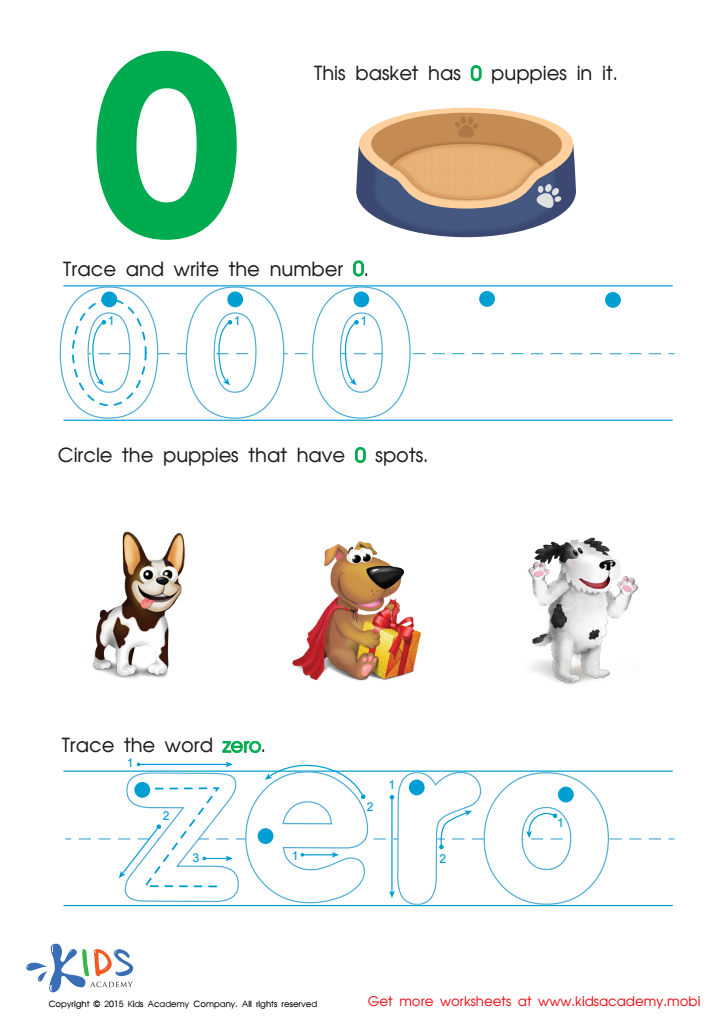
Learning Numbers Worksheets: Trace And Write Number 0 PDF Worksheet

Trace And Write Number 0 Worksheet

Let’s learn numbers together! Start with zero: practice writing, counting, matching spots. Tracing lines will help. Then move on to the collection of number worksheets. Enjoy learning with Kids Academy!
Trace And Write Number 0 Worksheet
Worksheet
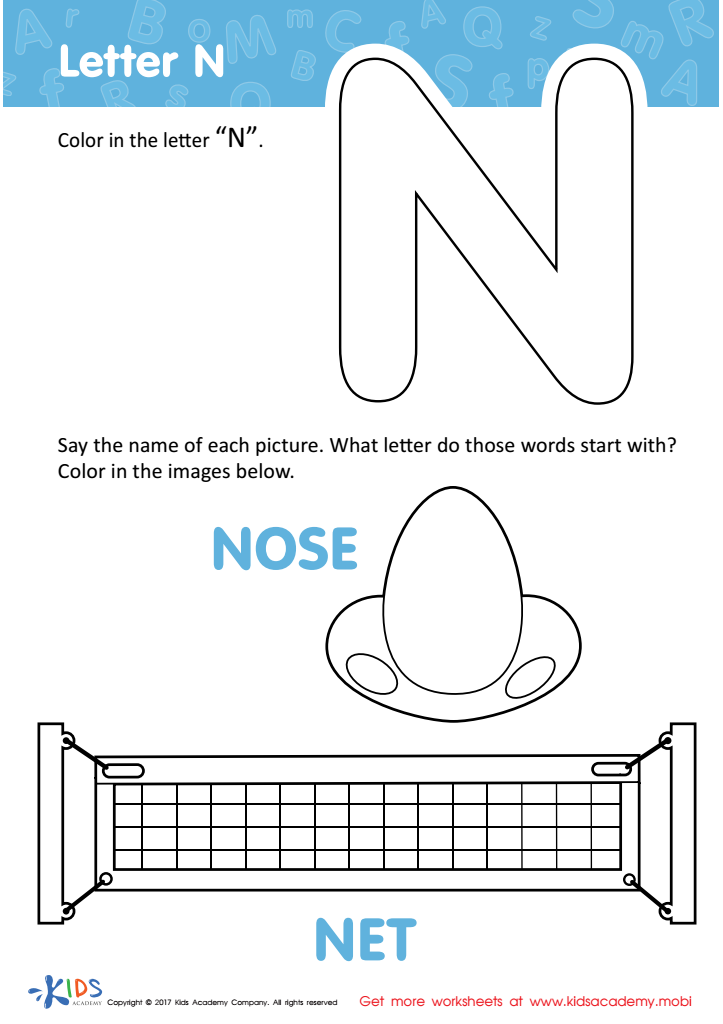
Letter N Coloring Page

Letter N Coloring Sheet

Let your child get creative and learn the alphabet with this letter "N" coloring page! It's a fun way to recognize the letter, featuring a body part all kids know. Coloring and reinforcing recognition of "N" will help your child have fun while learning!
Download (PDF)
Assign to My Students
Letter N Coloring Sheet
Worksheet
letter d worksheets
letter d worksheets

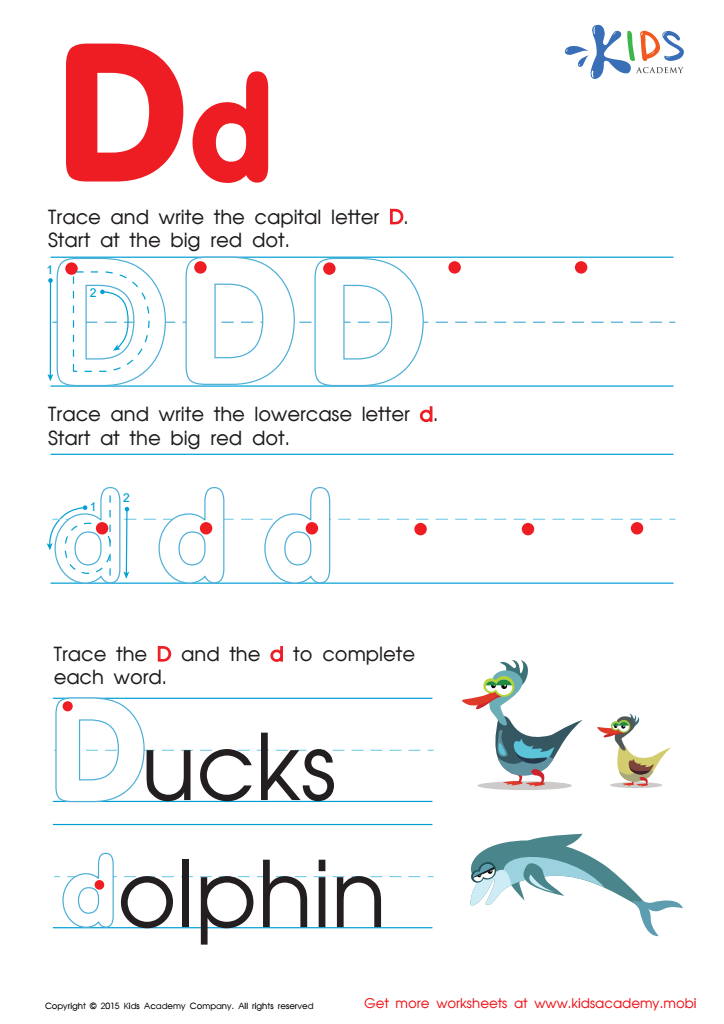
Letter D Tracing Page

Trace and write capital and lowercase letter "D" with our free printable alphabet worksheet! Be careful not to mix up "b" and "d" - just look at the ducks and write their first letter. The dolphin wants to join the fun too - do you like dolphins? Get more fun worksheets and activities at Kids Academy!
Letter D Tracing Page
Worksheet
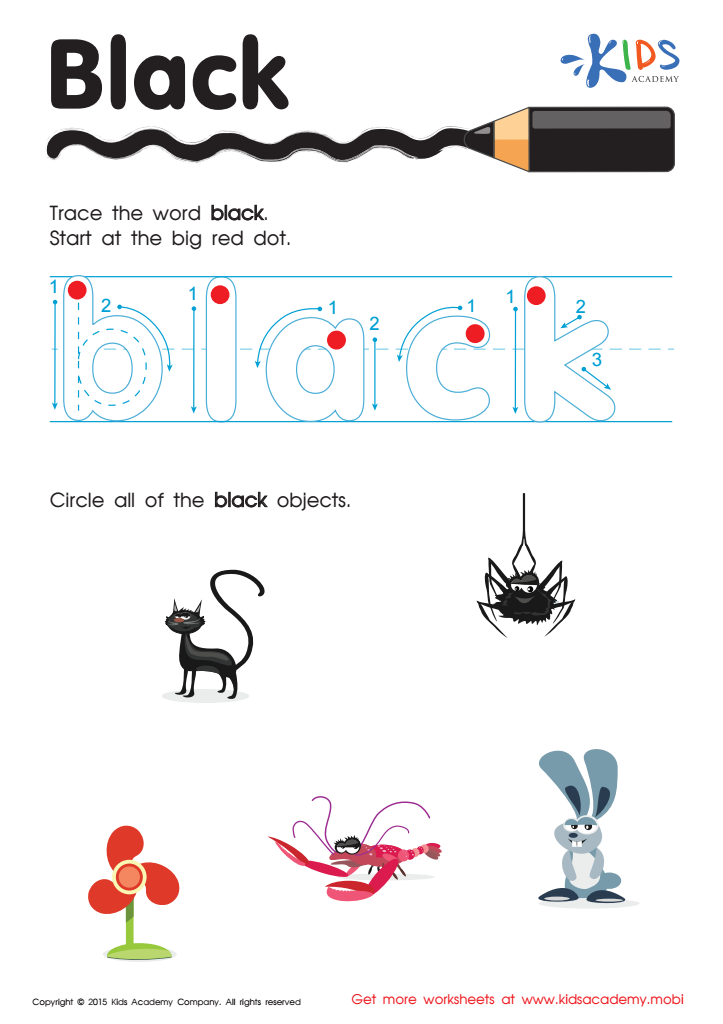
Handwriting PDF Worksheets | Tracing Color Words | Black

Black Tracing Color Words Printable

Tracing is essential for kids to learn good handwriting and boost their fine motor skills. This handwriting worksheet lets kids trace the word "black" letter by letter using a black crayon and spot all the black items. With this free printable, they'll have fun while writing! For more practice, check out the link.
Black Tracing Color Words Printable
Worksheet
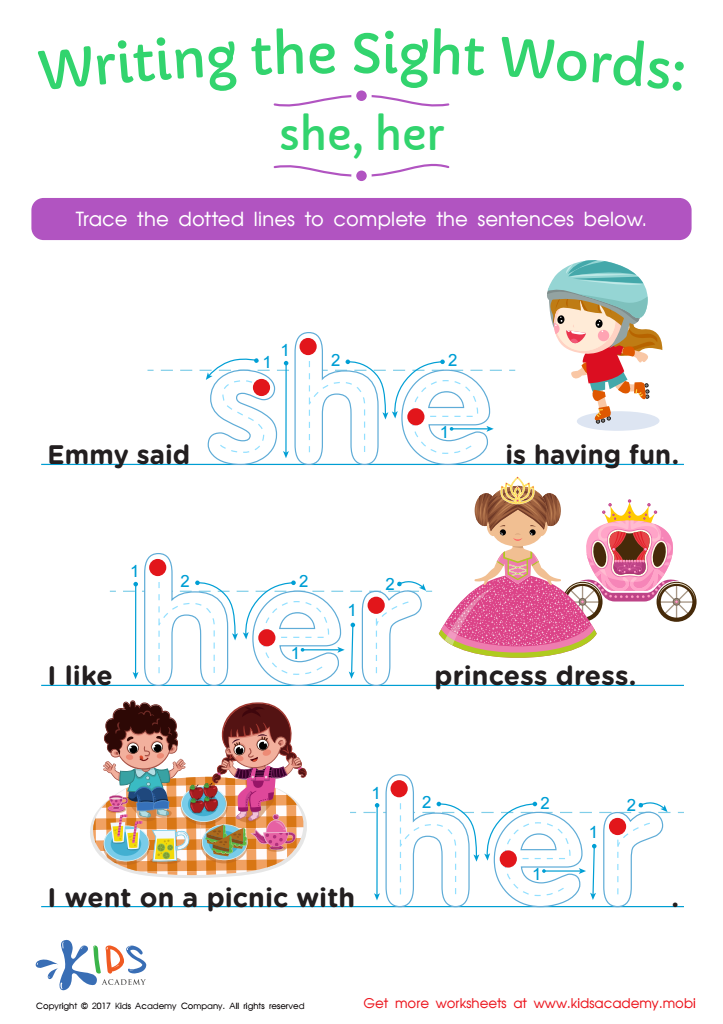
Sight Word Tracing Worksheet: She, Her

She, Her Printable Sight Words Worksheet
Help your child build literacy with daily sight word tracing! Have them read and trace the words 'she' and 'her' for a fun, focused practice. It's a great way to develop reading and writing skills.
She, Her Printable Sight Words Worksheet
Worksheet
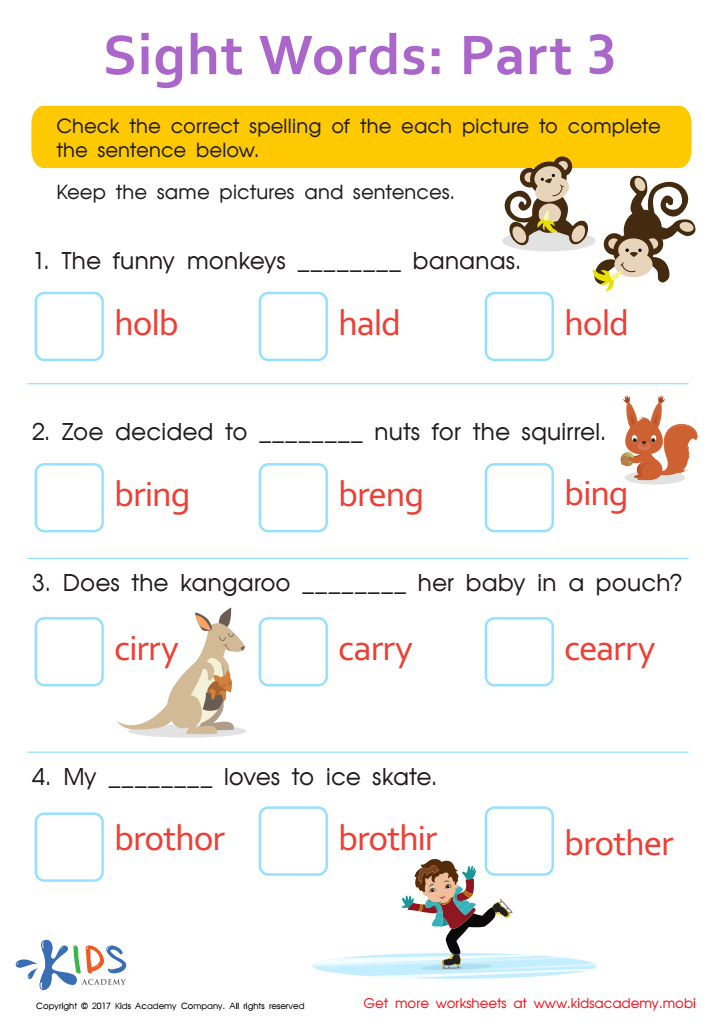
Sight Words Worksheet: Hold, Bring, Carry, Brother

Hold, Bring, Carry, Brother Sight Words Worksheet
This sight words worksheet has fun illustrations to engage kids. They must read each sentence, then fill in the missing word, selecting from: hold, bring, carry, brother!
Hold, Bring, Carry, Brother Sight Words Worksheet
Worksheet
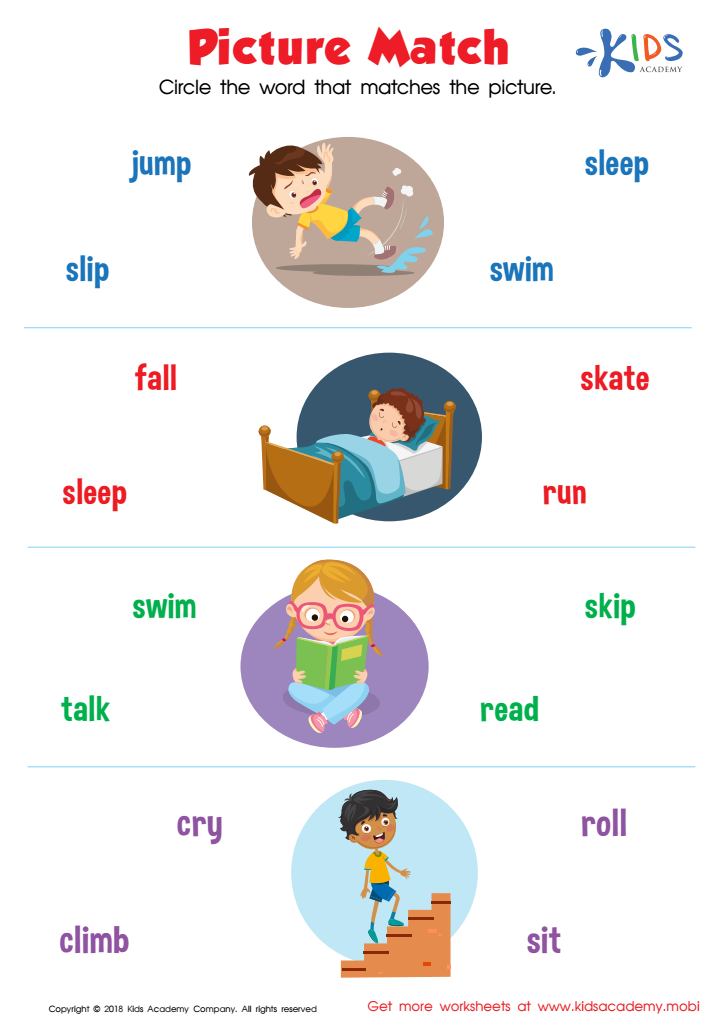
Picture Match Worksheet

Picture Match Worksheet

If your kids can read, this exercise will be a breeze. Show the pictures and ask them what's happening. Read the words and see if they can identify any of them and help them circle the word that matches the picture. Simple!
Picture Match Worksheet
Worksheet
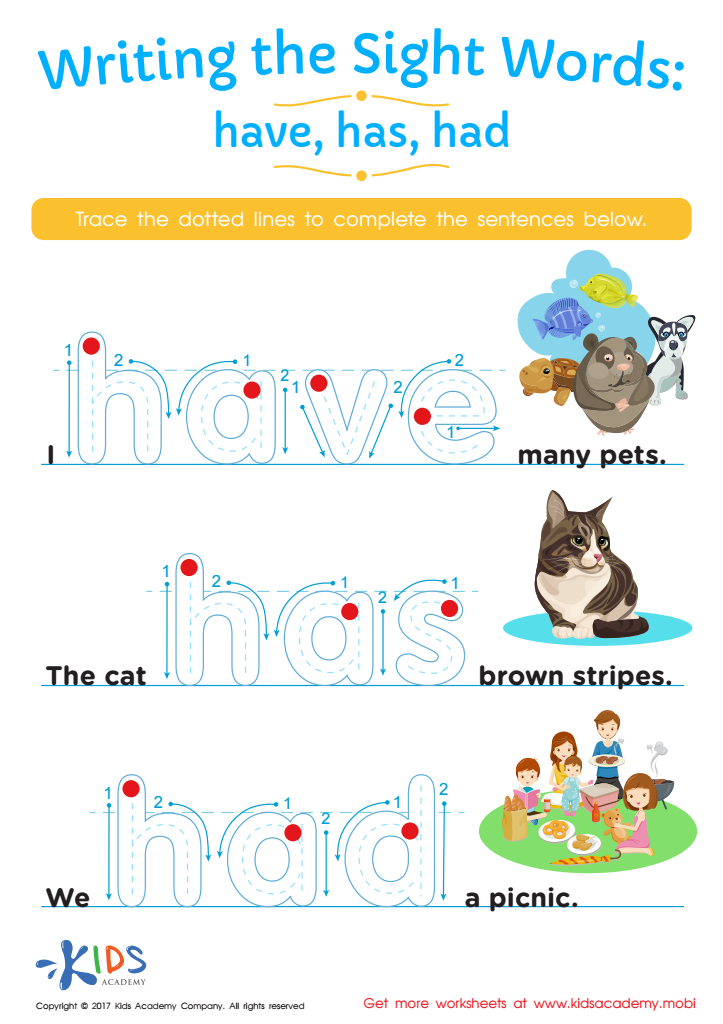
Writing the Sight Words: Have, Has, Had

Have, Has, Had Worksheet Sight Words Worksheet

Writing and reading go hand-in-hand. Build your child's literacy with this helpful worksheet, focusing on the sight words - have, has, had. Have them read through the sentences and trace the words to master the skill.
Have, Has, Had Worksheet Sight Words Worksheet

Worksheet


... 3 4

Teaching Normal English to young children aged 3-8 is crucial for their cognitive, social, and academic development. This age range is a foundational period for language acquisition, as children's brains are highly adaptable and primed for learning new languages. By focusing on Normal English during these early years, parents and teachers lay a strong foundation for effective communication skills, which are essential for success in later stages of education and life.

Firstly, mastering Normal English fosters cognitive development. It enhances children's abilities to think critically, solve problems, and understand complex concepts. Language skills also play a significant role in memory retention and the ability to grasp new ideas.

Secondly, language proficiency boosts social development. Effective communication helps children express their needs and emotions more clearly, promoting healthier interactions with peers and adults. This is particularly important for building friendships and social networks, which are crucial for emotional well-being.

Lastly, a strong grasp of Normal English is vital for academic success. Reading, writing, and comprehension skills are essential in virtually every subject. Early language proficiency gives children a head start in their educational journeys, providing them with the tools they need to excel academically.

In summary, investing in Normal English for young children paves the way for a brighter, more successful future by enriching their cognitive, social, and educational experiences.