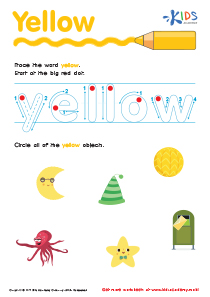
Alphabetical order understanding Normal English for Beginners Worksheets for Ages 3-8
3 filtered results
-
From - To
Explore our engaging "Alphabetical Order Understanding" worksheets designed for young learners aged 3-8! These beginner-friendly resources simplify the concept of alphabetical order, helping children enhance their English language skills in a fun, interactive way. Each worksheet features colorful illustrations and creative activities that encourage sorting words and items alphabetically. Ideal for teachers and parents, these worksheets promote early literacy, vocabulary development, and critical thinking. Perfect for classrooms and home learning, they cater to ESL students and those starting their journey in English. Download now and support your child's learning in a playful and effective manner!

Letter G Tracing Page
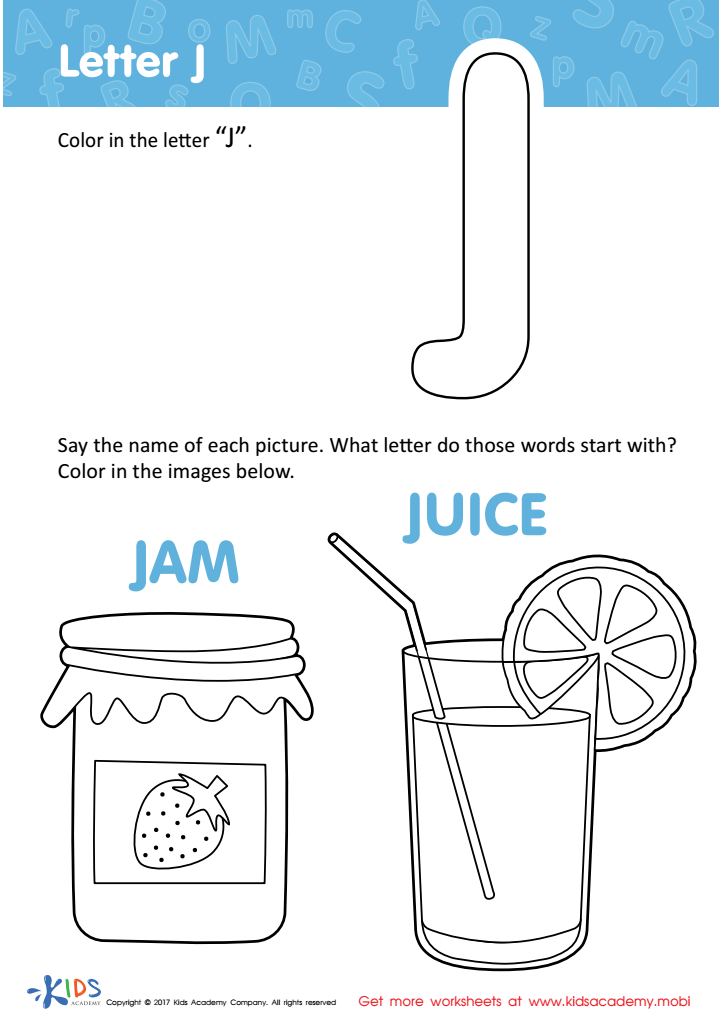
Letter J Coloring Sheet
 Assign to My Students
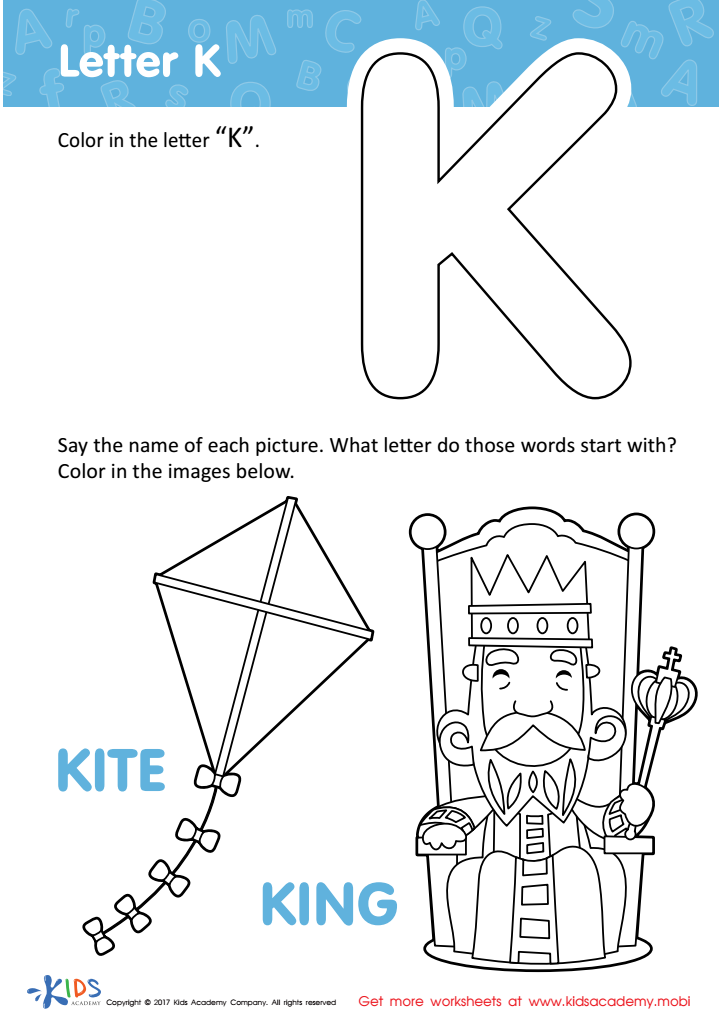
Letter K Coloring Sheet
Assign to My Students




Understanding alphabetical order is fundamental for children aged 3-8, as it lays the groundwork for literacy and organizational skills. This essential skill not only aids in reading and writing but also fosters independence when navigating books, dictionaries, and other resources.
For parents and teachers, promoting alphabetical order knowledge helps young learners develop a critical understanding of letters and their sequence, enhancing phonemic awareness, which is crucial for decoding words. This skill boosts their confidence in reading independently, enabling them to explore literature and develop a love for reading.
Furthermore, sorting items alphabetically teaches organization and categorization, which are valuable life skills. Children learn to track information and recognize patterns, shaping their cognitive processes and enhancing their problem-solving abilities.
Engaging children through playful activities, such as organizing toys, singing the alphabet song, or using flashcards, makes learning enjoyable. Encouraging exploration of books and reading together not only strengthens this skill but also creates bonding moments. Hence, parents and teachers should care about alphabetical order, as it is a vital stepping stone in a child’s educational journey, paving the way for future academic success and confidence in their literacy abilities.