Basic Mathematics Normal Worksheets for Ages 3-8
5 filtered results
-
From - To
Welcome to our collection of Basic Mathematics Normal Worksheets designed specifically for children ages 3-8! These engaging and colorful worksheets provide a fun and interactive way for your little ones to learn essential math skills. Featuring a variety of activities that cover counting, addition, subtraction, and more, our worksheets are tailored to cater to different learning levels. Whether your child is a beginner or looking to enhance their mathematical abilities, these resources make learning enjoyable. Perfect for home or classroom use, our worksheets support early math development, encouraging children to explore and master basic concepts with confidence. Start exploring today!
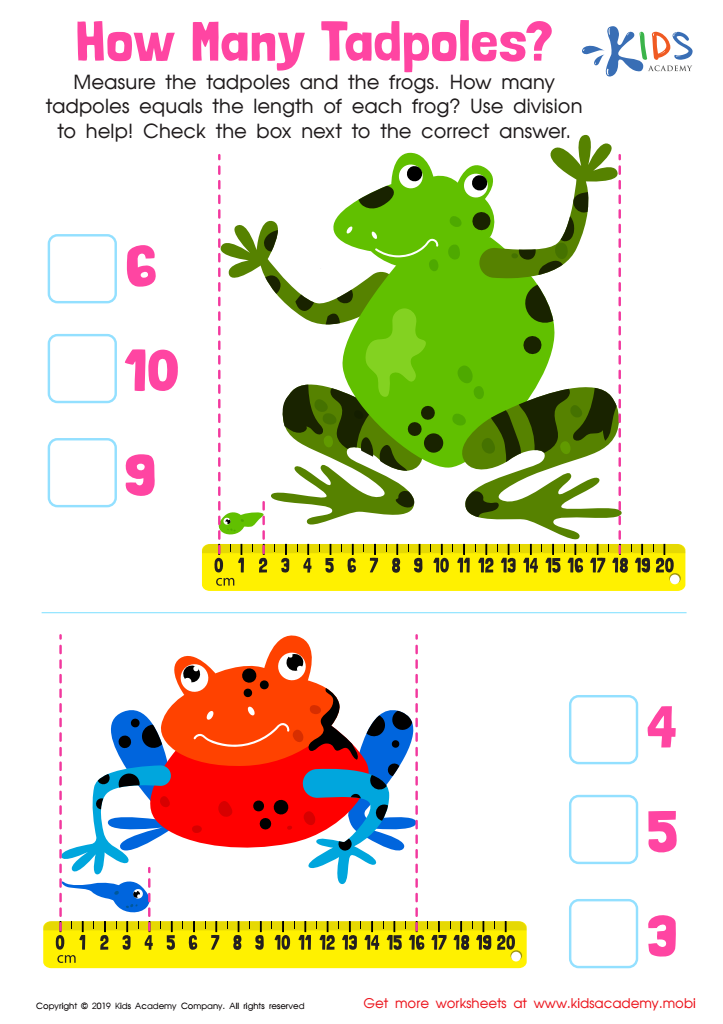
How Many Tadpoles Worksheet
 Assign to My Students
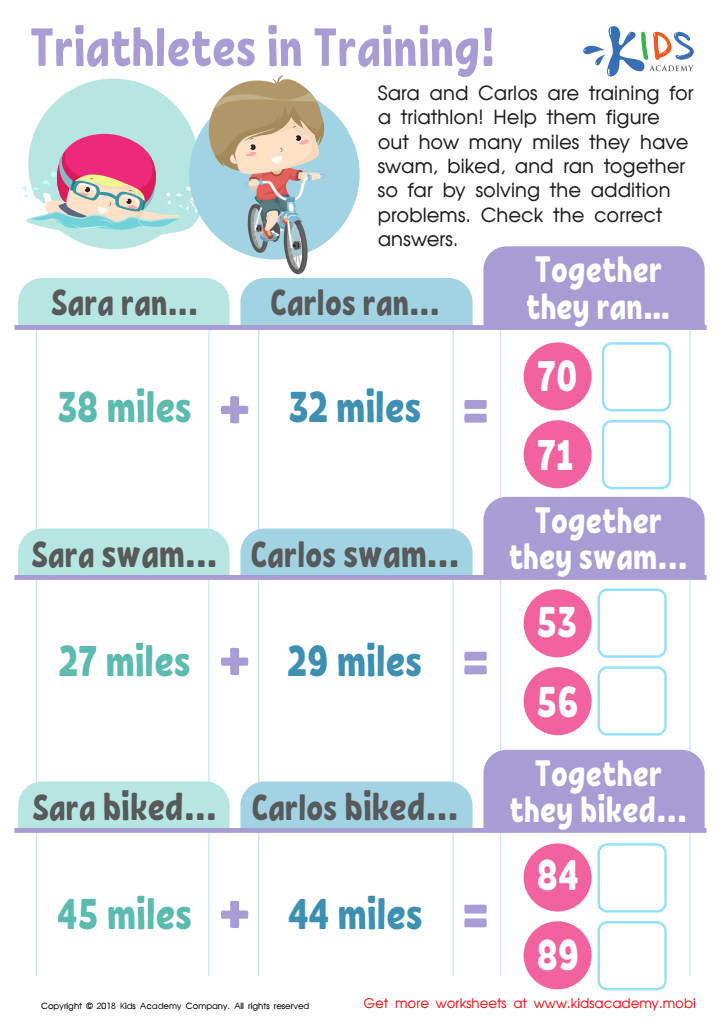
Triathletes in Training Worksheet
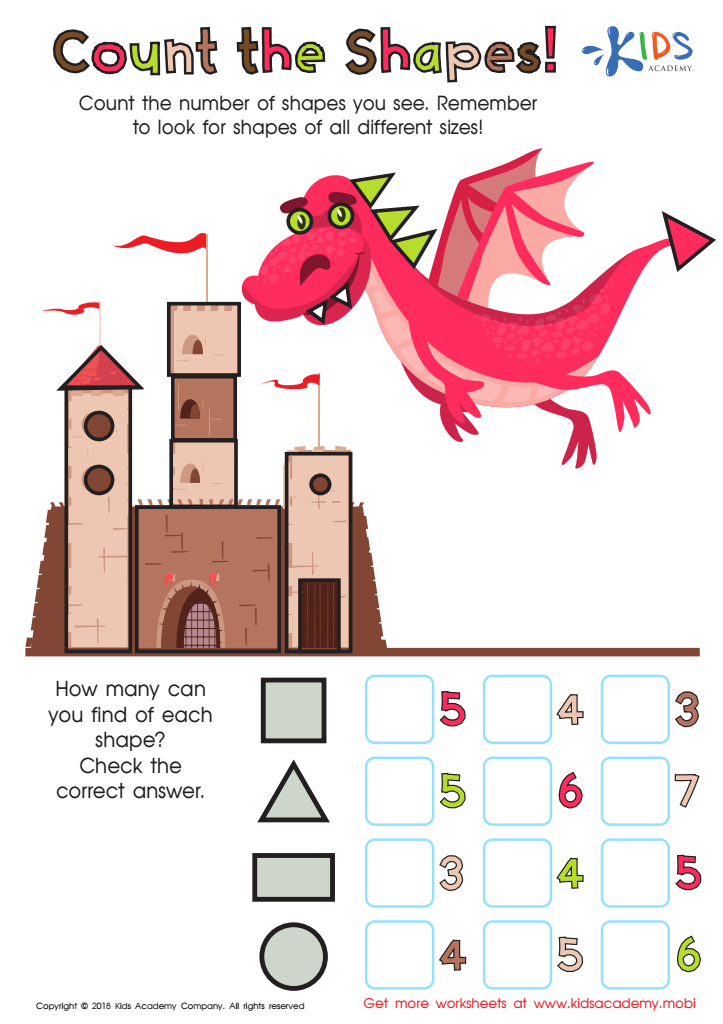
Count the Shapes Worksheet
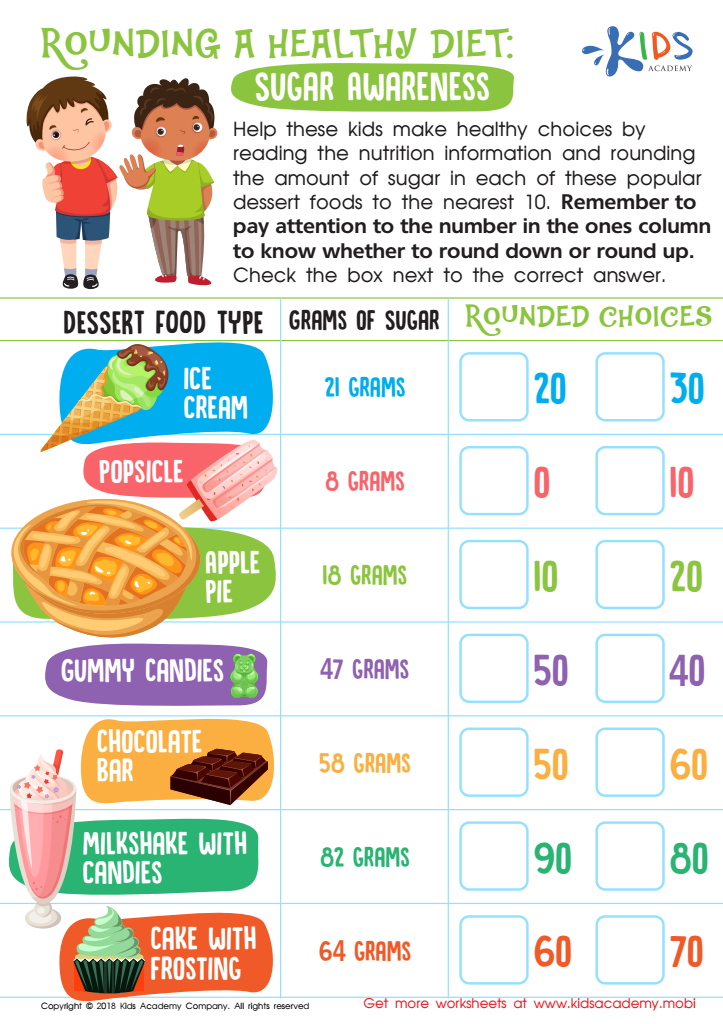
Rounding Healthy Diet Worksheet
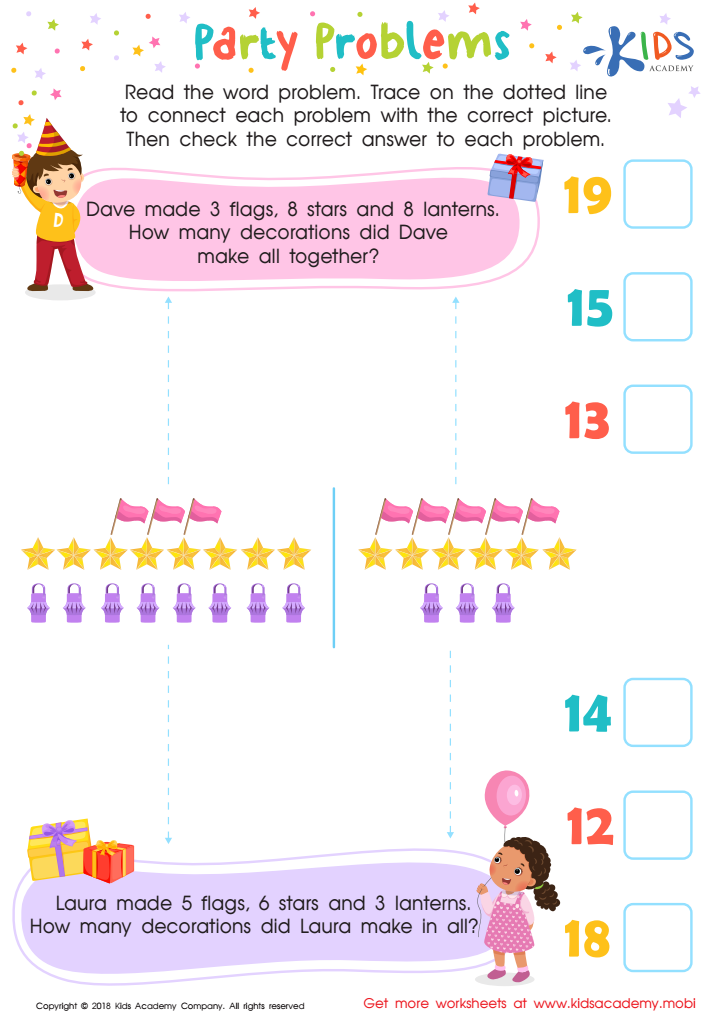
Party Problems Worksheet






Parents and teachers should prioritize Basic Mathematics for children ages 3-8 because this foundational skill set plays a crucial role in overall cognitive development and future academic success. During these formative years, children develop essential mathematical concepts such as counting, number recognition, and basic operations like addition and subtraction. Engaging in early math promotes critical thinking, problem-solving skills, and logical reasoning, which are vital across all areas of learning.
Furthermore, early exposure to mathematics builds confidence in children's mathematical ability. When parents and teachers actively support and encourage children to explore numbers and patterns, they help cultivate a positive attitude toward math, laying the groundwork for more complex topics in later years. Research shows that children who master basic math concepts early on are more likely to excel in later grades.
Moreover, integrating mathematics into everyday activities makes learning enjoyable. Simple activities like counting objects during playtime, measuring during cooking, or sorting toys can enhance understanding while fostering a conducive learning environment. By emphasizing the importance of Basic Mathematics, adults will ensure children are well-equipped to navigate not only academic challenges but real-world situations as they grow. Investing in mathematical literacy early ultimately supports lifelong learning and success.








