Comparing objects Normal Worksheets for Ages 3-8
4 filtered results
-
From - To
Discover our engaging "Comparing Objects Normal Worksheets" designed for children ages 3-8. These worksheets provide a fun and interactive way to help young learners develop their analytical skills by teaching them how to compare different objects. Through colorful illustrations and age-appropriate activities, kids will master concepts like size, shape, and quantity. These resources not only promote critical thinking but also enhance vocabulary and observational skills. Perfect for classroom or at-home learning, our worksheets make comparing objects an enjoyable educational experience. Give your child the foundation they need for future learning with these intuitive and stimulating worksheets!
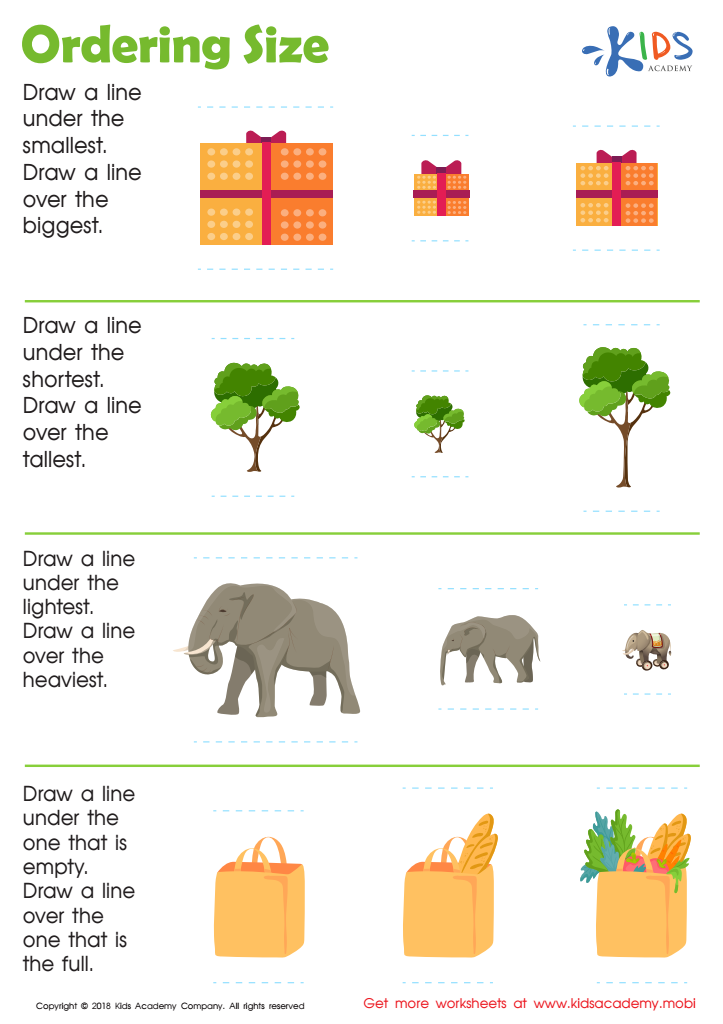
Ordering Size Worksheet
 Assign to My Students
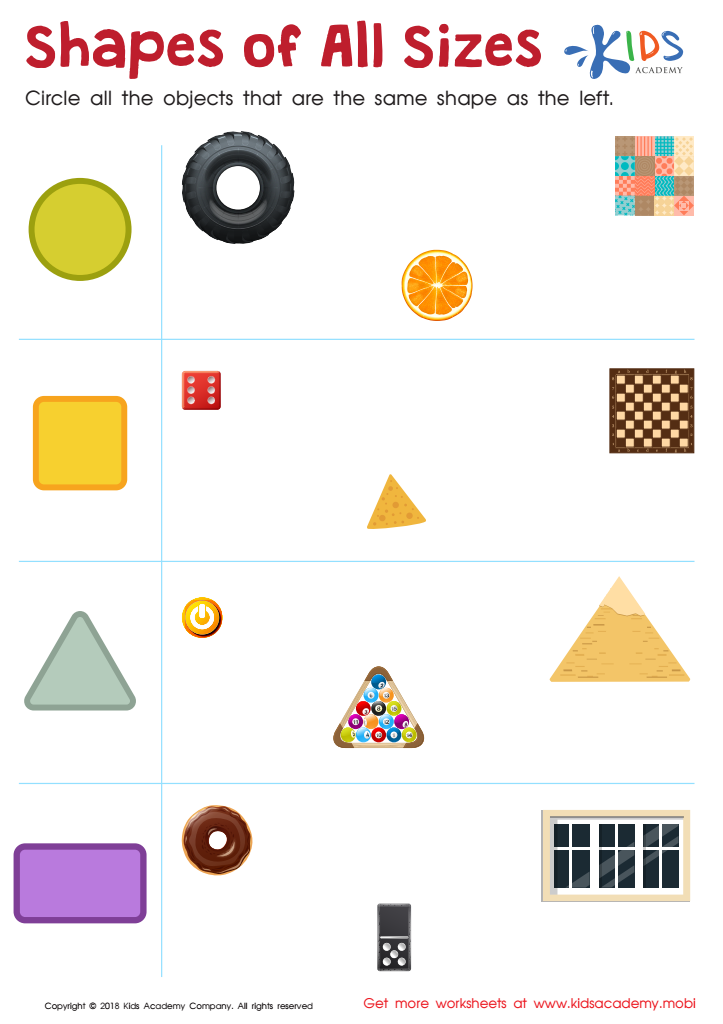
Shapes of All Sizes Worksheet
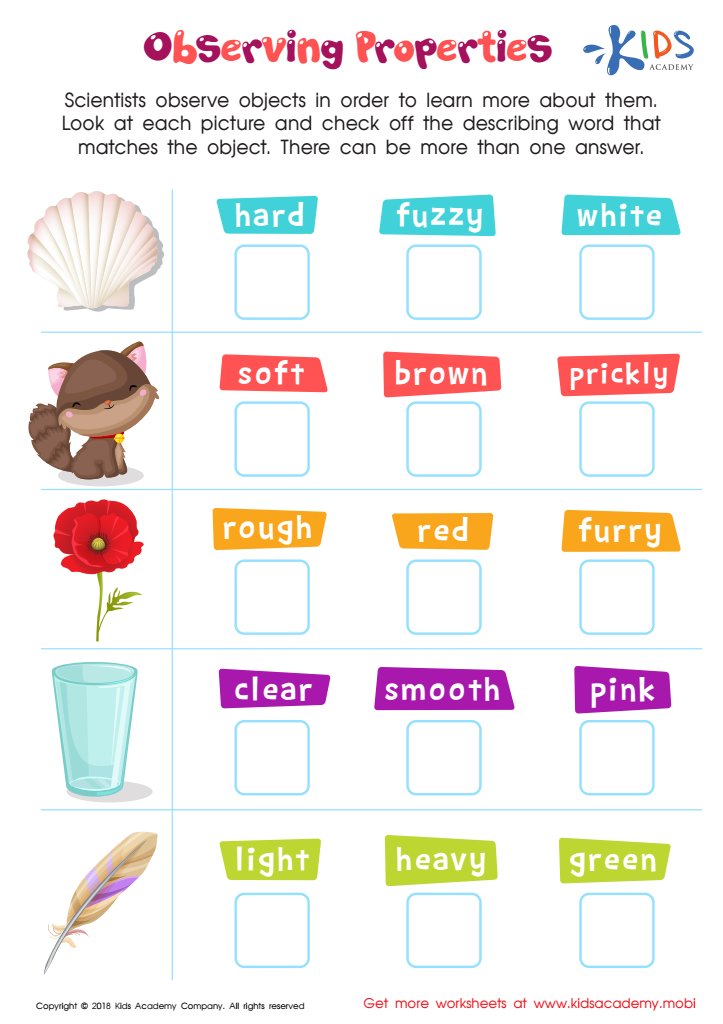
Observing Properties Worksheet
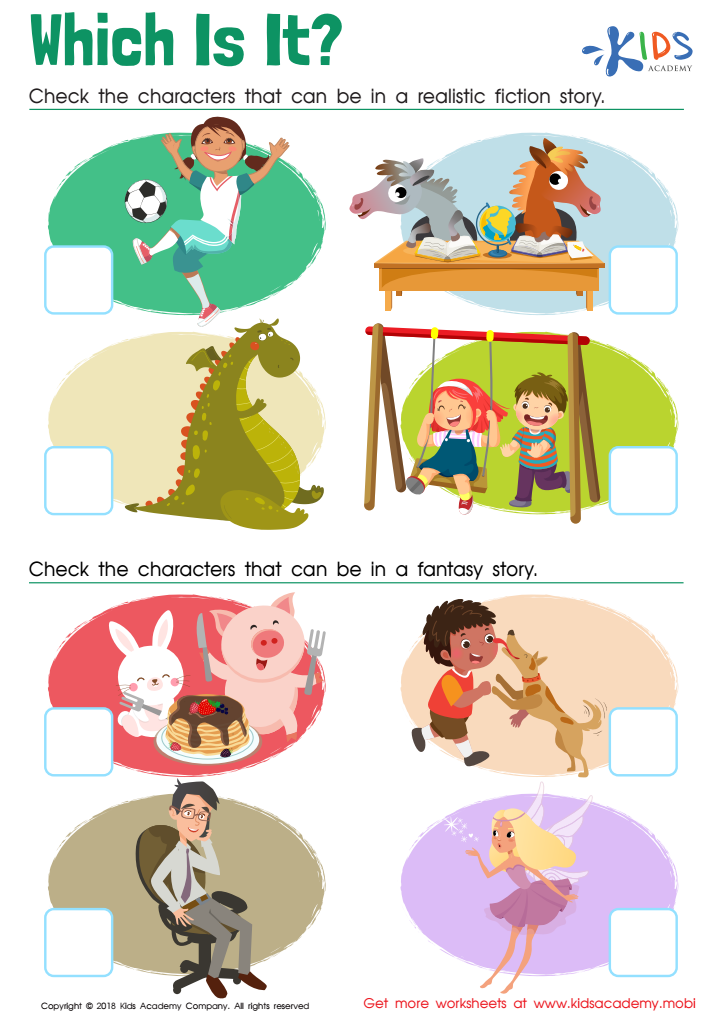
Which Is It? Worksheet







Comparing objects is a fundamental skill that young children from ages 3 to 8 need to develop, as it lays the groundwork for critical thinking and mathematical reasoning. When parents and teachers encourage children to compare sizes, weights, lengths, and quantities, they foster a sense of observation and analytical skills. This activity not only enhances cognitive abilities but also promotes language development as children articulate their observations and reasoning.
Furthermore, comparison activities help build a solid understanding of concepts like more vs. less, bigger vs. smaller, and heavier vs. lighter, which are crucial for their mathematical foundations. As children engage in comparing objects, they learn to categorize and organize information, skills that are essential for both academic success and everyday problem-solving.
Moreover, these activities promote collaboration and social interaction when done in groups, fostering emotional development and communication skills. Engaging in comparison tasks also stimulates curiosity, encouraging exploration and creativity. Overall, valuing comparison activities provides children with numerous opportunities for growth in various domains, making it essential for parents and teachers to incorporate these exercises into daily learning. By doing so, they prepare children not only for school but for life beyond the classroom.








