Historical Knowledge Normal Worksheets for Ages 3-8 - Page 2
27 filtered results
-
From - To
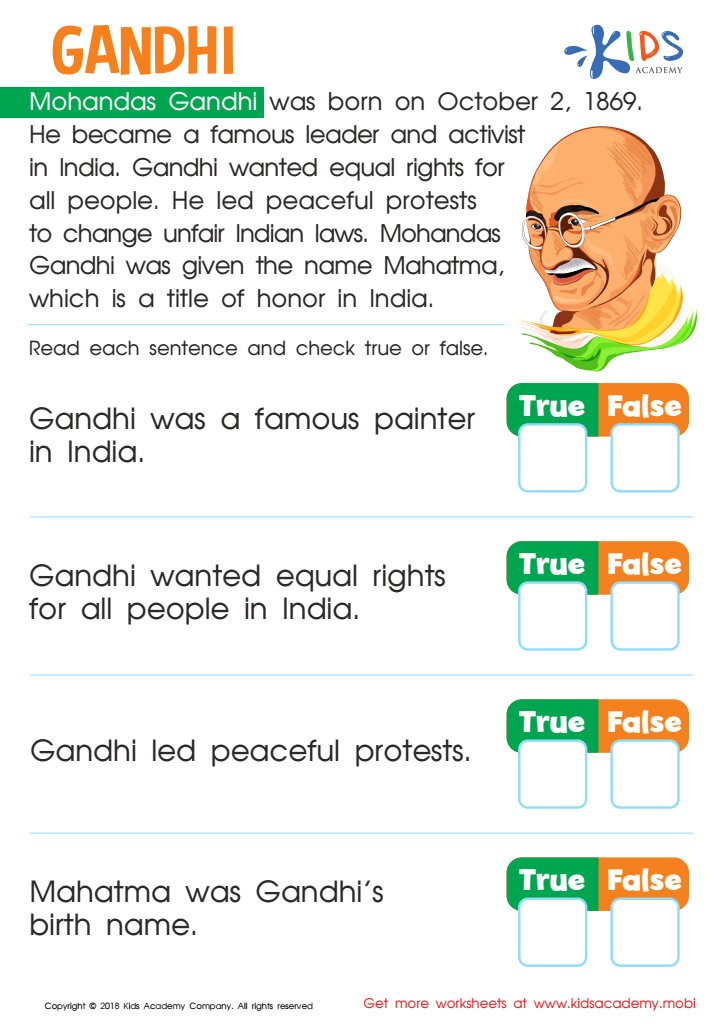
Gandhi Worksheet
 Assign to My Students
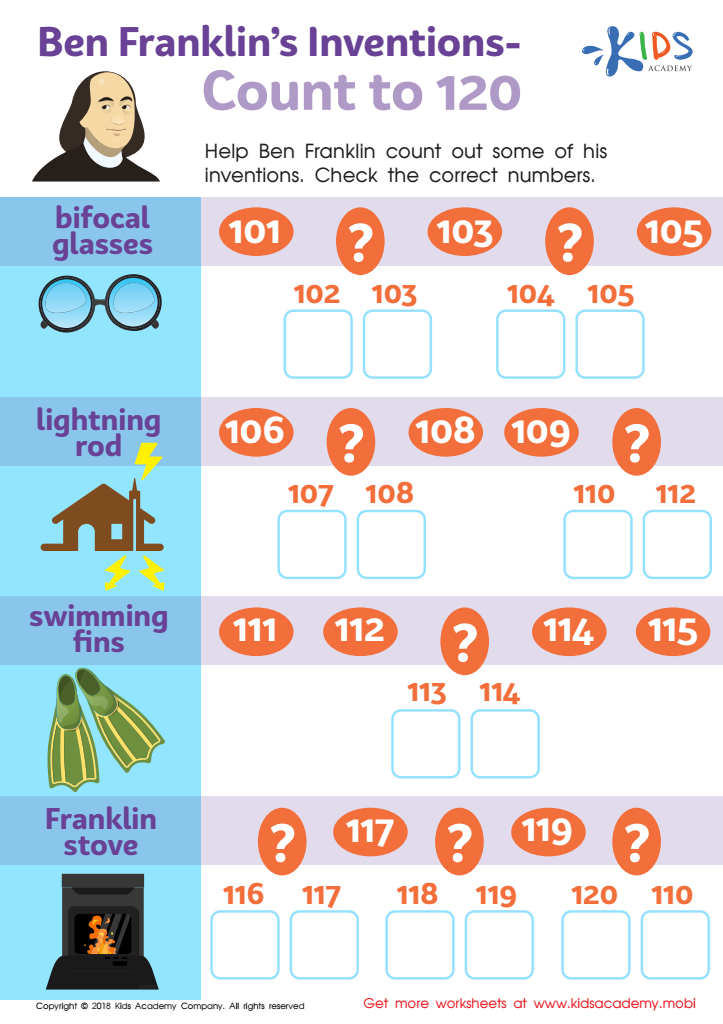
Ben Franklin’s Inventions – Count to 120 Worksheet
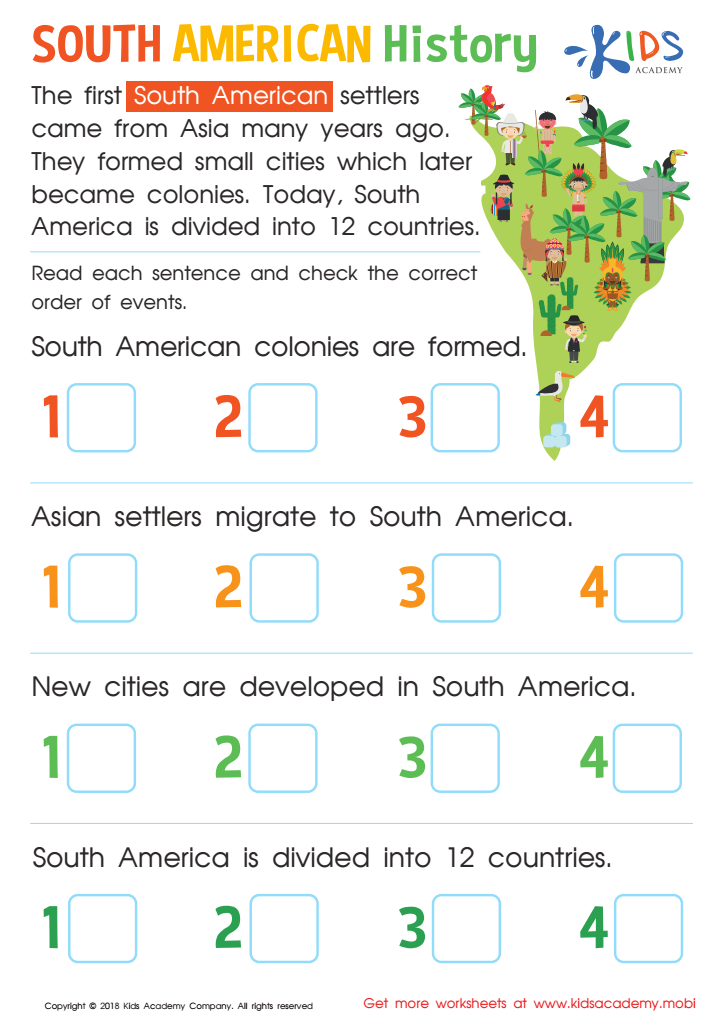
South American History Worksheet



.jpg)


Parents and teachers should pay close attention to fostering historical knowledge in children aged 3-8 because it lays the foundation for a well-rounded educational and personal development. During these early years, children are highly receptive and curious, making it an ideal time to introduce basic historical concepts in an age-appropriate manner.
Understanding history from a young age helps children develop a sense of time and chronology. They begin to grasp the difference between past, present, and future, which aids in cognitive development and critical thinking skills. Engaging with historical stories and events also hones their listening and comprehension abilities, often stimulating creativity and imagination.
Moreover, learning about significant figures, cultural traditions, and pivotal moments in history fosters a sense of identity and belonging. Children can start to appreciate diversity and realize that they are part of a larger community and world. This understanding builds empathy, tolerance, and respect for different cultures and viewpoints, essential traits in an increasingly globalized society.
Lastly, early historical knowledge cultivates curiosity and a love for learning. When children are introduced to interesting stories about the past, it can spark a lifelong interest in history and other academic subjects. By prioritizing historical knowledge at a young age, parents and teachers are setting up children for future academic and personal successes, ultimately contributing to their holistic growth.








