Map reading Normal Worksheets for Ages 3-8
3 filtered results
-
From - To
Unlock your child's inner explorer with our engaging Map Reading Normal Worksheets designed specifically for ages 3-8. These interactive resources introduce young learners to the fundamentals of map reading in a fun and intuitive way. Children will enhance their spatial awareness and critical thinking skills as they interpret symbols, directions, and various map features. Our worksheets include a mix of activities, from coloring and matching to simple problem-solving tasks that ignite curiosity and encourage exploration. Perfect for home learning and school use, these worksheets make learning about geography enjoyable and relatable. Start your adventure today with our creative map reading activities!
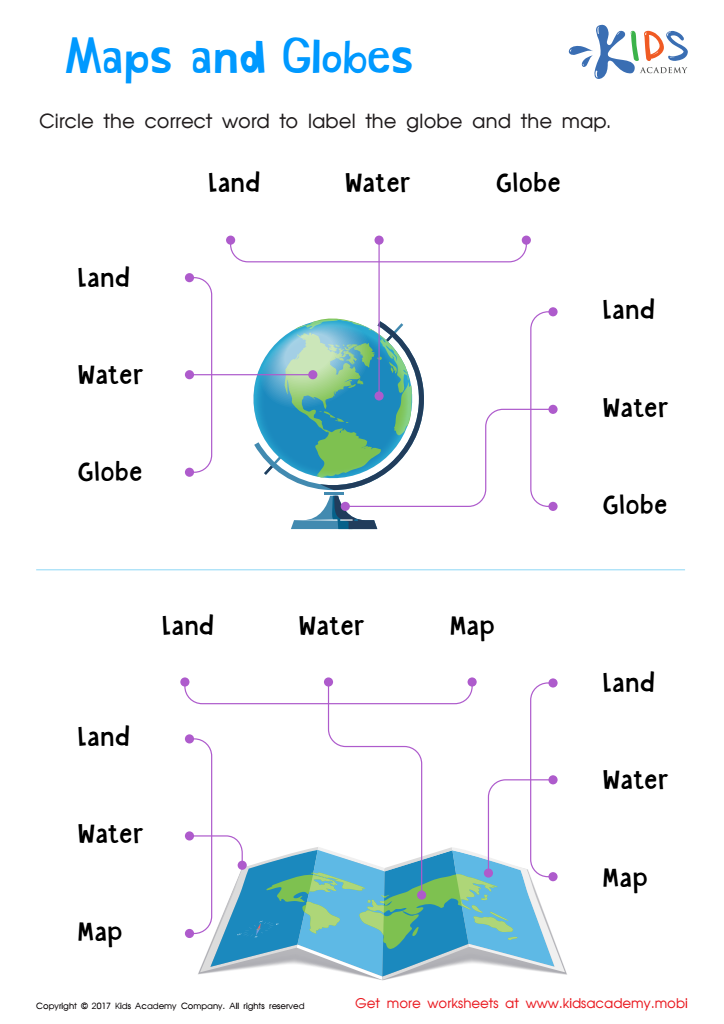
 Assign to My Students
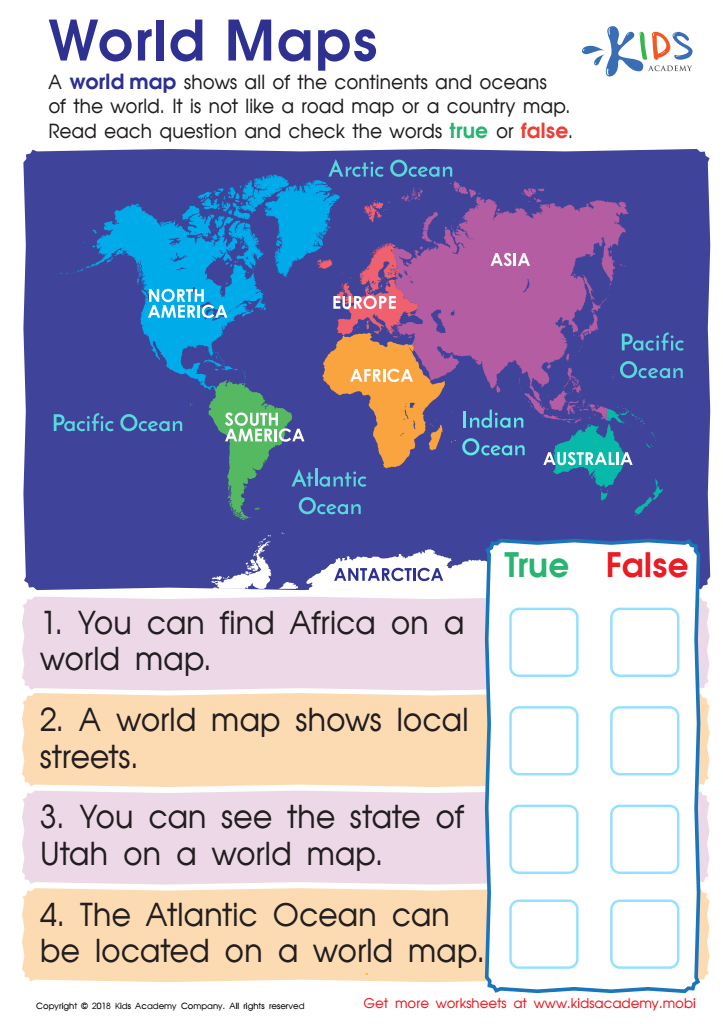
World Maps Worksheet
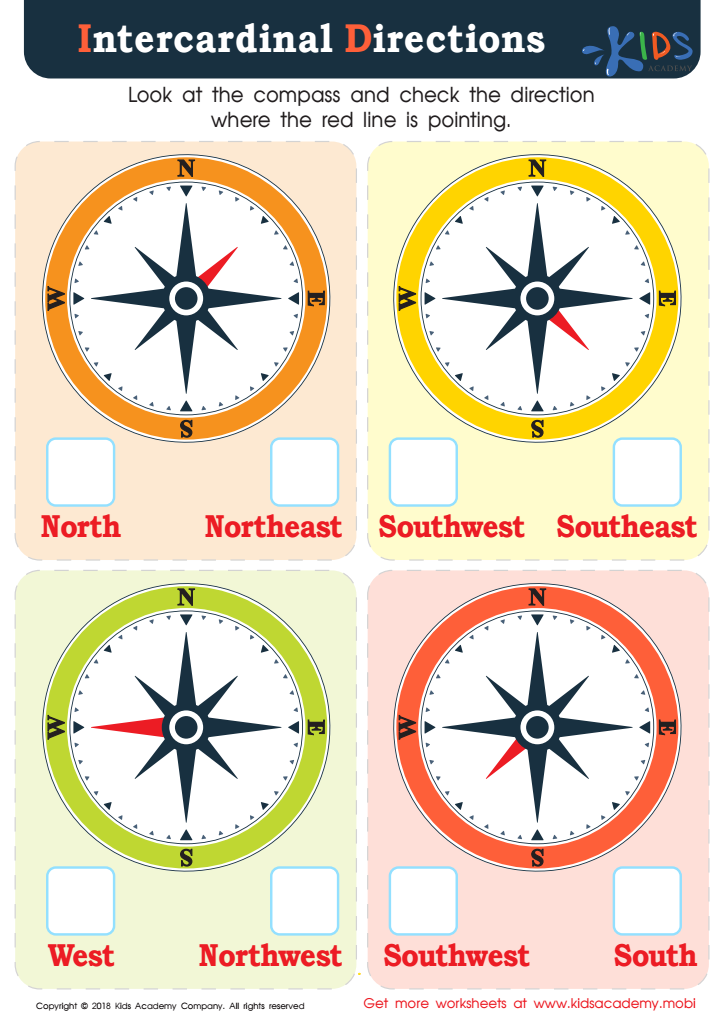
Intercardinal Directions Worksheet





Map reading is an essential skill for children aged 3-8, making it crucial for parents and teachers to emphasize its importance. At this early stage, children begin to develop spatial awareness and a basic understanding of their environment. Learning to read maps fosters critical thinking and problem-solving skills, encouraging children to make connections between symbols and real-world locations.
Engaging with maps also nurtures imagination and adventure, igniting a sense of curiosity about the world. When children learn to interpret maps, they gain the ability to navigate their surroundings confidently, expanding their independence. Maps can serve as interactive tools in storytelling, helping children visualize stories and locations more vividly.
Moreover, incorporating map reading into educational activities promotes teamwork and collaboration, as children can work together to find their way or complete a scavenger hunt. This shared experience builds communication skills while promoting social interaction.
By cultivating these skills early on, parents and teachers equip children with valuable tools for lifelong learning. They develop an understanding of geographical concepts, ultimately helping children excel in school and beyond. In a world increasingly focused on technology, traditional map reading remains an essential skill that enhances children's literacy and awareness of the world around them.








