
Mathematical problem-solving Normal Worksheets for Ages 3-8
3 filtered results
Difficulty Level
Grade
Age
-
From - To
Subject
Activity
Standards
Unlock the joy of learning with our meticulously designed Mathematical Problem-Solving Normal Worksheets for kids aged 3-8. Created to stimulate young minds, these printable activities from Kids Academy transform complex concepts into fun, manageable tasks. Tailored to suit varied learning needs, our worksheets cover everything from basic arithmetic to advanced puzzles, fostering critical thinking and analytical skills. Crafted by educational experts, each sheet is structured to progressively build upon foundational knowledge, ensuring a solid mathematical understanding. Explore our comprehensive collection and watch your child blossom into a confident problem-solver, ready to tackle academic challenges with enthusiasm and ease.
Favorites
With answer key
Interactive
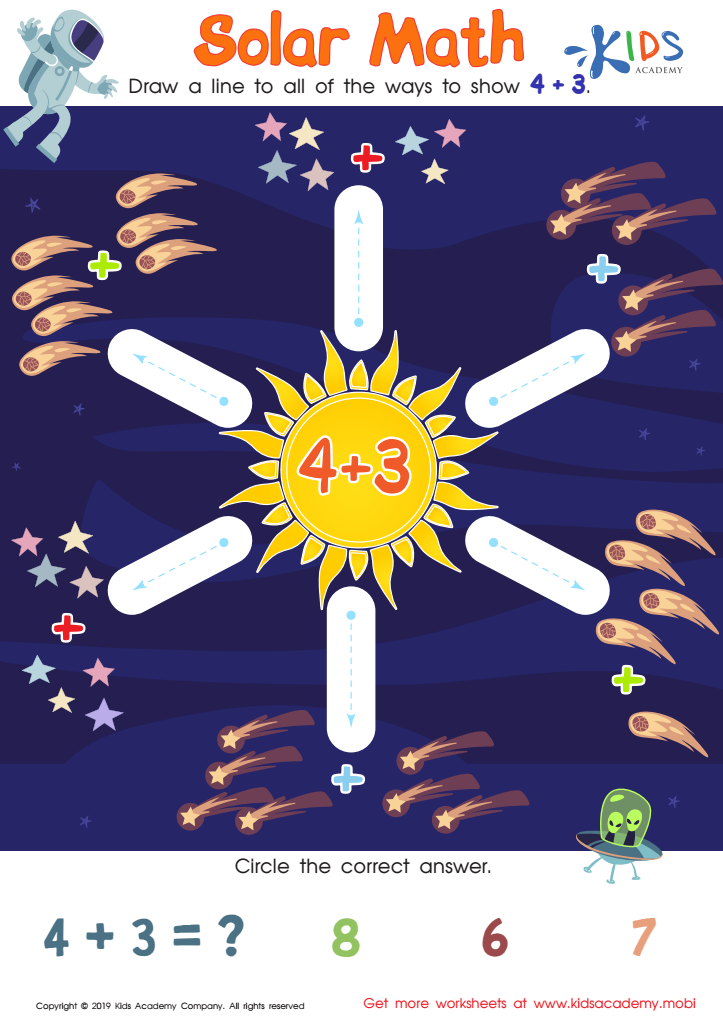
Solar Math Worksheet
Do your students need a lesson on the solar system? Use this colorful worksheet to make learning fun. Math is a must-know for kindergartners; make it enjoyable with this printout. Ask them to draw a line to all the ways to show 4+3.
 Assign to My Students
Solar Math Worksheet
Worksheet
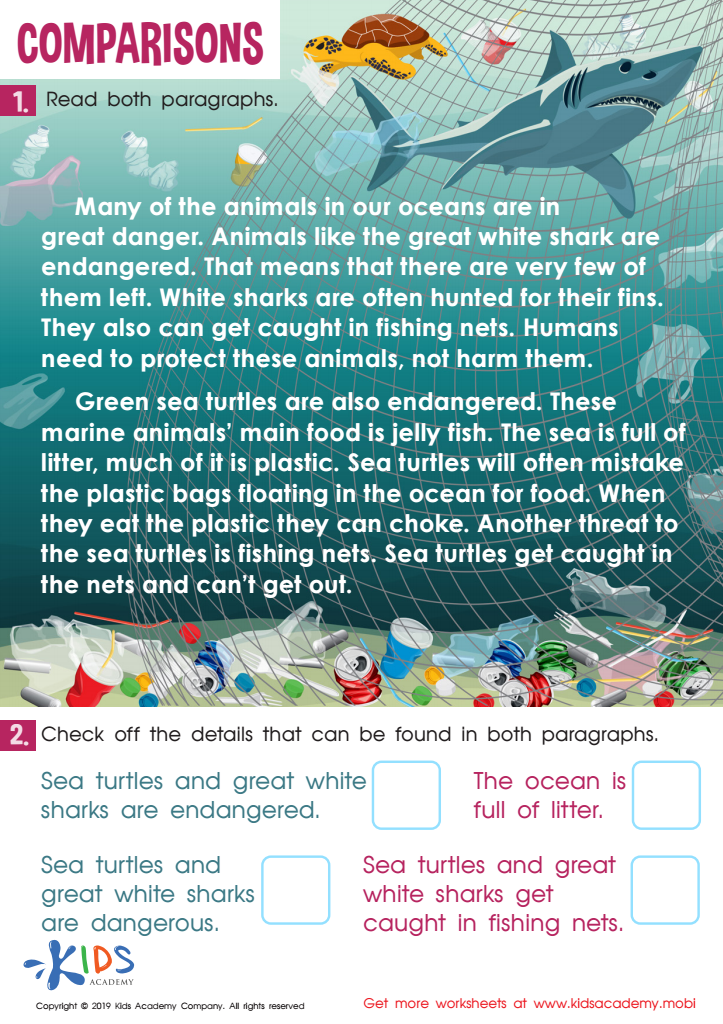
Comparisons Worksheet
Compare two things easily: place them side by side and note the differences. Use this passage to help kids practice reading and comprehension, and teach them about the ocean and sea creatures. Read both paragraphs, then check off details found in both. (80 words)
Comparisons Worksheet
Worksheet
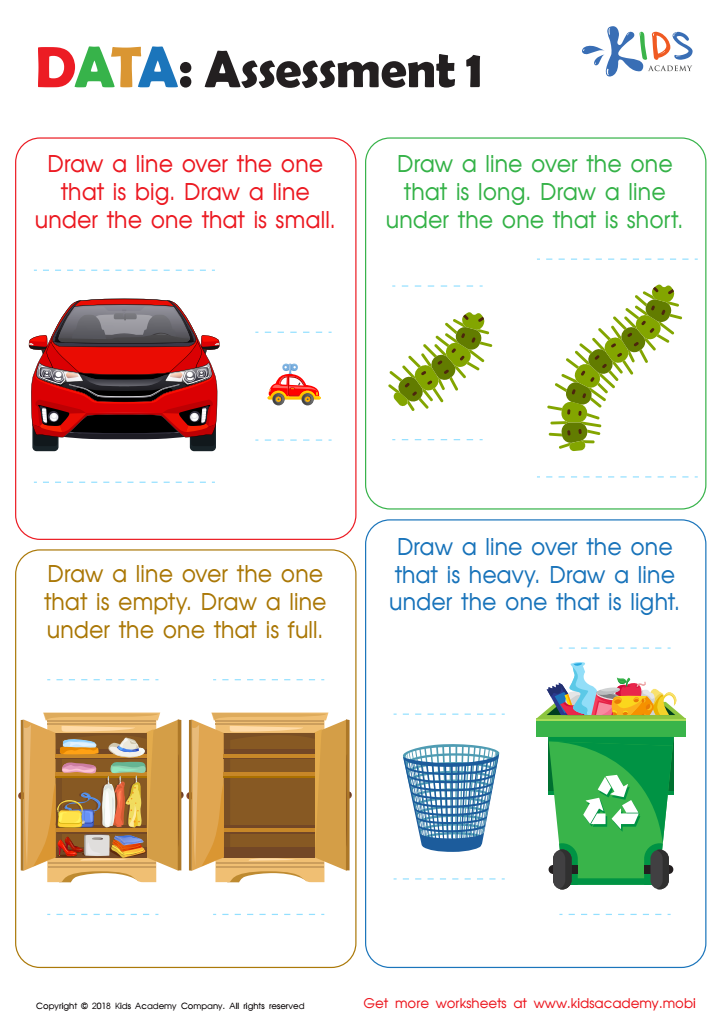
Data: Assessment 1 Worksheet
Assess your students' knowledge of measurement words with this worksheet. Have them compare and describe objects/quantities using words like "big", "small", "long", "short", "empty", "full", "heavy" and "light". Encourage further learning by asking students to provide examples of each word meaning.
Data: Assessment 1 Worksheet
Worksheet
Join Kids Academy for Free
Who is primarily going to use this learning content?






Caring about mathematical problem-solving for children ages 3-8 is crucial for several compelling reasons. During these formative years, young learners develop foundational cognitive and analytical skills that will support their future academic and life success. Engaging in problem-solving activities enhances a child's ability to think critically, reason logically, and approach challenges with a flexible, open mind.
Moreover, early exposure to mathematical concepts helps demystify the subject, fostering a positive attitude towards math. When children tackle problems independently or with guidance, they experience a sense of accomplishment that bolsters their self-confidence. This confidence can translate to increased motivation and perseverance in facing more complex academic tasks later on.
Additionally, mathematical problem-solving activities often require children to communicate their thought processes, thereby improving their language and social skills. They learn to articulate ideas, listen to peers, and collaborate effectively—a set of skills valuable beyond the classroom context.
Furthermore, early math education has been linked to academic achievement in other domains such as literacy. Research indicates that early math skills are strong predictors of later reading success and overall school performance.
In sum, prioritizing math problem-solving from an early age cultivates essential cognitive abilities, nurtures positive attitudes towards learning, improves communication skills, and lays a robust academic foundation that significantly benefits a child's educational journey and personal development.








