
Phonetics understanding Normal Worksheets for Ages 3-8
3 filtered results
Difficulty Level
Grade
Age
-
From - To
Subject
Activity
Standards
Enhance your child's phonetic awareness with our engaging "Understanding Phonetics Normal Worksheets" designed for ages 3-8. These expertly crafted worksheets support early literacy by introducing letter sounds and simple words in a fun, interactive way. Each activity encourages young learners to recognize and articulate sounds, fostering crucial speech and reading skills. From tracing letters to interactive sound games, our worksheets cater to diverse learning styles, making phonetics accessible and enjoyable. Empower your child's language development with resources that promote confidence and enthusiasm for learning. Explore our collection to inspire a lifelong love of reading and communication!
Favorites
With answer key
Interactive
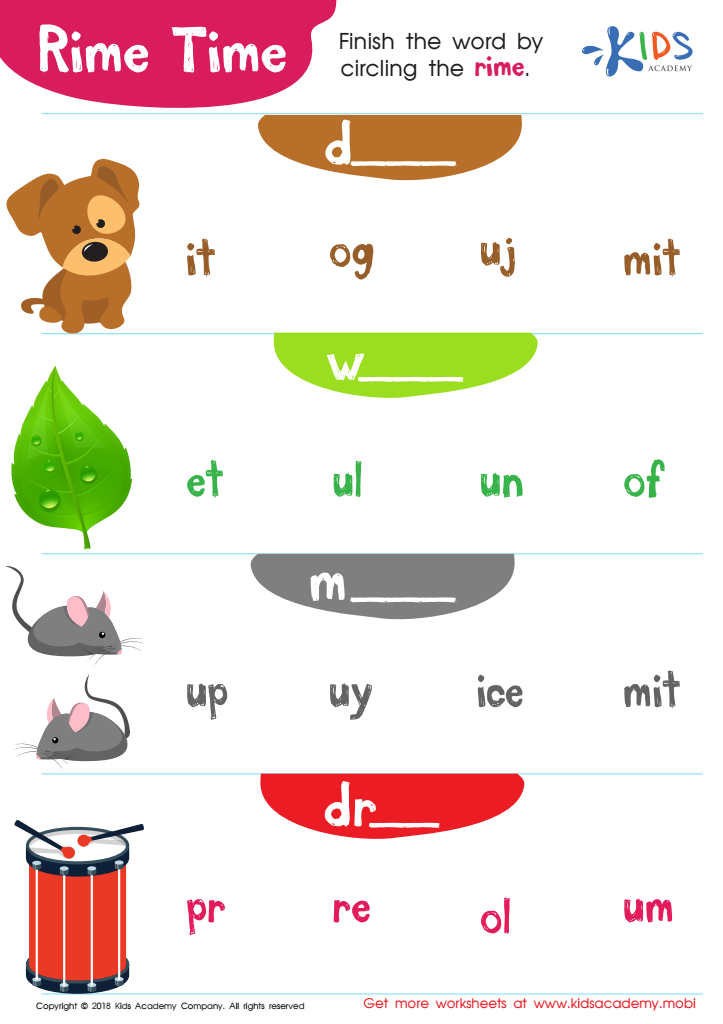
Rime Time Worksheet
This free PDF worksheet helps new and emerging readers identify rimes (the letters after initial consonants) and practice fine motor skills. Kids trace the correct rimes for each picture and increase their fluency and decoding skills with each one!
 Assign to My Students
Rime Time Worksheet
Worksheet
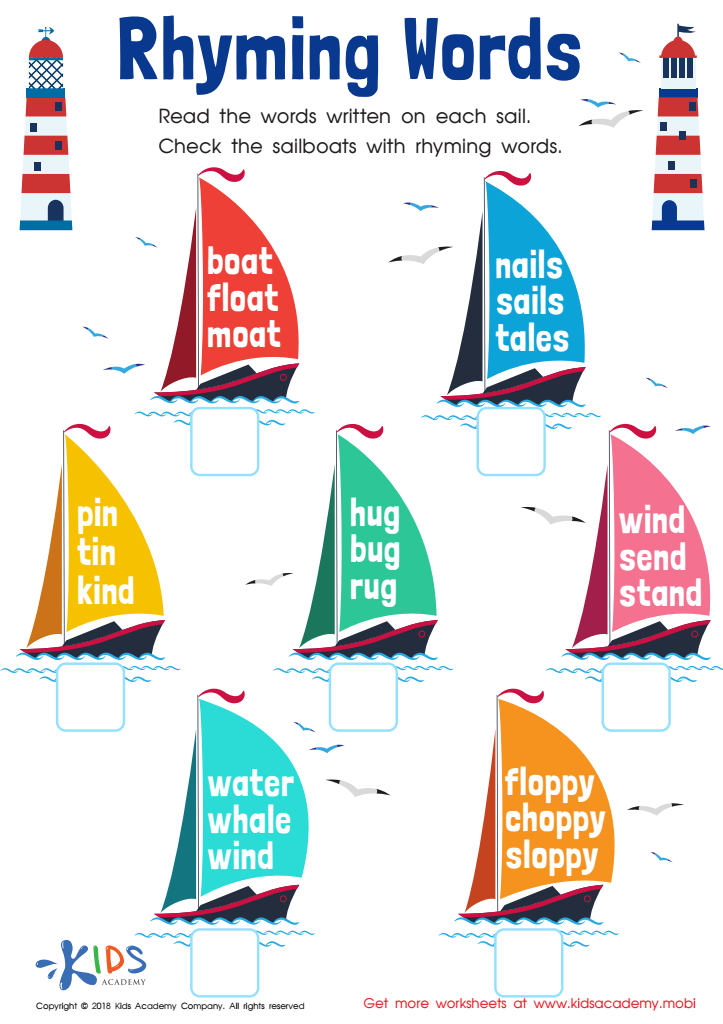
Rhyming Words Worksheet
Does your child know about rhyming words? Get them interested in poetry and explain that these words have similar sounds when pronounced. Read the words on each sailboat to your child and ask them to identify the rhyming pairs. Guide them to check the sailboats.
Rhyming Words Worksheet
Worksheet
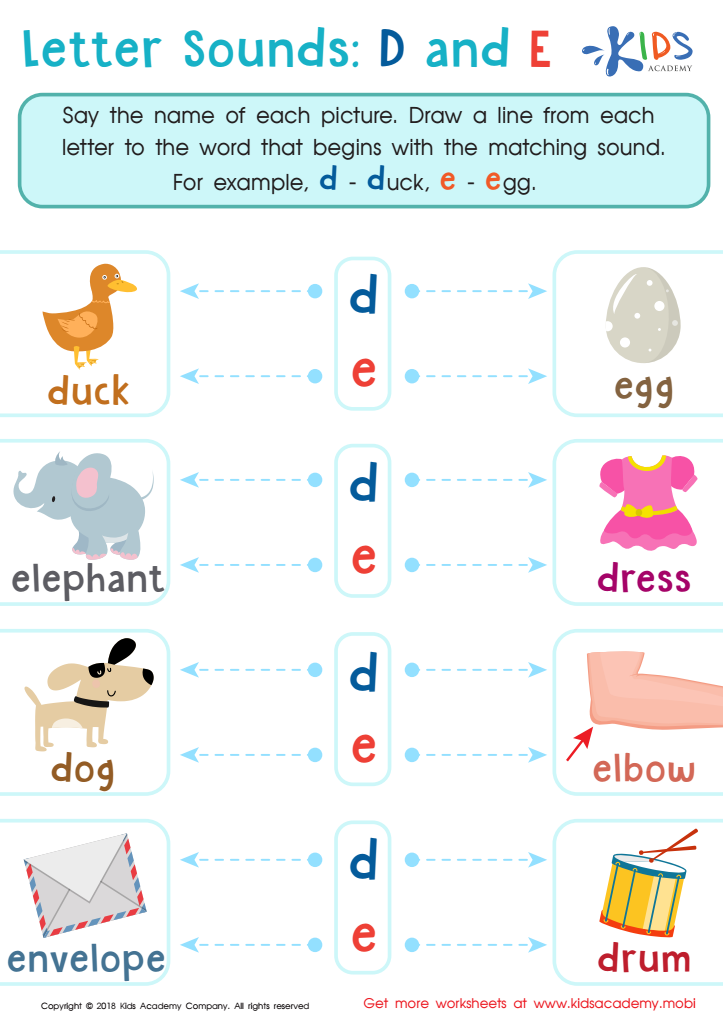
Letter D and E Sounds Worksheet
Kids can use picture clues and visual discrimination to name cheerful pics and isolate the beginning sound. This free PDF worksheet will help them develop phonological awareness, differentiate between "D" and "E", and hone fine-motor skills. It'll also boost their confidence as they become readers.
Letter D and E Sounds Worksheet
Worksheet
Join Kids Academy for Free
Who is primarily going to use this learning content?



.jpg)


Phonetics, the study of sounds in human speech, is crucial for children aged 3-8 as it forms the foundation for literacy development. Understanding phonetics helps children decode words, enabling them to read independently. For parents and teachers, recognizing the importance of phonetics means equipping young learners with the tools to become confident readers and effective communicators.
At this developmental stage, children are particularly adept at auditory discrimination, making it an ideal time for phonetics instruction. By focusing on sounds, rather than letters in isolation, children learn to blend, segment, and manipulate sounds. This skill is essential when encountering unfamiliar words.
Additionally, phonetics impacts overall language development. It supports vocabulary growth and enhances spelling skills, setting the groundwork for more advanced language abilities. Strong phonetic skills also help in developing listening comprehension, as children learn to perceive the subtle differences in sound that shape meaning.
Furthermore, early intervention in phonetics can identify and address potential reading difficulties, ensuring that all children have equal access to literacy. Therefore, parents and educators should prioritize phonetics to promote school readiness, foster enthusiastic learners, and nurture a solid foundation for lifelong literacy and communication skills.








