Phonics improvement Normal Worksheets for Ages 3-8
3 filtered results
-
From - To
Boost your child's reading skills with our Phonics Improvement Normal Worksheets, designed specifically for ages 3-8. These engaging, interactive worksheets make learning phonics fun while helping kids develop essential sound recognition, blending, and decoding skills. Perfect for home or classroom use, our resources include colorful illustrations and a variety of activities that cater to different learning styles. Children will practice letter sounds and improve their reading fluency through engaging exercises that reinforce phonemic awareness. Our age-appropriate tasks ensure that your child builds a solid foundation in phonics, setting them up for reading success. Explore our worksheets today to jumpstart your child's literacy journey!
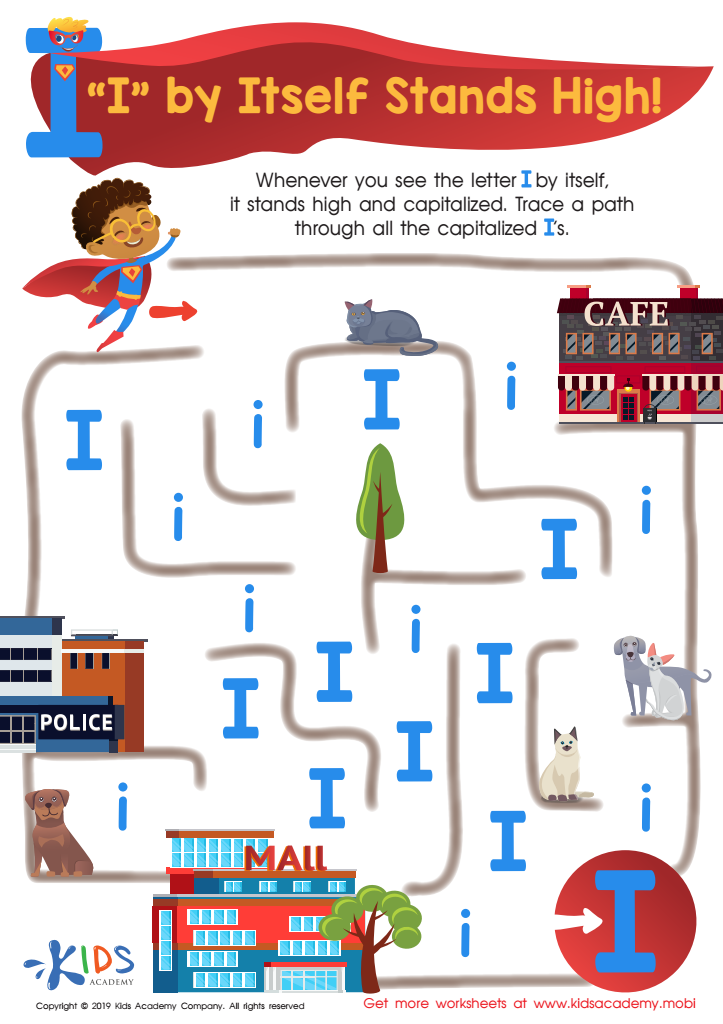
I Stands High Worksheet
 Assign to My Students
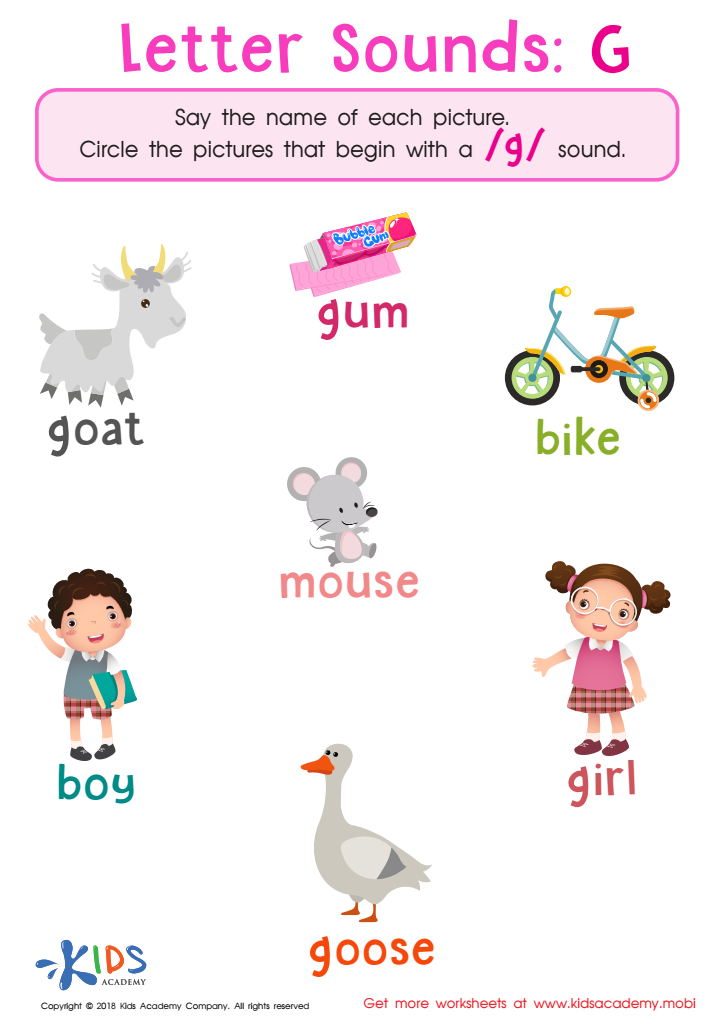
Letter G Sounds Worksheet








Phonics improvement is crucial for children aged 3-8 as it lays the foundation for their reading and writing skills. At this early stage, children are developing essential literacy skills that will affect their future academic success. When parents and teachers prioritize phonics, they help children understand the relationship between letters and sounds, which is fundamental to decoding words.
Effective phonics instruction enhances children's ability to read fluently, comprehend text, and express their ideas clearly. This skill set is vital as it allows children to engage with literature, participate in discussions, and articulate thoughts confidently. Early mastery of phonics often leads to better performance in school, boosting their self-esteem and motivation.
Furthermore, supporting phonics improvement fosters a love for reading. When children can read independently, they explore diverse genres and expand their vocabulary, which promotes intellectual curiosity.
Moreover, intervention in phonics instruction can prevent future difficulties with reading. Many literacy challenges can be mitigated early, ensuring that children do not fall behind their peers. Parents and teachers, working collaboratively, can create a nurturing environment that emphasizes the importance of phonics, ultimately setting children on a path to success in their educational journey.








