Practicing subtraction Normal Worksheets for Ages 3-8
3 filtered results
-
From - To
Introduce young learners to the fundamentals of subtraction with our expertly designed printable worksheets for ages 3-8. Tailored to build foundational math skills, these engaging activities feature colorful visuals and fun challenges that make learning subtraction enjoyable. Perfect for both classroom and home use, our worksheets cater to varied skill levels, ensuring every child grasps subtraction concepts at their own pace. Watch your child’s confidence soar as they master subtraction through consistent practice. Explore our collection today and support your child’s mathematical journey with resources from Kids Academy - where learning is an adventure!
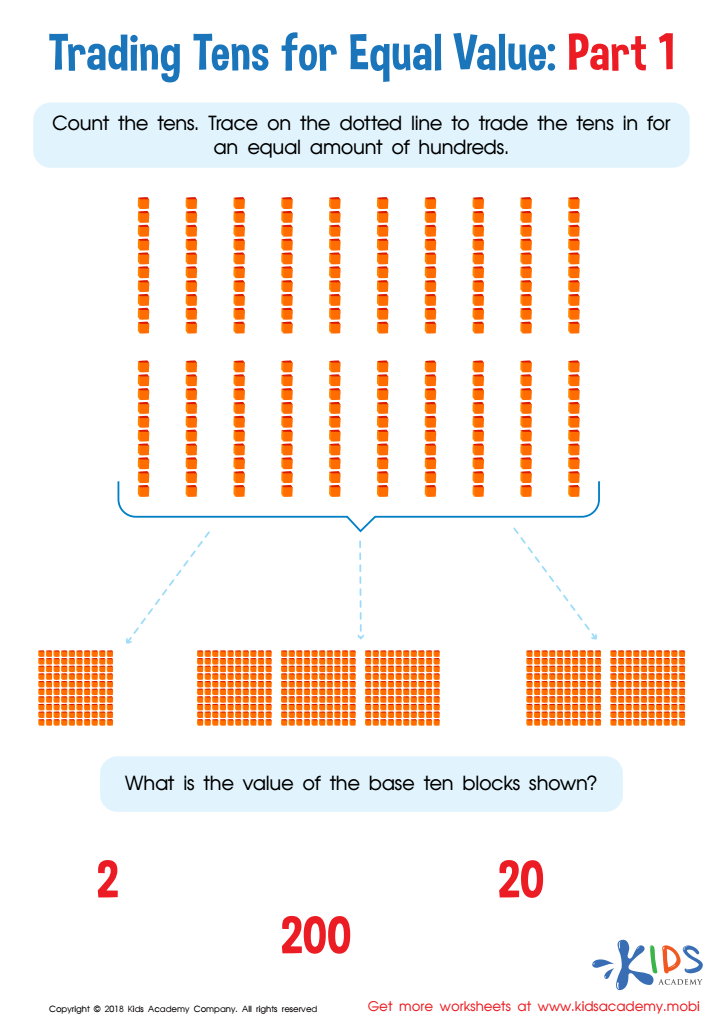
Trading Tens for Equal Value Worksheet: Part 1
 Assign to My Students
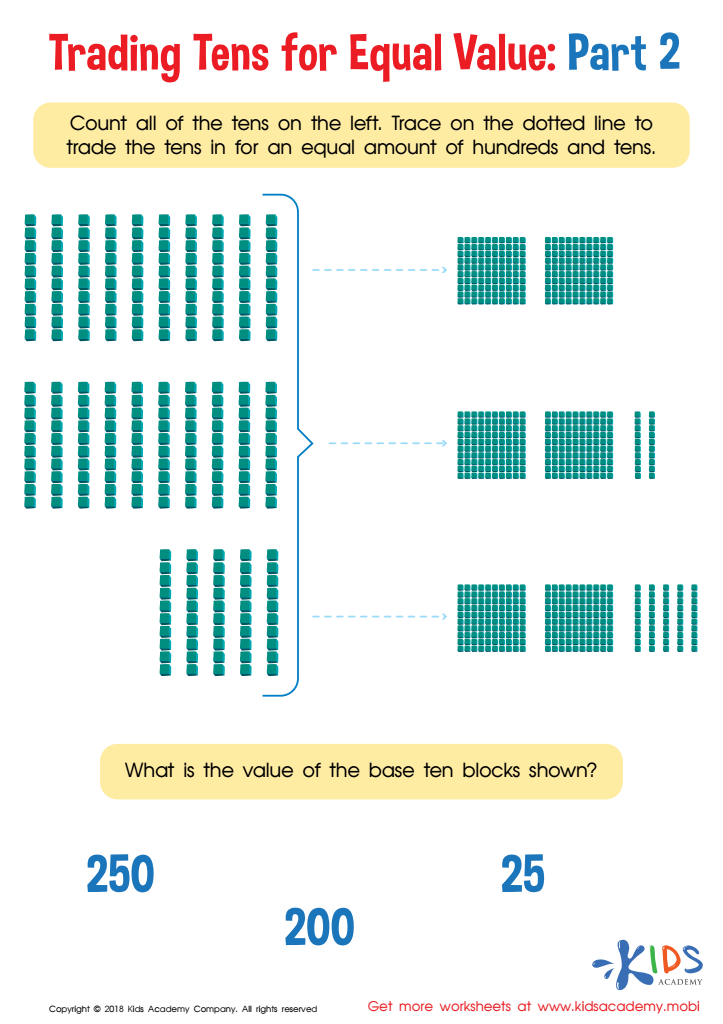
Trading Tens for Equal Value Worksheet: Part 2
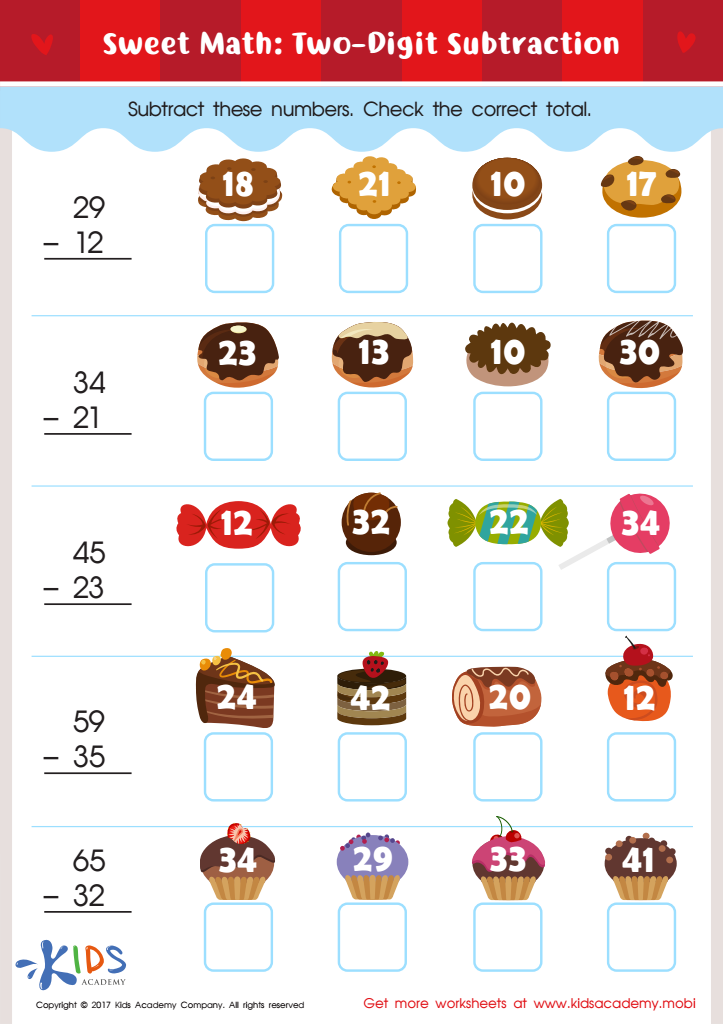
Two Digit Subtraction Worksheet






Practicing subtraction for children aged 3-8 is fundamental in laying the groundwork for future mathematical understanding and cognitive development. At this tender age, children are particularly receptive to learning basic numerical concepts, and subtraction is a crucial arithmetic operation that intersects with daily life and higher-level math skills.
Firstly, mastering subtraction enhances problem-solving abilities. As young learners encounter everyday scenarios like sharing toys or snacks, understanding subtraction helps them make sense of how quantities decrease. This practical application builds their confidence and encourages independent thinking.
Secondly, subtraction serves as a building block for more complex arithmetic, including addition, multiplication, and division. Early proficiency in subtraction prepares children for advanced topics in mathematics, facilitating smoother transitions in their academic journey.
Moreover, engaging in subtraction activities can improve a child's attention span, memory, and logical reasoning. Utilizing playful methods like fingers, counters, or visual aids, both parents and teachers can make learning enjoyable, fostering a positive attitude towards math.
Finally, strengthening foundational skills through subtraction promotes overall academic success. Children who grasp basic mathematics early on are more likely to perform well in other subjects, as math skills are often interlinked with scientific thinking and analytical abilities.
Hence, parents and teachers should prioritize subtraction practice, ensuring children have a solid numerical foundation to support comprehensive cognitive and academic development.








