Understanding adjectives Normal Worksheets for Ages 3-8
5 filtered results
-
From - To
Discover our “Understanding Adjectives Normal Worksheets” designed for children aged 3-8! These engaging worksheets help young learners grasp the concept of adjectives through fun activities that encourage creativity and critical thinking. Perfect for at-home learning or classroom use, each worksheet includes vibrant illustrations and clear instructions tailored to different skill levels. Little ones will explore words that describe size, color, and shape, enhancing their vocabulary and comprehension skills. Our user-friendly resources support early literacy development while making learning enjoyable. Join us in fostering a love for language and expression with these delightful adjective worksheets that make education a fun adventure!
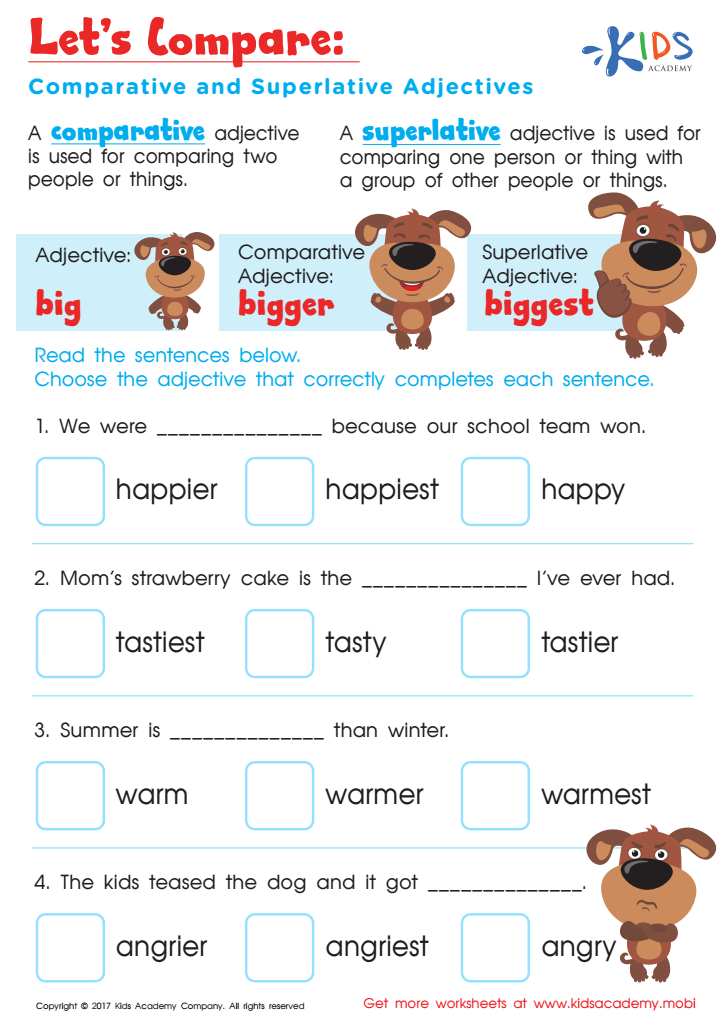
Comparative and Superlative Worksheet
 Assign to My Students
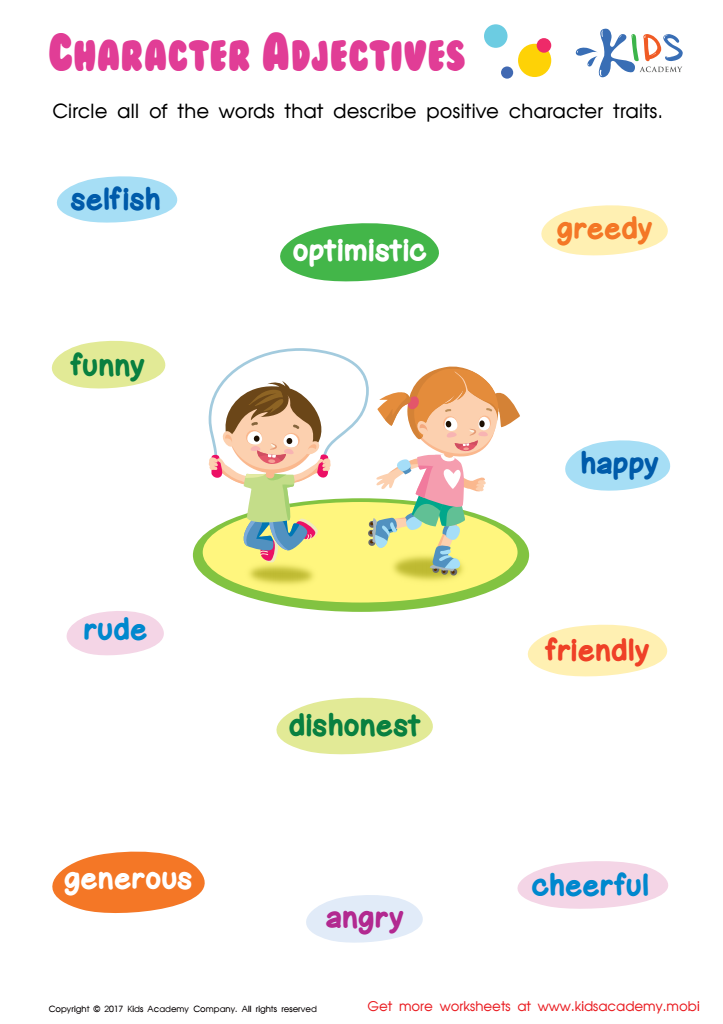
Character Adjectives Worksheet
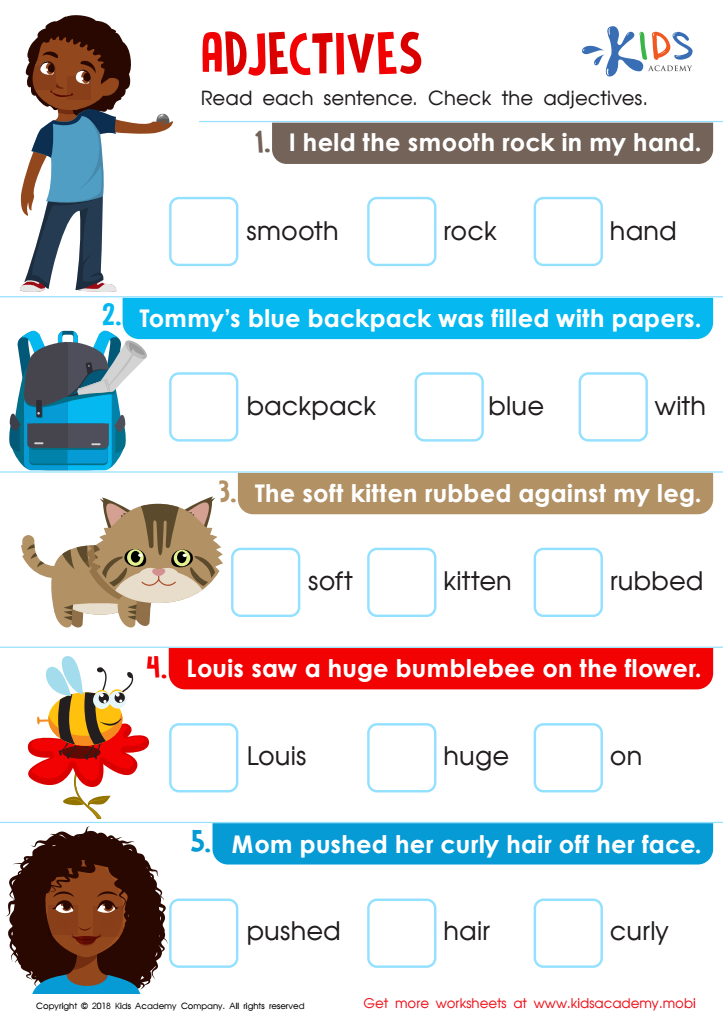
Adjectives Worksheet
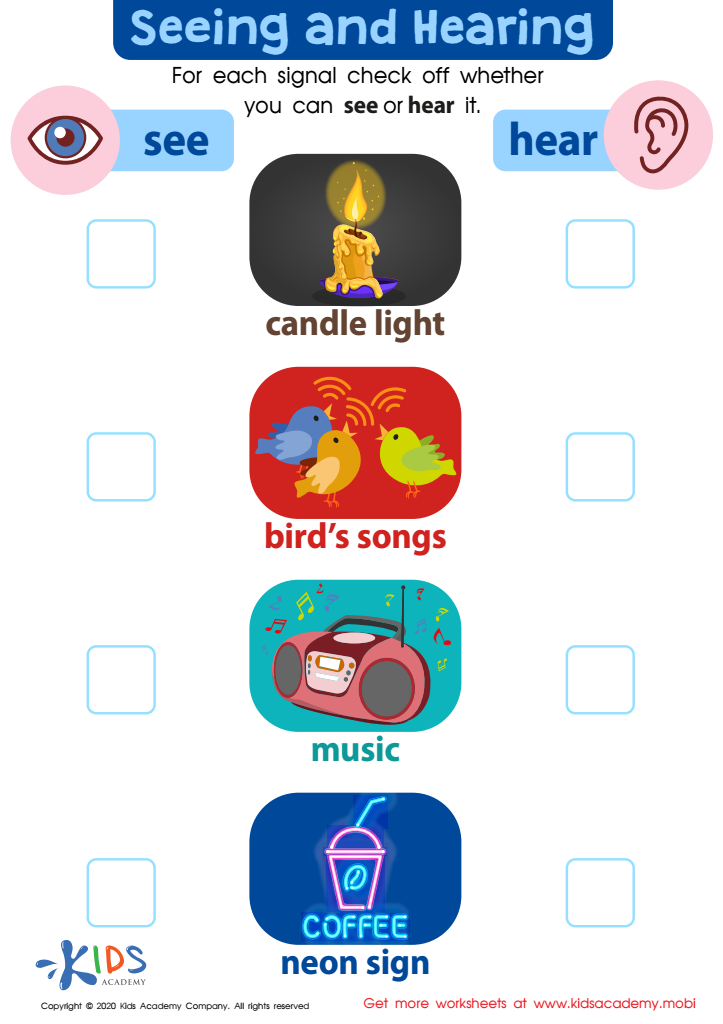
Seeing and Hearing Worksheet
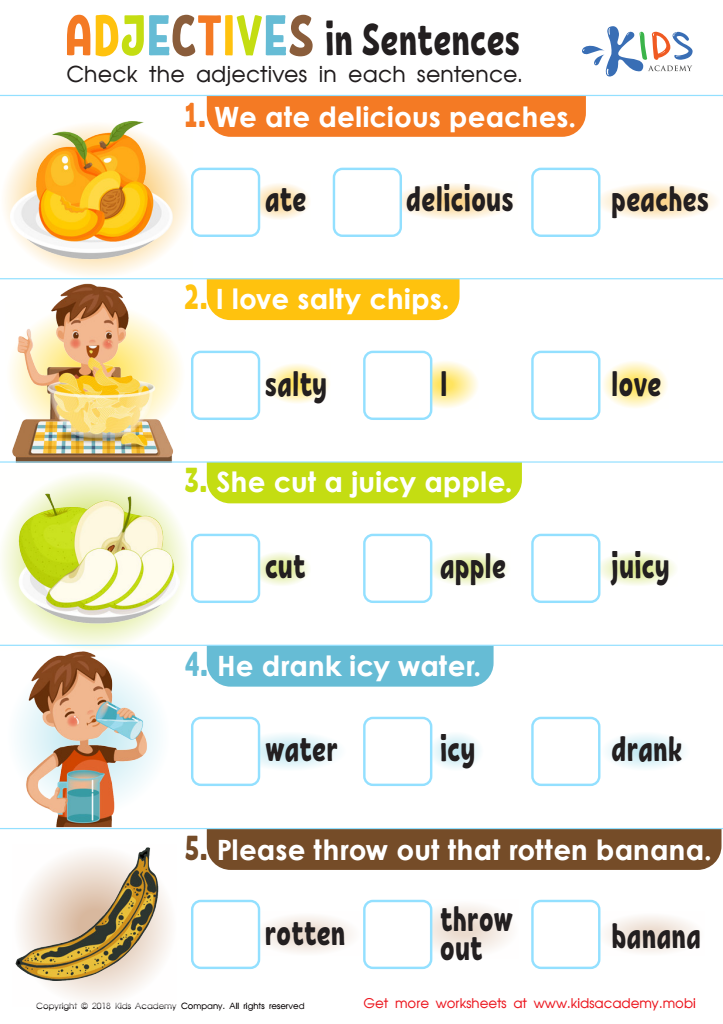
Adjectives in Sentences Worksheet







Understanding adjectives is vital for children aged 3-8, as these descriptive words enrich language development and comprehension. For parents and teachers, recognizing the importance of adjectives helps in nurturing effective communication skills in young learners. Adjectives describe nouns, providing specific details that help children articulate their thoughts and feelings more clearly.
By introducing adjectives, educators can enhance vocabulary and encourage creativity in storytelling, prompting children to explore and express ideas in richer, more colorful ways. This knowledge not only aids in academic success but also fosters confidence in verbal and written communication.
Moreover, comprehension of adjectives supports cognitive development. Children learn to categorize characteristics, observe differences and similarities, and think critically about the world around them. Engaging with adjectives in playful contexts—such as through games, books, and activities—makes learning enjoyable and memorable.
Teachers and parents who prioritize this understanding lay the foundation for advanced literacy skills, enabling children to make more nuanced connections and express themselves more effectively as they grow. Additionally, in an increasingly descriptive and complex world, mastering adjectives equips children with tools to navigate and articulate their experiences. Understanding adjectives is thus a crucial step toward proficient communication and overall language mastery.








