Understanding plant growth Normal Worksheets for Ages 3-8
3 filtered results
-
From - To
Our "Understanding Plant Growth" worksheets for ages 3-8 offer young learners an enjoyable way to explore the wonders of nature. Perfectly tailored for early childhood education, these printable worksheets help children discover the basics of how plants grow. Engaging activities guide kids through the life cycle of plants, from seed germination to blooming flowers. By combining visual aids with hands-on exercises, these worksheets enhance learning and retention. They're a valuable resource for parents, teachers, and caregivers seeking to instill scientific curiosity and a love for the environment in young minds. Download today and nurture budding curiosity with ease!
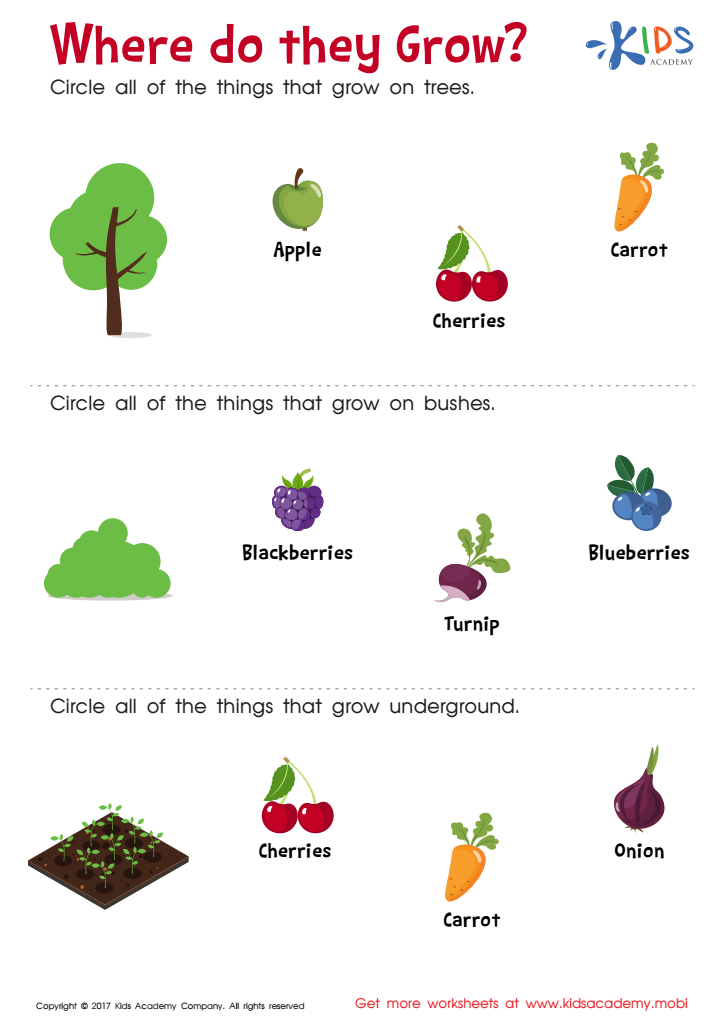
Where Do They Grow Worksheet
 Assign to My Students
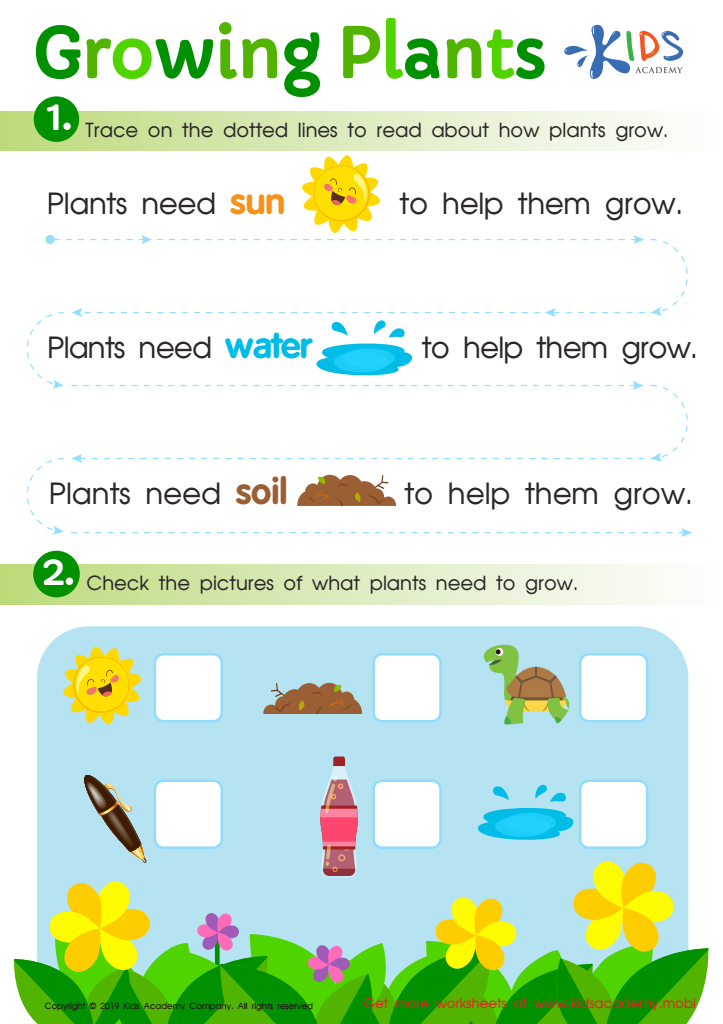
Growing Plants Worksheet
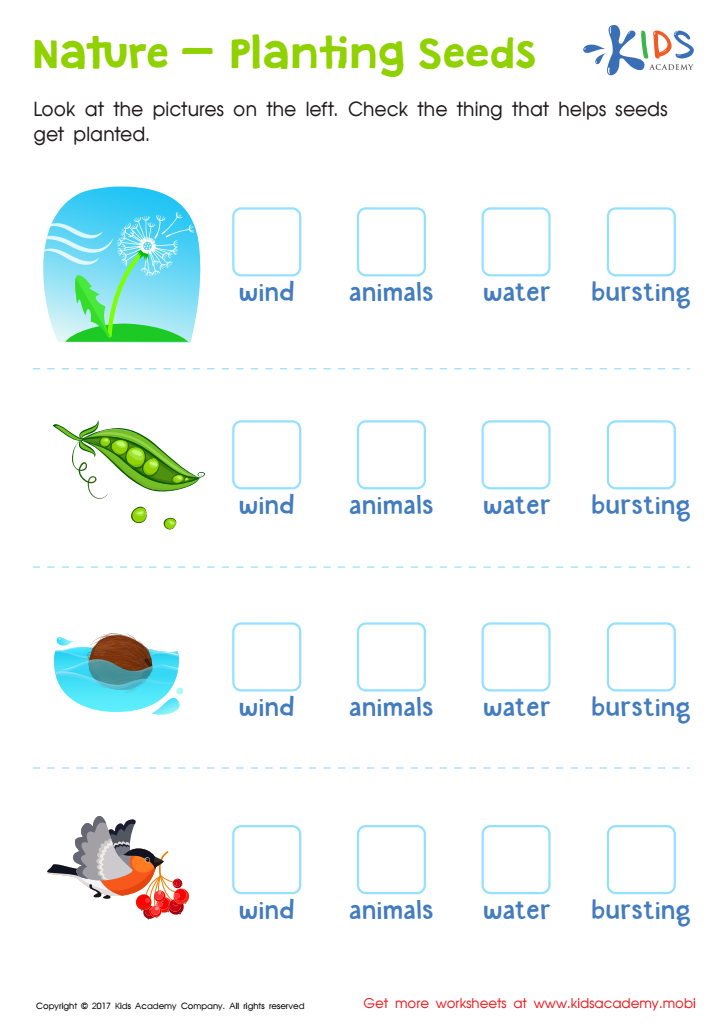
Nature Planting Seeds Worksheet








Understanding plant growth is essential for young children (ages 3-8) because it nurtures their curiosity and provides foundational learning about the world around them. Parents and teachers play a pivotal role in this educational journey. Introducing children to the basics of plant growth helps them develop important scientific concepts such as life cycles, needs of living things, and environmental awareness.
By caring about plant growth, parents and teachers enable hands-on learning experiences through activities like planting seeds, watering plants, and observing changes. These activities cultivate a sense of responsibility and patience as children wait for their plants to grow. They also enhance fine motor skills and promote outdoor activity, contributing positively to physical health.
Moreover, understanding plant growth connects children to the environment, fostering a deeper appreciation for nature and sustainability. It also integrates various subjects such as math (measuring growth), art (drawing plants), and literacy (reading plant stories), creating a well-rounded educational experience.
Additionally, these experiences can spark lifelong interests in science and gardening, encouraging future environmental stewardship. In summary, parents and teachers should prioritize understanding plant growth to foster curiosity, responsibility, and a well-rounded education in children, setting a strong foundation for lifelong learning and appreciation of the natural world.








