Understanding timelines Normal Worksheets for Ages 3-8
3 filtered results
-
From - To
Welcome to our "Understanding Timelines" worksheet page, designed specifically for children aged 3-8. These engaging worksheets help young learners grasp the concept of timelines through visually stimulating activities that introduce sequencing and the passage of time. With user-friendly layouts and relatable themes, this resource supports early childhood education by encouraging critical thinking and storytelling skills. Children will enjoy identifying past, present, and future events while enhancing their ability to organize information. Perfect for home-schooling or classroom use, our worksheets promote developmental growth and a solid foundation in understanding timelines. Explore today and inspire your child's love for learning!
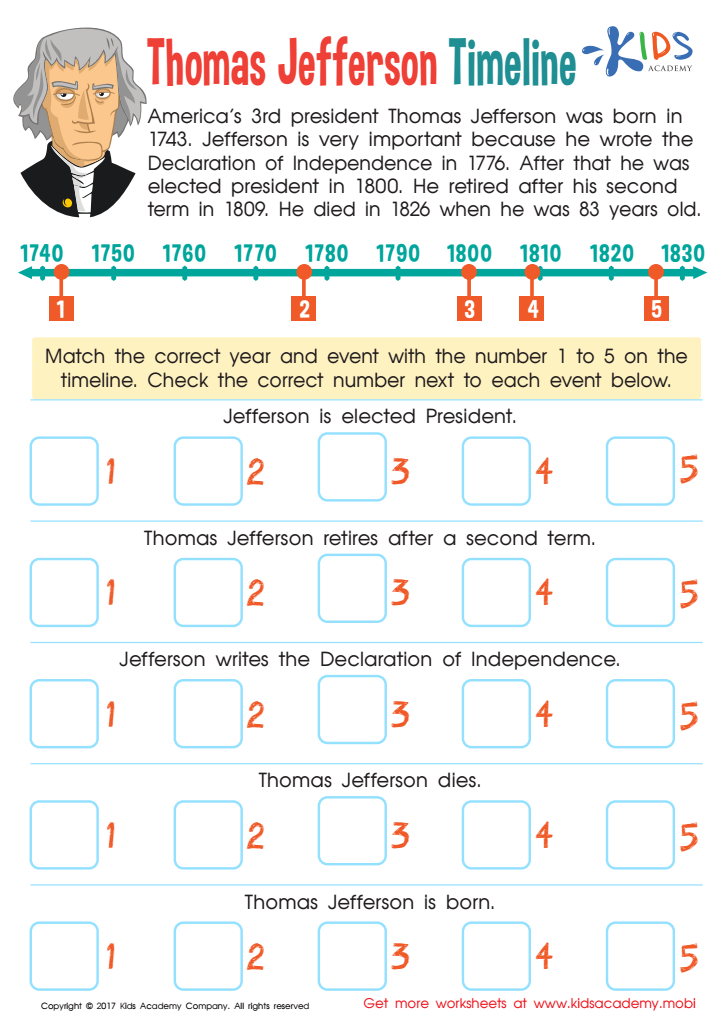
Thomas Jefferson Timeline Worksheet
 Assign to My Students
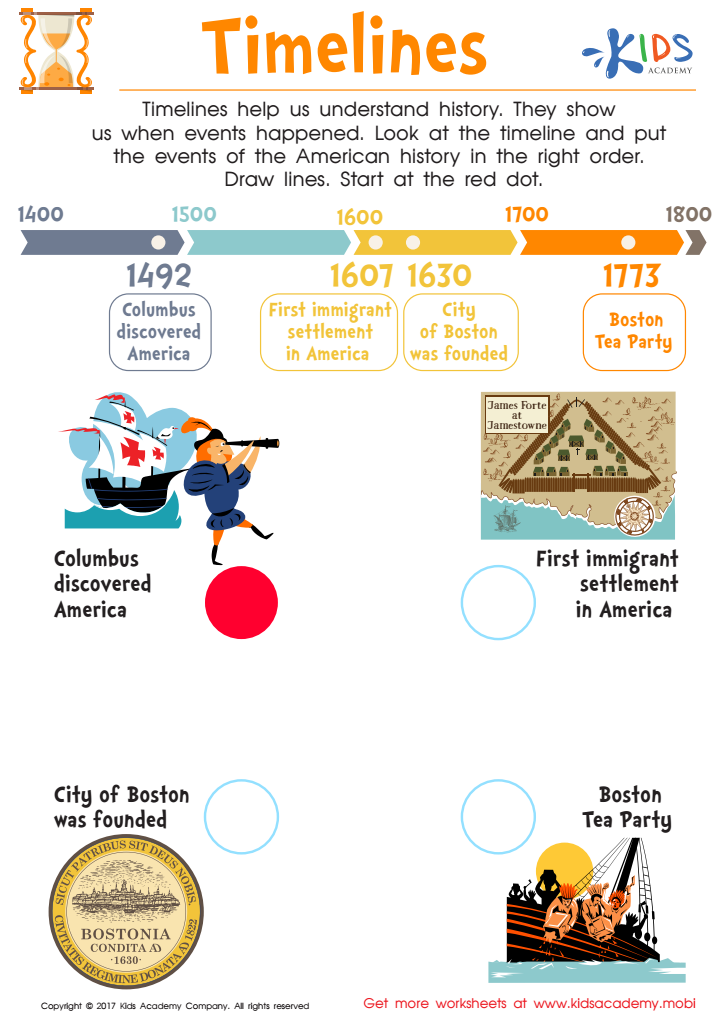
American History Timeline Worksheet
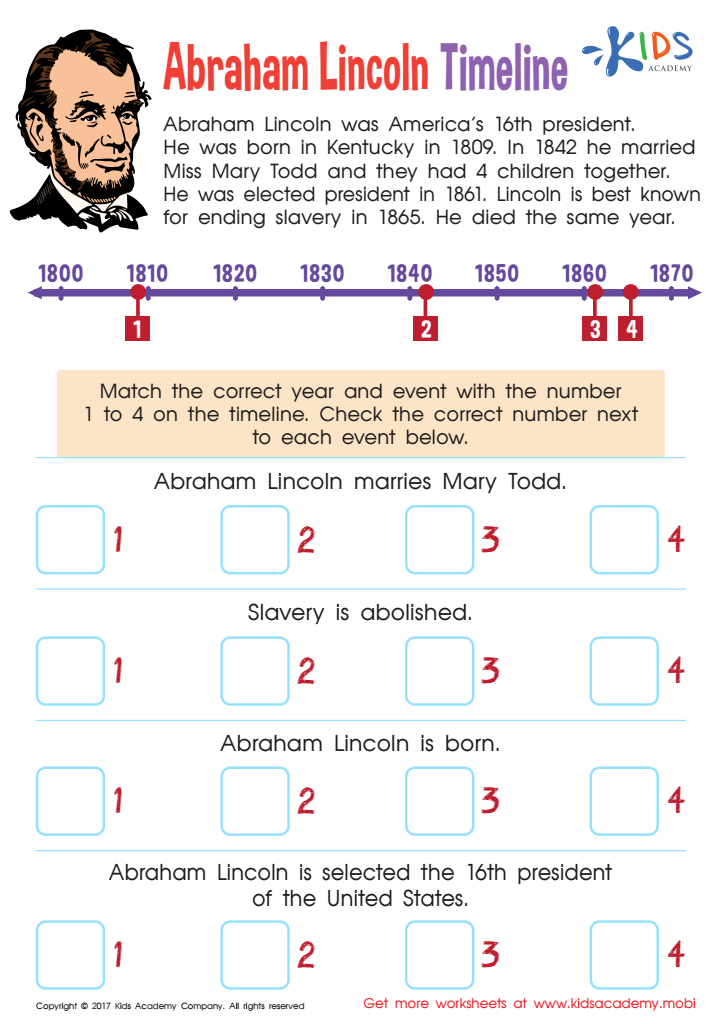
Abraham Lincoln Timeline Worksheet







.jpg)
Understanding timelines is crucial for children aged 3-8 as it lays the foundation for their cognitive and emotional development. During these formative years, kids begin grasping the concept of time—past, present, and future—which helps them make sense of their experiences and the world around them. Parents and teachers should pay particular attention to this concept because it aids in the development of executive functioning skills, such as memory, planning, and organization.
By introducing simple timelines through visuals and storytelling, educators can help children relate personal experiences to a chronological sequence, enhancing their narrative skills and comprehension. This practice fosters a sense of security as children learn to recognize patterns and anticipate events, whether it’s understanding daily routines or seasonal changes.
Additionally, timelines can be a powerful tool for fostering empathy, as children learn about historical events, people, and cultures, which broadens their perspective. Active engagement with timelines also promotes critical thinking, as young learners begin to analyze relationships between causes and effects.
In essence, by prioritizing the understanding of timelines, parents and teachers equip children with valuable skills that enhance their learning, enrich their social understanding, and contribute positively to their emotional well-being.








