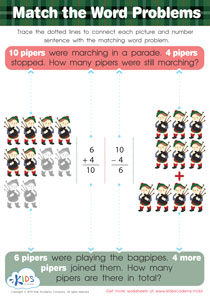
Mental math skills Normal Addition Worksheets for Ages 3-8
5 filtered results
-
From - To
Enhance your child's arithmetic abilities with our Mental Math Skills Normal Addition Worksheets for Ages 3-8. Tailored to nurture early mathematical prowess, these engaging worksheets foster swift and accurate addition skills. Suitable for young learners, the exercises focus on basic addition while promoting cognitive development and numerical fluency. Kids will enjoy colorful, age-appropriate activities that make learning fun and effective. Ideal for both classroom use and at-home practice, our worksheets help build a strong foundational understanding of math concepts, preparing your child for future academic success. Start boosting your child's mental math confidence today with these essential tools.
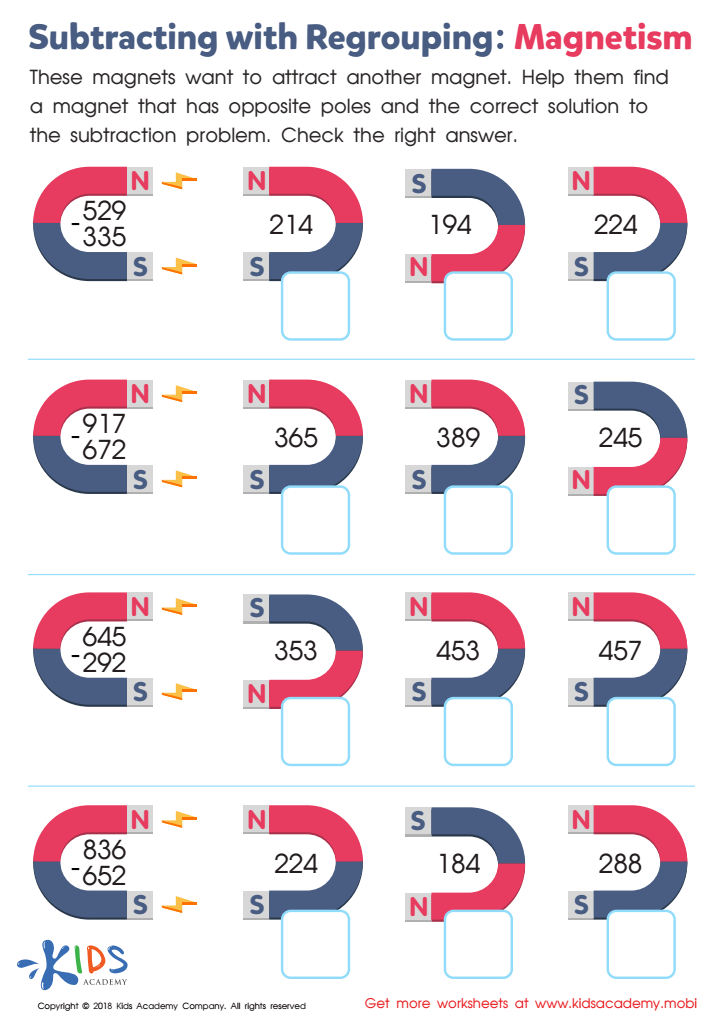
Subtracting with Regrouping: Magnetism Worksheet
 Assign to My Students
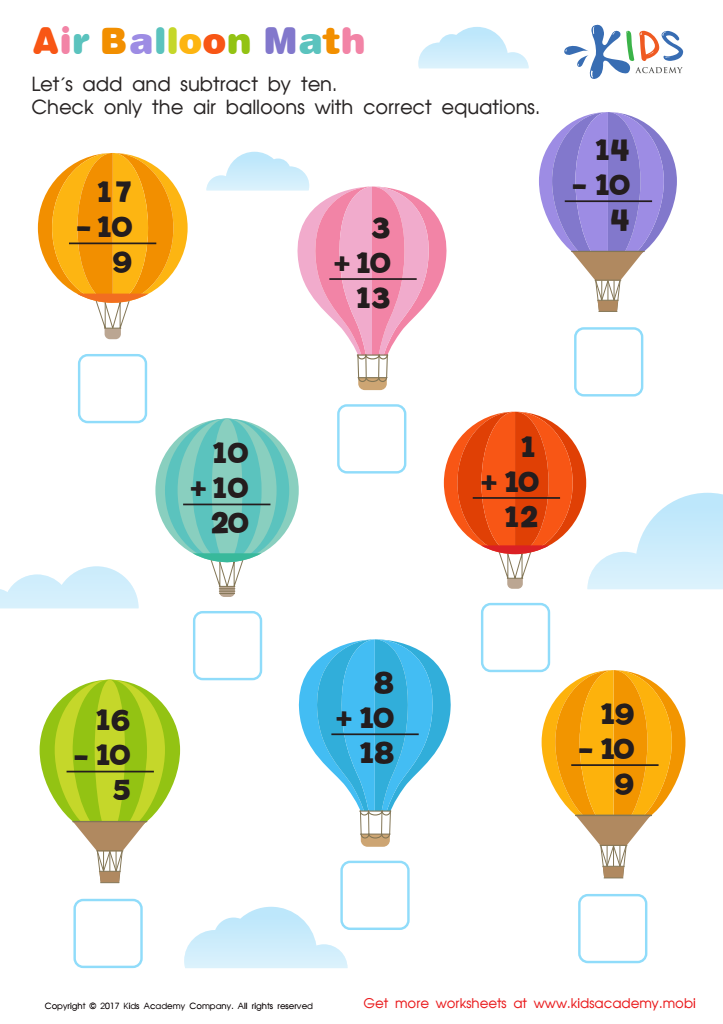
Air Balloon Math Worksheet
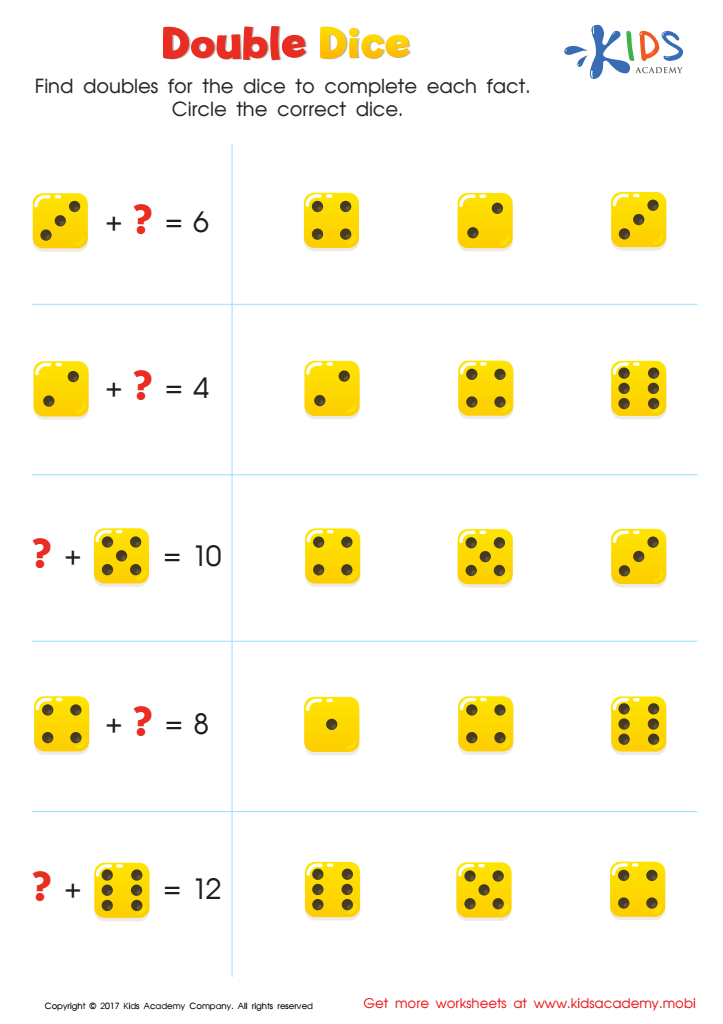
Addition Facts: Double Dice Worksheet
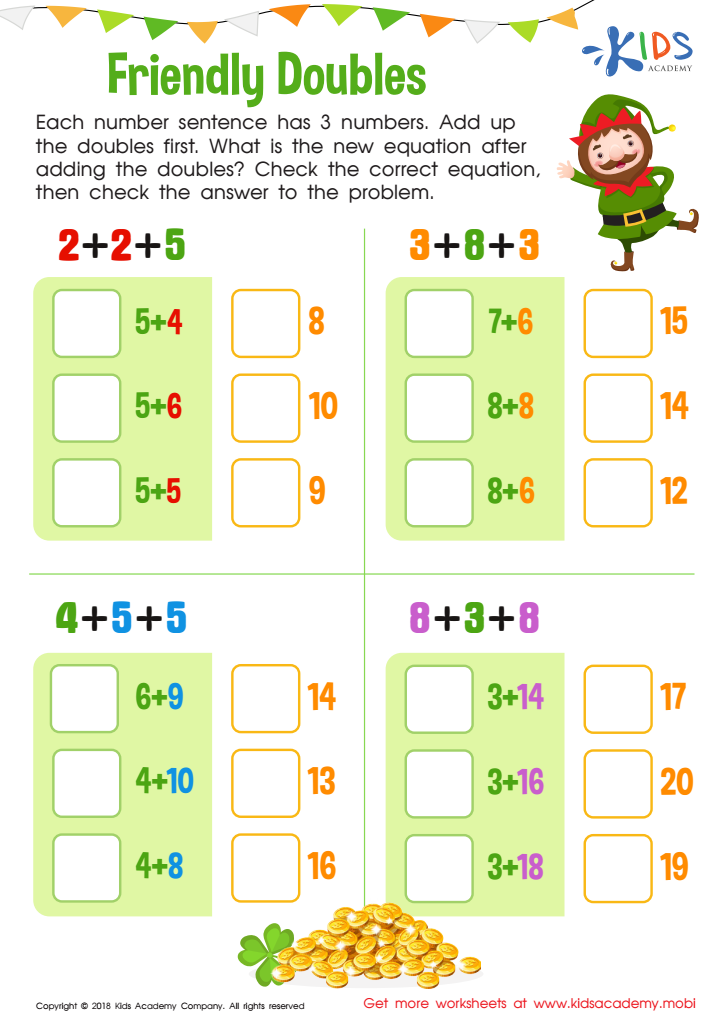
Friendly Doubles Worksheet
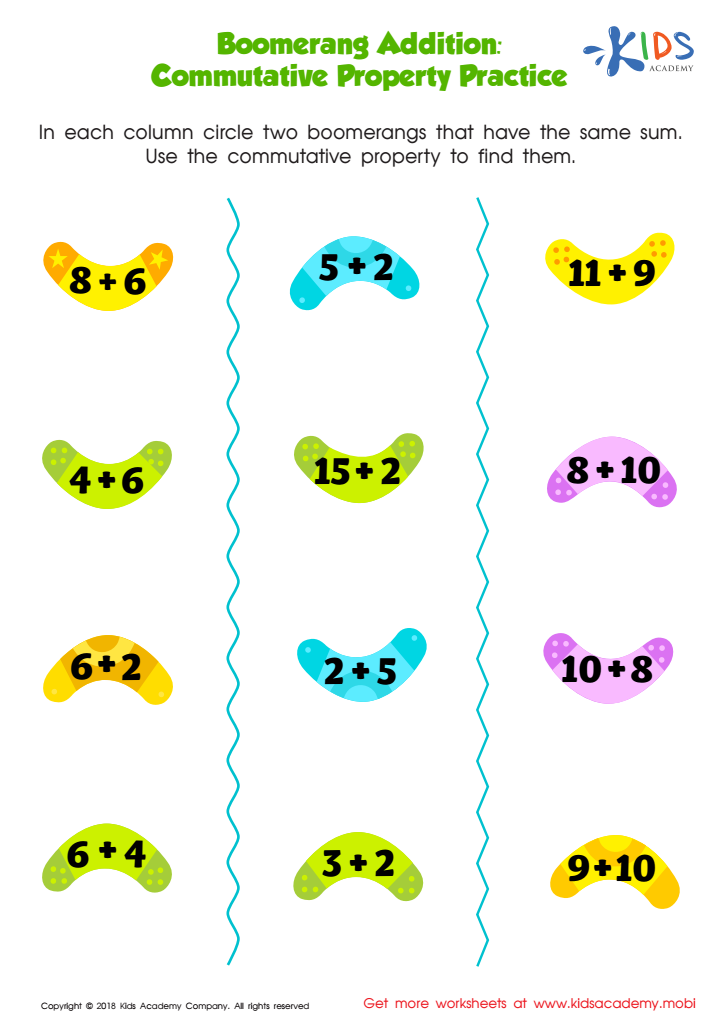
Boomerang Addition Worksheet








Mental math skills, particularly basic addition, are crucial for children aged 3-8, as they form the foundation for more advanced mathematical concepts. When children practice mental arithmetic, they enhance their numerical fluency and develop a deep understanding of number relationships. This skill aids in quicker problem-solving and reduces dependency on calculators or written methods, making daily math tasks in school easier.
For young children, developing mental addition skills also strengthens cognitive abilities such as memory, attention, and logical thinking. These cognitive skills are essential not only for math but for overall academic success. Mental math promotes confidence, as children feel more capable and self-assured when they can solve problems independently. This heightened self-esteem can positively impact their attitude toward other subjects and learning in general.
Moreover, mental math exercises engage children in fun, interactive, and practical ways, reinforcing the idea that math is a part of everyday life. Activities such as counting objects, understanding quantities, and performing simple transactional calculations establish real-world applications for math early on. Thus, both parents and teachers should prioritize mental math skills, especially normal addition, to support children's comprehensive cognitive development and lifelong learning skills.