Understanding times tables Normal Advanced Times Tables up to 12 Worksheets for Ages 3-8
3 filtered results
-
From - To
Explore our "Understanding Times Tables" worksheets designed for children aged 3-8! These engaging resources cover normal and advanced times tables up to 12, aiming to build foundational math skills in a fun and interactive way. Our carefully crafted worksheets provide a step-by-step approach to help kids master multiplication concepts, enhancing their confidence and problem-solving abilities. Each worksheet is tailored to fit various learning styles, making math enjoyable and accessible for every child. Download now and watch your little learners thrive as they embark on their journey to becoming multiplication masters! Perfect for home or classroom use.
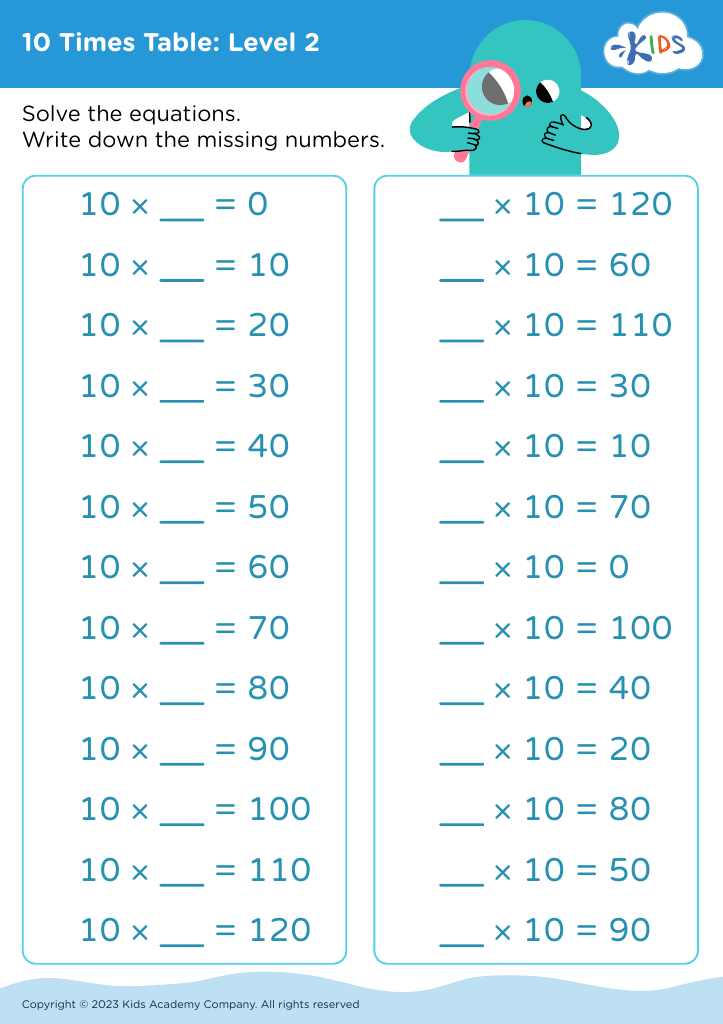
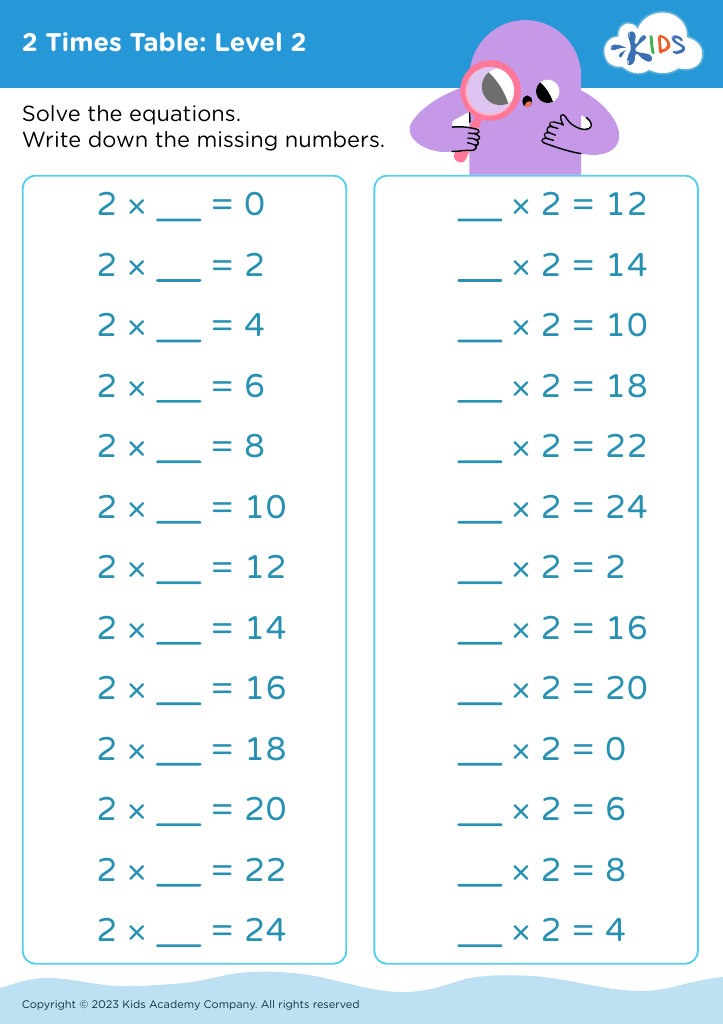
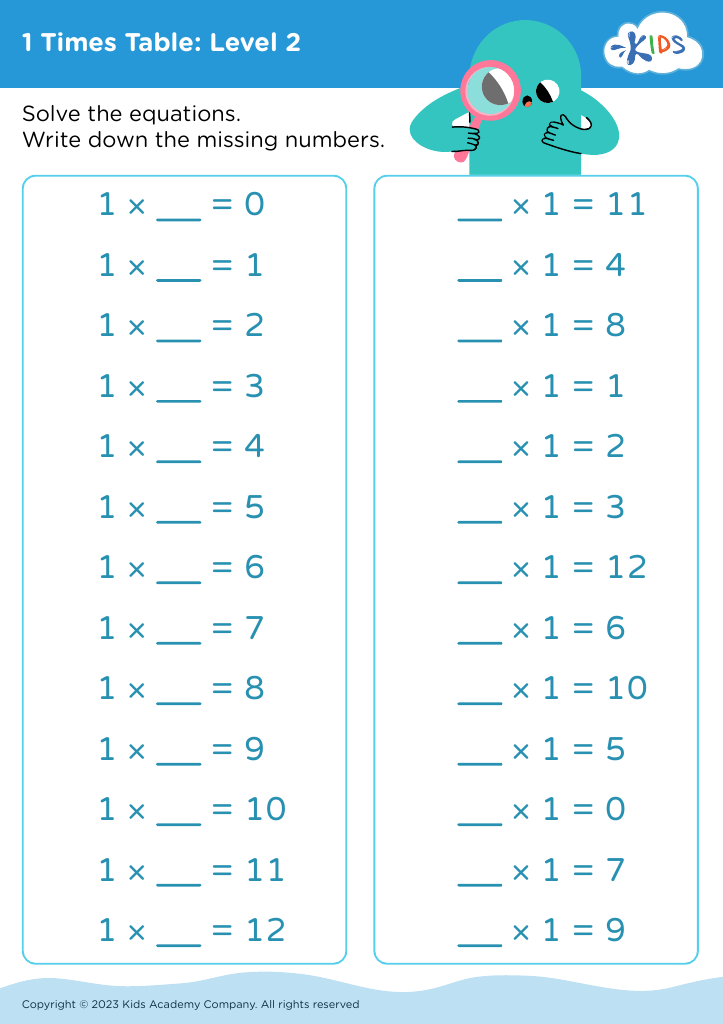



Understanding times tables from an early age is crucial for children’s mathematical development and confidence in math. For children aged 3-8, learning normal advanced times tables up to 12 lays a solid foundation for future mathematical concepts. Early mastery of multiplication helps develop abstract thinking and problem-solving skills as students begin to understand relationships between numbers.
When parents and teachers emphasize times tables, they encourage recognition of patterns and enhance mental math abilities. This knowledge aids in quicker calculations and reinforces other math-related skills such as division and fractions.
Moreover, grasping these concepts at an early age can reduce math anxiety, leading to a more positive attitude toward learning. It can also help children excel academically as they progress through school. The times tables serve as building blocks for more complex mathematical concepts, putting children at an advantage when they encounter algebra and geometry in later years.
Additionally, engaging teaching methods like games, songs, and interactive activities can make learning times tables enjoyable, fostering a love for learning while helping children see the practical applications of math in everyday life. Therefore, both parents and teachers should prioritize understanding times tables in young learners.








