Understanding times tables Normal Math Worksheets for Ages 3-8
3 filtered results
-
From - To
Unlock the magic of multiplication with our "Understanding Times Tables" worksheets for ages 3-8! Designed to foster a solid foundation in math, these engaging activities introduce children to the concept of times tables through colorful visuals and interactive exercises. Aimed at younger learners, these worksheets simplify complex ideas and make learning fun. With step-by-step instructions and varying skill levels, kids will develop their multiplication skills at their own pace. Perfect for classroom or home use, our resources empower parents and teachers to encourage mathematical confidence and fluency in young learners. Start the journey to mastery in math today!
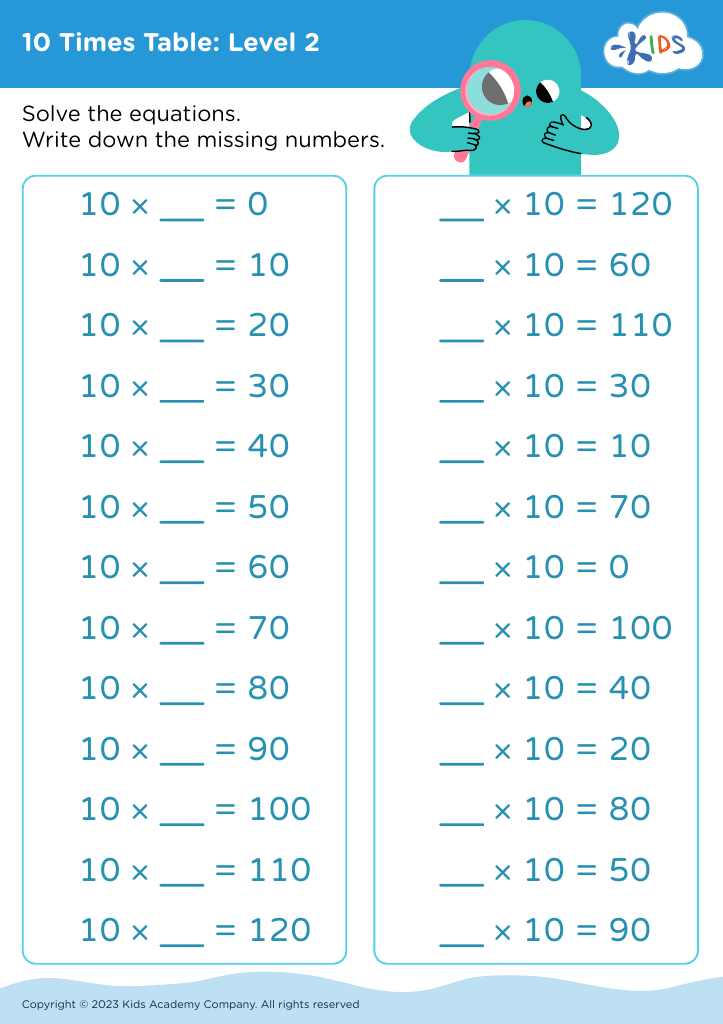
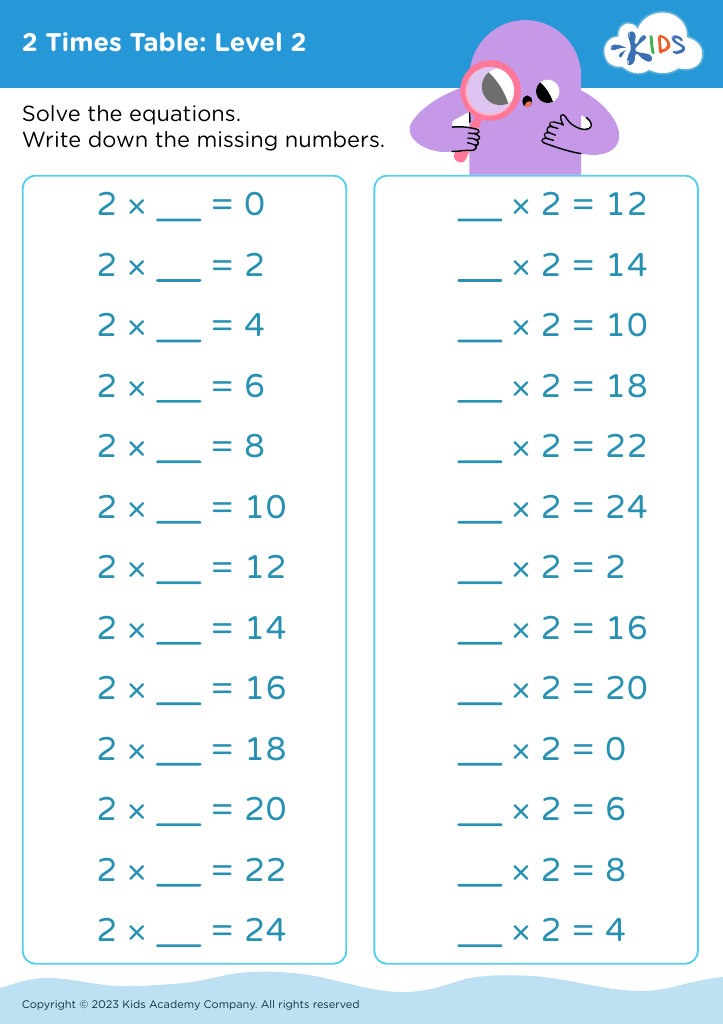
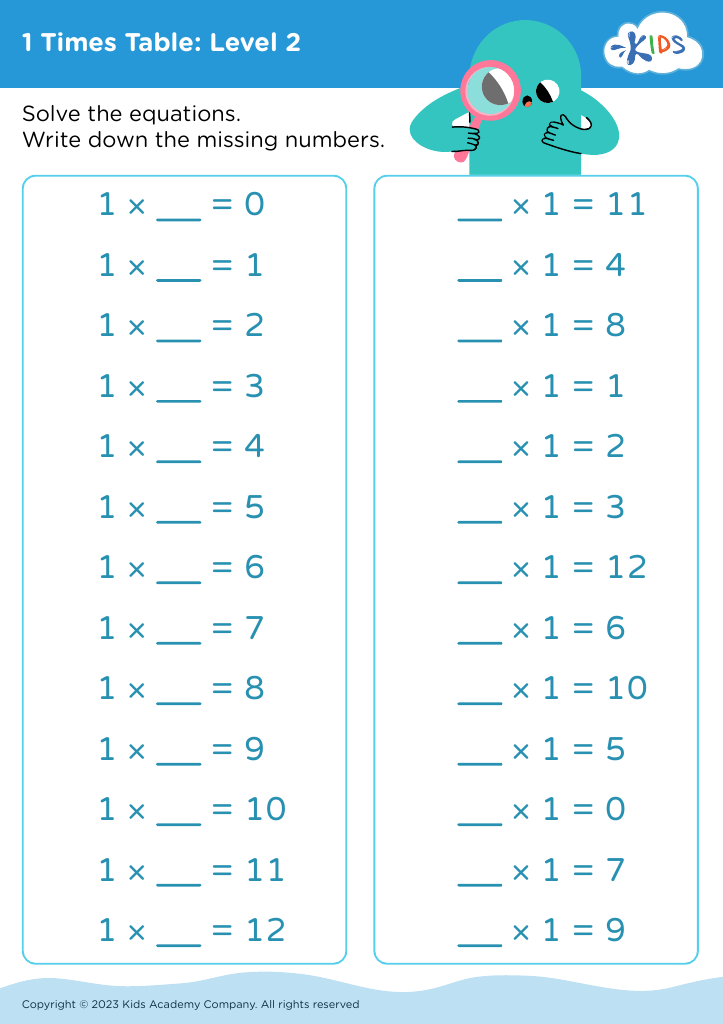







Understanding times tables is crucial for children aged 3-8 as it lays a strong mathematical foundation for future learning. By familiarizing young learners with multiplication concepts early on, parents and teachers help foster mathematical fluency, making operations like addition, subtraction, and division more intuitive. Mastery of times tables enhances problem-solving skills, as children learn to recognize patterns and relationships in numbers.
Engaging with times tables at an early age also promotes mental math abilities, which are essential for everyday decision-making and skills such as budgeting and cooking. Furthermore, a solid grasp of multiplication boosts confidence in math, reducing anxiety during assessments later in their academic careers.
Additionally, times tables can be integrated into fun, interactive activities—like games or songs—keeping learning enjoyable and stimulating engagement. This approach supports various learning styles, encouraging participation among different learners.
Incorporating times tables into early education creates a yearning for knowledge and primes children for advanced mathematical concepts. Ultimately, both parents and teachers play a pivotal role in nurturing these skills, ensuring that children not only build competence but also a positive attitude toward math. This engagement will yield long-term benefits in their academic and personal lives.








