
Vocabulary development Normal Matching Worksheets for Ages 3-8
3 filtered results
Difficulty Level
Grade
Age
-
From - To
Subject
Activity
Standards
Unlock the world of words with our engaging Vocabulary Development Normal Matching Worksheets for children ages 3-8! Designed to enhance language skills, these worksheets provide a fun and interactive way for young learners to connect words with their meanings. Perfect for home or classroom use, the activities foster critical thinking and comprehension through matching exercises that include pictures and words. Encourage your child's linguistic growth while cultivating their joy for learning. With easy-to-follow instructions, these worksheets are ideal for parents and teachers looking to enrich vocabulary knowledge in an enjoyable and memorable way. Start building your child's vocabulary today!
Favorites
With answer key
Interactive
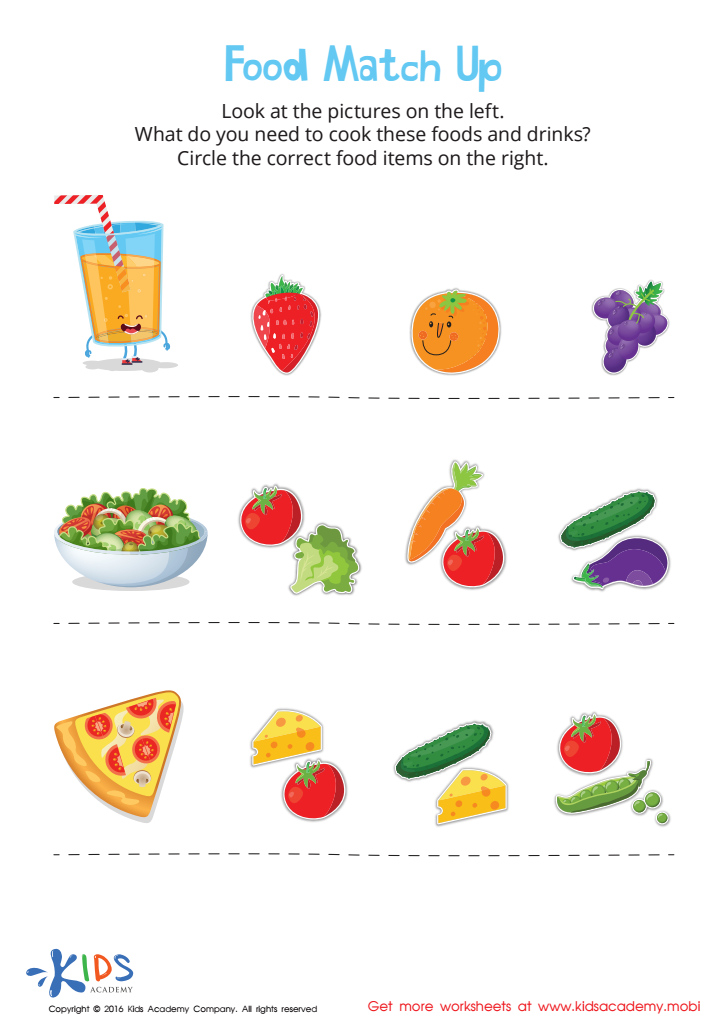
Food Match Up Worksheet
This worksheet will help your preschooler develop early math and cognitive skills. It challenges them to pay attention to details, understand how smaller parts make a whole, and increase important matching skills. Use it to give them a hands-on learning experience in the kitchen, and watch them understand how ingredients come together to make something delicious!
 Assign to My Students
Food Match Up Worksheet
Worksheet
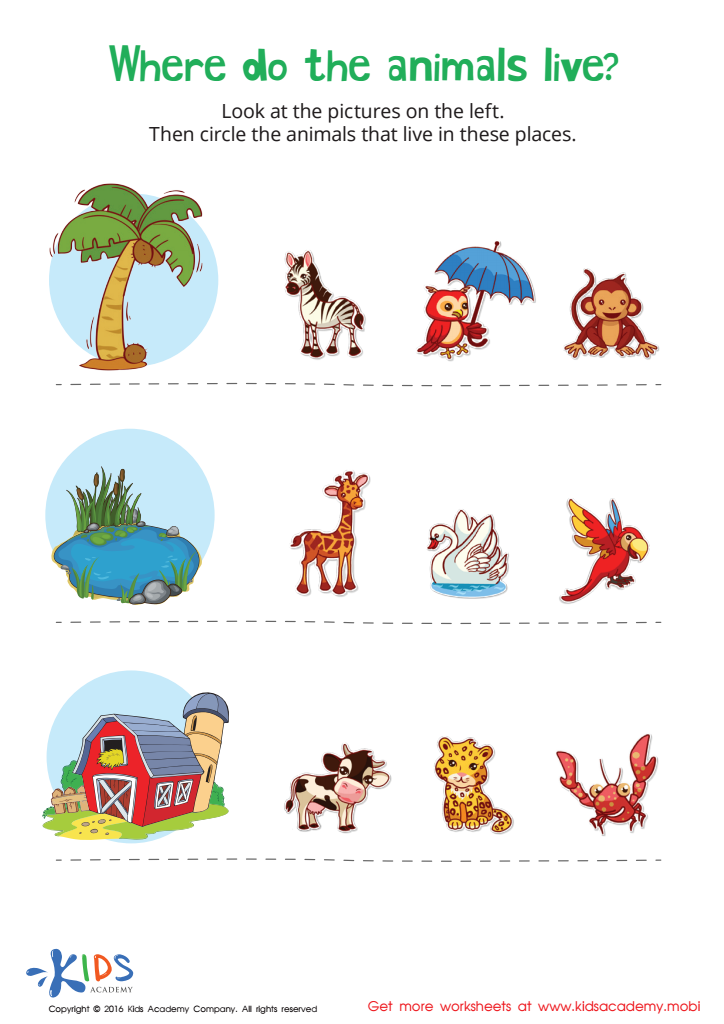
Where Animals Live Worksheet
Teaching early reading and math skills is important, but don't forget about science. With the Where Animals Live PDF worksheet, kids can identify their favorite animals and the environments they live in. Ask them what type of environment the animals like and introduce them to geography. It's great for logical reasoning and classification skills. Your kid will practice with their favorite animals and love the trip to the zoo afterwards!
Where Animals Live Worksheet
Worksheet
Join Kids Academy for Free
Who is primarily going to use this learning content?








Vocabulary development is crucial for children aged 3-8 as it lays the foundation for their overall language and cognitive skills. During this formative stage, children absorb language at an astounding rate, making it a prime time for vocabulary growth. A rich vocabulary enhances children's ability to express their thoughts, emotions, and ideas clearly and effectively, which boosts their confidence and engages them socially.
Teachers and parents play essential roles in fostering this development. Exposure to diverse words through conversations, storytelling, and reading not only introduces children to new terms but also enhances their comprehension skills. Proficient vocabulary aids academic success by allowing children to understand instructions, engage in discussions, and perform well on reading assessments.
Moreover, vocabulary development is linked to critical thinking and problem-solving skills, essential for future learning. Engaging children in activities like word games, rhymes, and literacy-rich interactions can significantly enhance their vocabulary. Thus, investing time and effort into vocabulary development can have lasting positive impacts, supporting crucial skills that children will carry into their academic journey and beyond. Overall, nurturing vocabulary growth in young learners should be a priority for both parents and educators.








