Understanding times tables Normal Times Tables Worksheets for Ages 3-8
3 filtered results
-
From - To
Welcome to our resource page for "Understanding Times Tables: Normal Times Tables Worksheets for Ages 3-8." Our engaging printable worksheets are designed to introduce children to the fundamentals of multiplication through a fun and interactive approach. These resources cater to young learners, helping them grasp key concepts behind times tables while reinforcing their math skills. Perfect for classroom activities or at-home practice, our worksheets aim to make learning enjoyable and accessible. By mastering times tables, children build a strong foundation in mathematics that supports their overall academic growth. Start exploring our worksheets today and watch your child’s confidence soar!
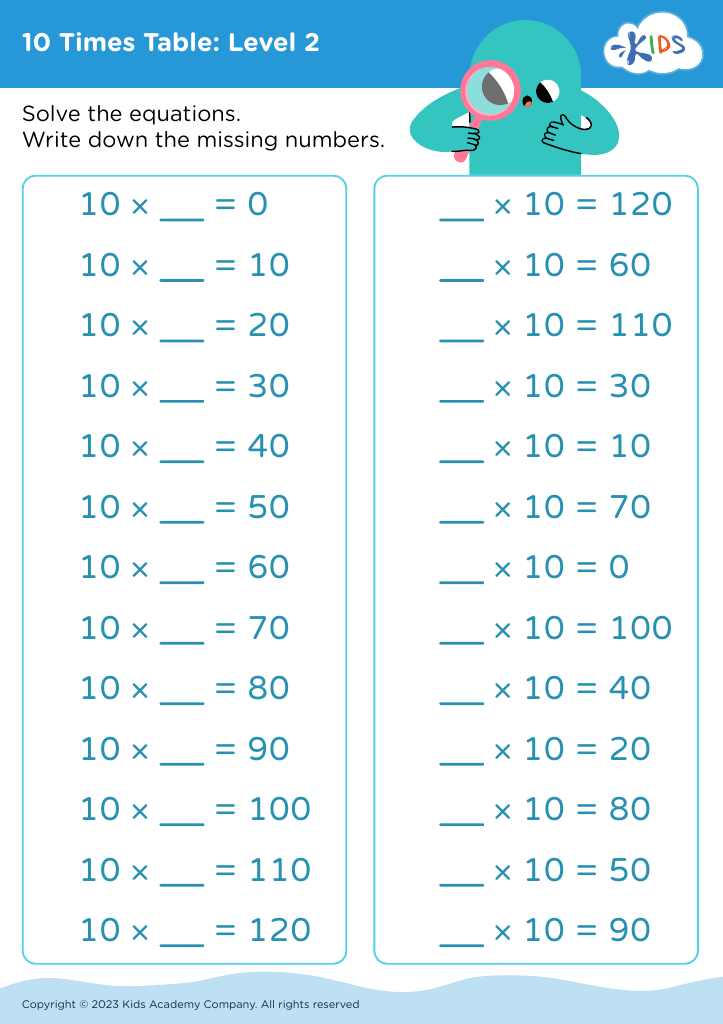
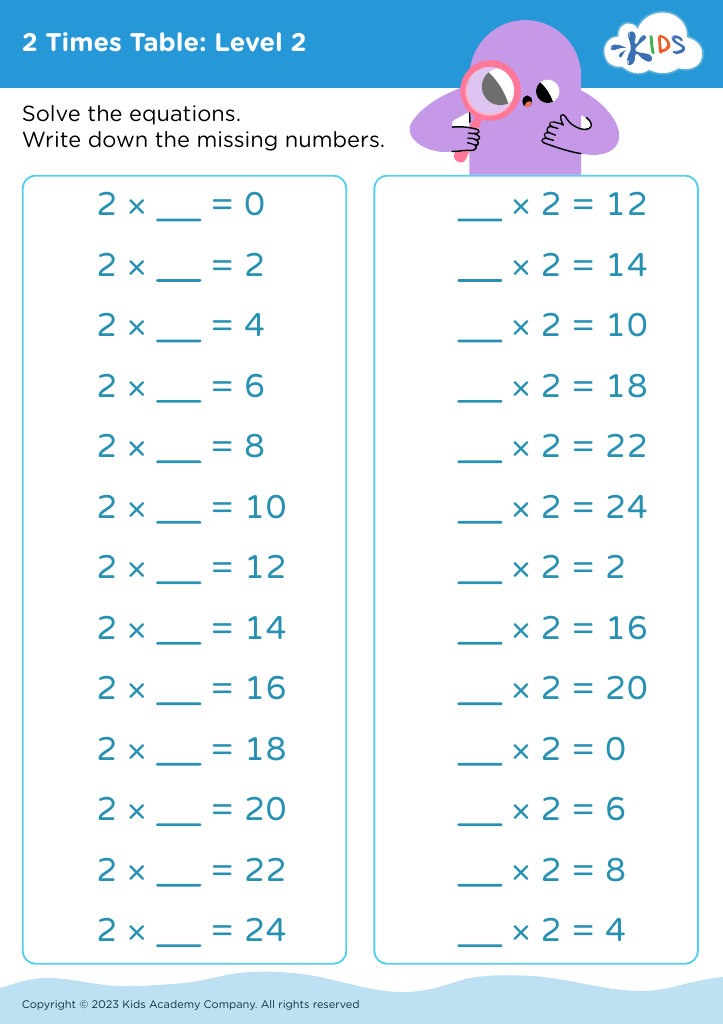
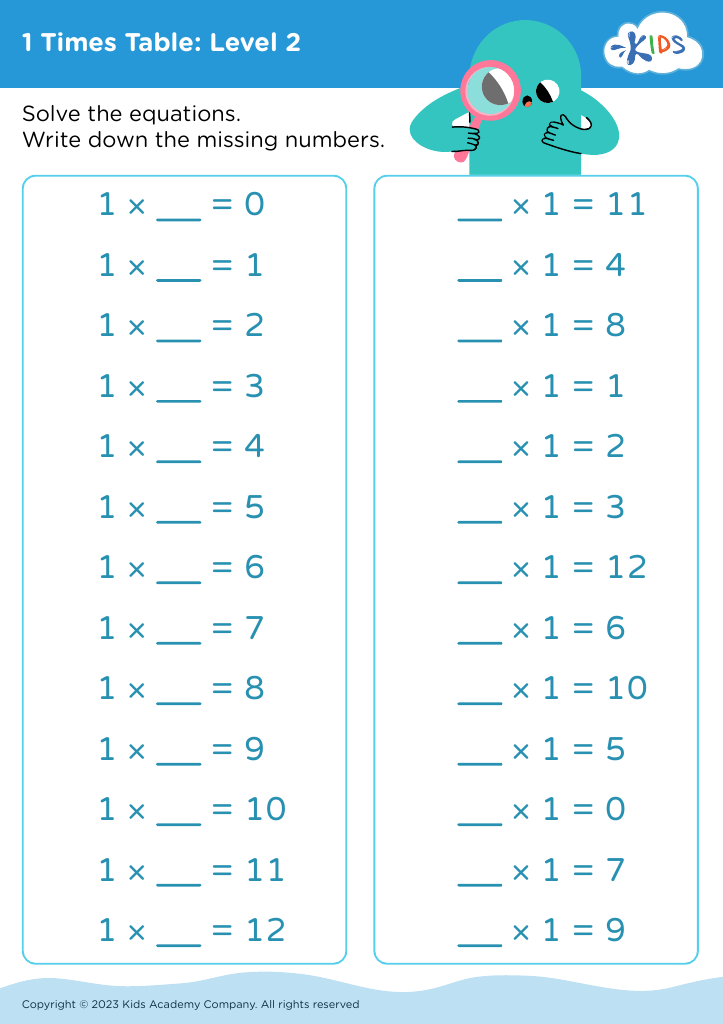





Understanding times tables is crucial for children aged 3-8 as it lays the foundation for their mathematical development. Mastering these concepts enhances numerical fluency, which is essential not just for basic arithmetic but also for higher-level mathematics encountered later in school. Early exposure to times tables helps children recognize patterns within numbers, fostering critical thinking and problem-solving skills.
For parents and teachers, focusing on times tables facilitates a fun and engaging way for children to learn. Incorporating games, songs, and activities makes the experience enjoyable and reinforces memory retention, ensuring that children are more likely to grasp these concepts. This foundational knowledge leads to increased confidence as they advance in their studies, reducing math anxiety often seen in later grades.
Furthermore, understanding times tables prepares children for future challenges in subjects that rely heavily on calculation, including geometry and algebra. Equipping children with a solid grasp of multiplication provides them with valuable skills for life, such as budgeting and measuring. With parents' and teachers' active involvement, children are more likely to develop a positive attitude toward math, setting them on a path to academic success. Ultimately, nurturing early mathematical understanding is essential for developing lifelong learners.








