Logical Reasoning Normal Building Vocabulary Worksheets for Ages 3-8
4 filtered results
-
From - To
Explore our "Logical Reasoning Normal Building Vocabulary Worksheets" tailored for children aged 3-8! These engaging worksheets are designed to enhance vocabulary while promoting critical thinking skills. Perfect for home or classroom use, our activities encourage kids to solve puzzles, identify patterns, and make logical connections, building a strong foundation for reading and language development. Each worksheet combines fun illustrations with educational prompts that foster creativity and comprehension. Our user-friendly resources support young learners in developing logical reasoning skills essential for academic success. Start your child's journey to effective communication and cognitive growth with our vibrant, interactive worksheets today!
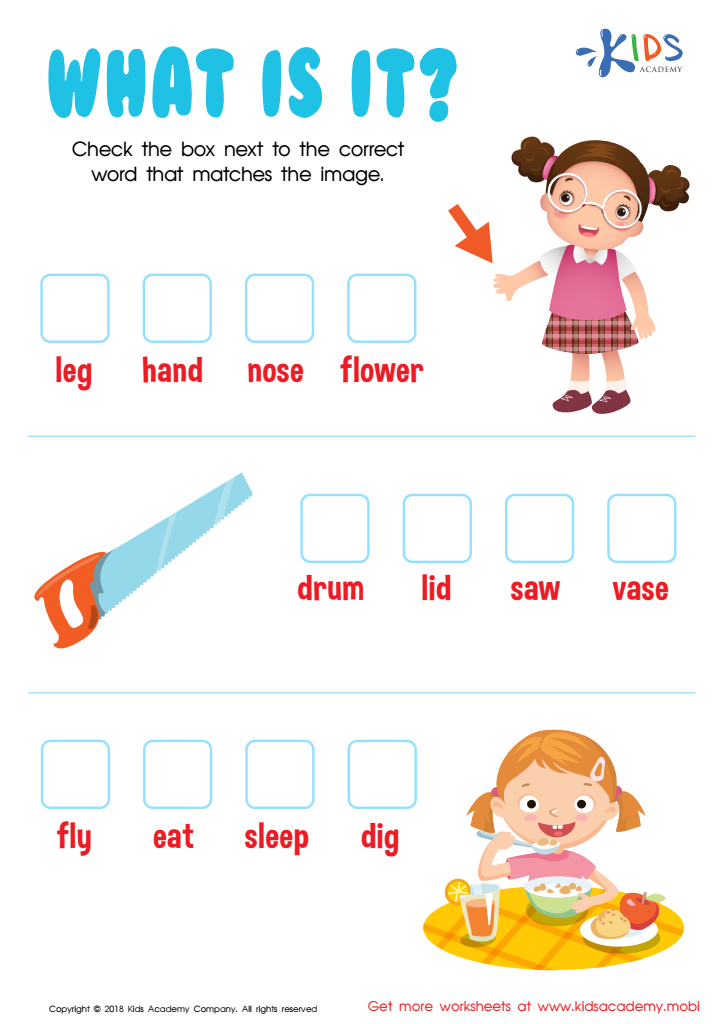
What Is It? Worksheet
 Assign to My Students











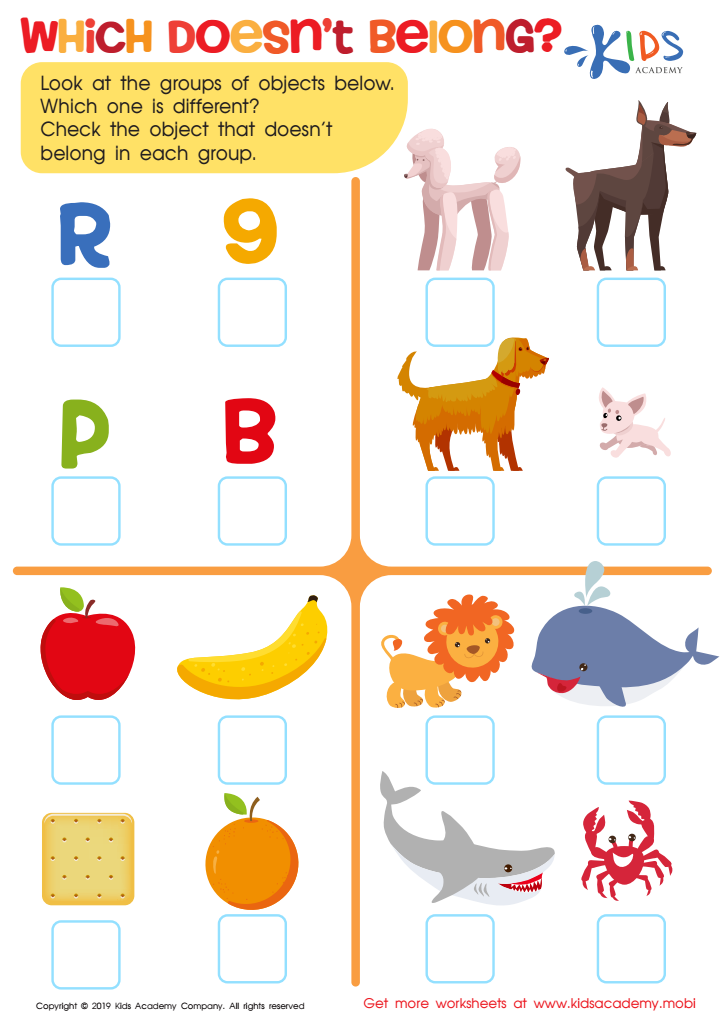
Which Doesn't Belong? Worksheet
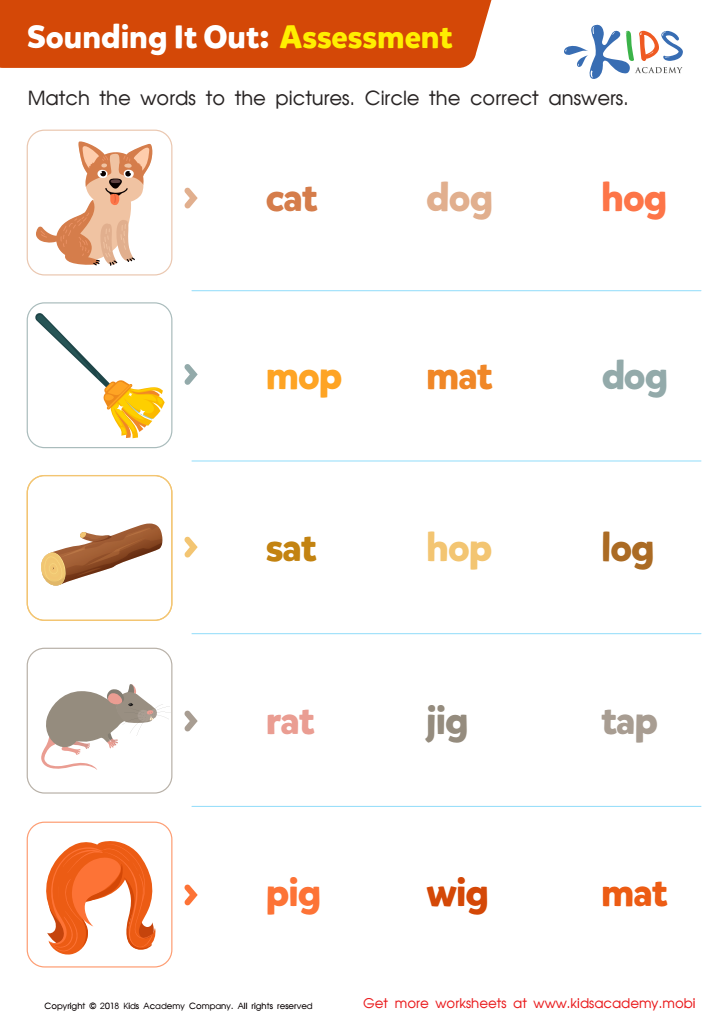
Sounding it Out: Assessment Worksheet
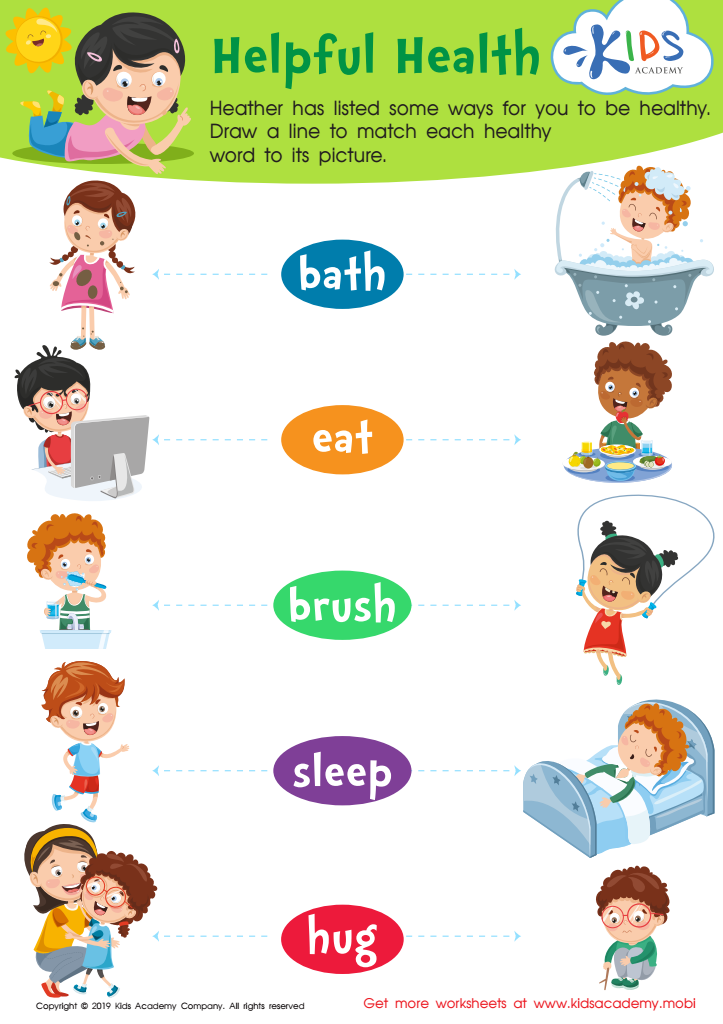
Helpful Health Worksheet







.jpg)
Logical reasoning and vocabulary development are crucial for children aged 3-8, laying the foundation for future academic success and critical thinking skills. During these formative years, children are naturally curious, and engaging them in activities that promote logical reasoning helps sharpen their cognitive abilities. This involves teaching them to recognize patterns, solve simple problems, and think sequentially, which are key skills in all areas of learning.
Additionally, building a strong vocabulary is essential during early childhood. A rich vocabulary enhances a child's ability to express thoughts, ask questions, and comprehend the world around them. Language acquisition at this stage not only supports communication but also boosts reading development, as children who can understand and use a broader range of words typically become better readers.
Moreover, by developing these skills, children become more effective communicators, capable of articulating their ideas and understanding complex instructions. For educators and parents, nurturing these areas enriches children's educational experiences and helps them thrive both in school and in everyday interactions. Investing time in logical reasoning and vocabulary development during these formative years will yield lifelong benefits, equipping children with the tools they need to navigate an increasingly complex world.








