Reading skills development Normal Building Vocabulary Worksheets for Ages 3-8
3 filtered results
-
From - To
Discover our engaging "Building Vocabulary Worksheets" designed specifically for children ages 3-8! These printables promote essential reading skills by helping young learners expand their vocabulary in a fun and interactive way. Each worksheet features creative exercises that encourage word recognition, phonetic understanding, and sentence construction. As children complete these activities, they'll enhance their language comprehension and build a strong foundation for future reading success. Our materials are perfect for teachers and parents alike, making learning enjoyable and effective. Foster your child’s love for reading today and watch their confidence soar with our innovative worksheets!
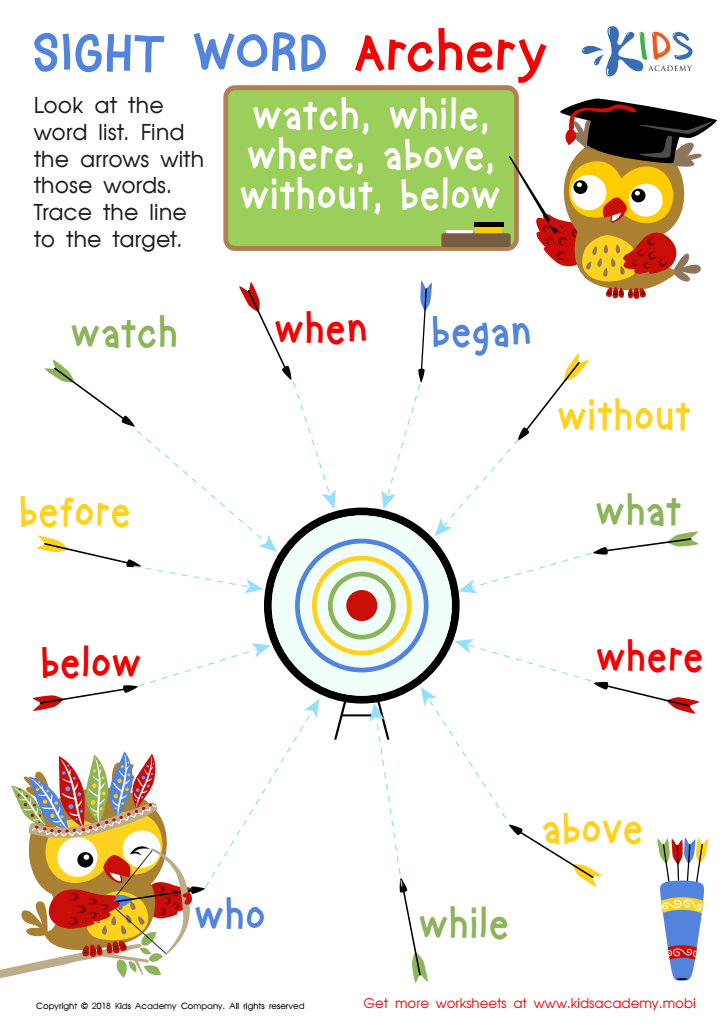
Sight Word Archery Worksheet
 Assign to My Students











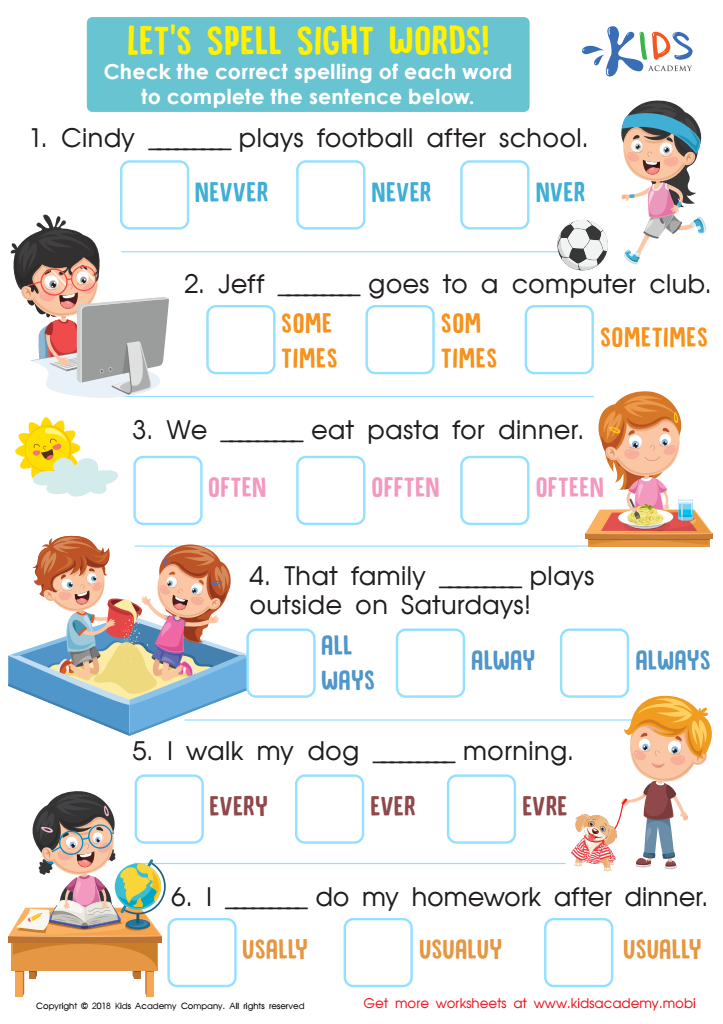
Let's Spell Sight Words Worksheet
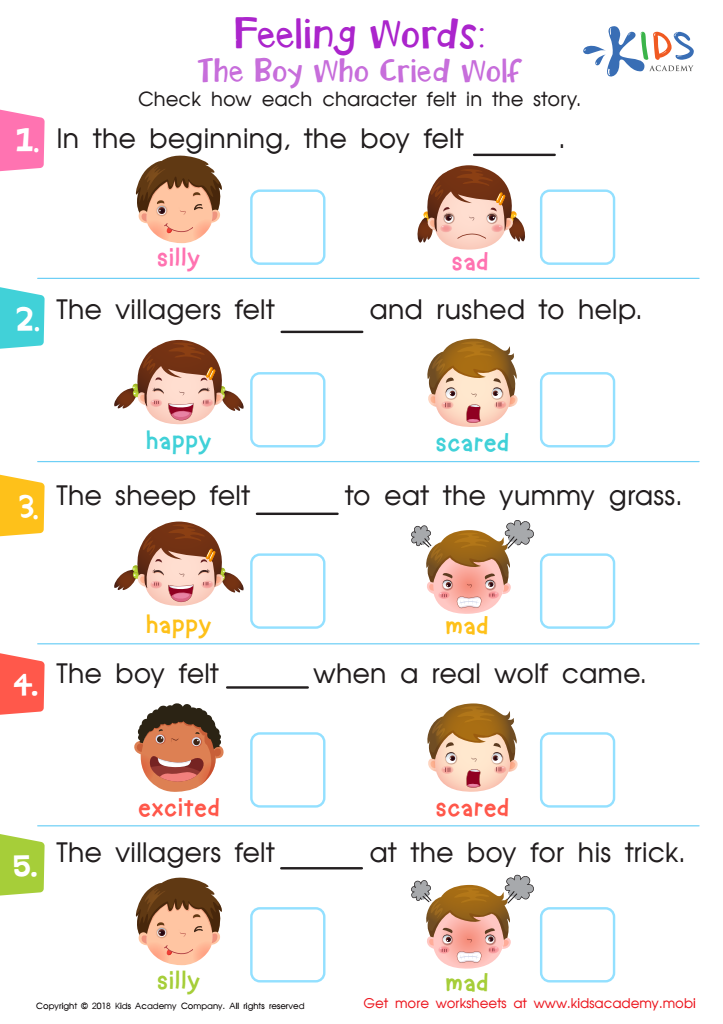
Feeling Words: The Boy Who Cried Wolf Worksheet




.jpg)



Parents and teachers should be deeply invested in the reading skills development and vocabulary building of children aged 3-8 because these foundational skills are crucial for academic success and lifelong learning. At this early stage, children's brains are highly receptive to language, making it an optimal time for vocabulary expansion. A rich vocabulary not only enhances comprehension and communication skills but also boosts confidence and fosters a love for reading.
When children understand a wide range of words, they can engage more meaningfully with texts, leading to better understanding and critical thinking abilities. Strong reading skills also correlate significantly with improved performance across all subjects in school, from math to science. Furthermore, early literacy experiences can influence social skills, as children with well-developed language abilities often find it easier to express themselves and build friendships.
Additionally, in our increasingly interconnected world, a robust vocabulary serves as a tool for effective communication, helping children thrive in diverse environments. By prioritizing vocabulary development through interactive reading, storytelling, and discussions, parents and teachers can empower children to become enthusiastic learners who are well-prepared for the challenges of the future.








