
Sight words recognition Normal Building Vocabulary Worksheets for Ages 3-8
4 filtered results
Difficulty Level
Grade
Age
-
From - To
Subject
Activity
Standards
Enhance your child's reading journey with our Sight Words Recognition and Building Vocabulary Worksheets, designed for ages 3-8. These engaging, printable worksheets from Kids Academy expertly combine fun and learning to build essential literacy skills. Kids will develop recognition of high-frequency sight words, boosting their confidence and reading fluency. Our activities are thoughtfully crafted to progressively challenge and motivate young learners, fostering an early love for reading and a solid foundation for future literacy success. Perfect for both at-home practice and classroom use, these resources are a valuable tool in your child's educational toolkit. Discover the joy of learning today!
Favorites
With answer key
Interactive
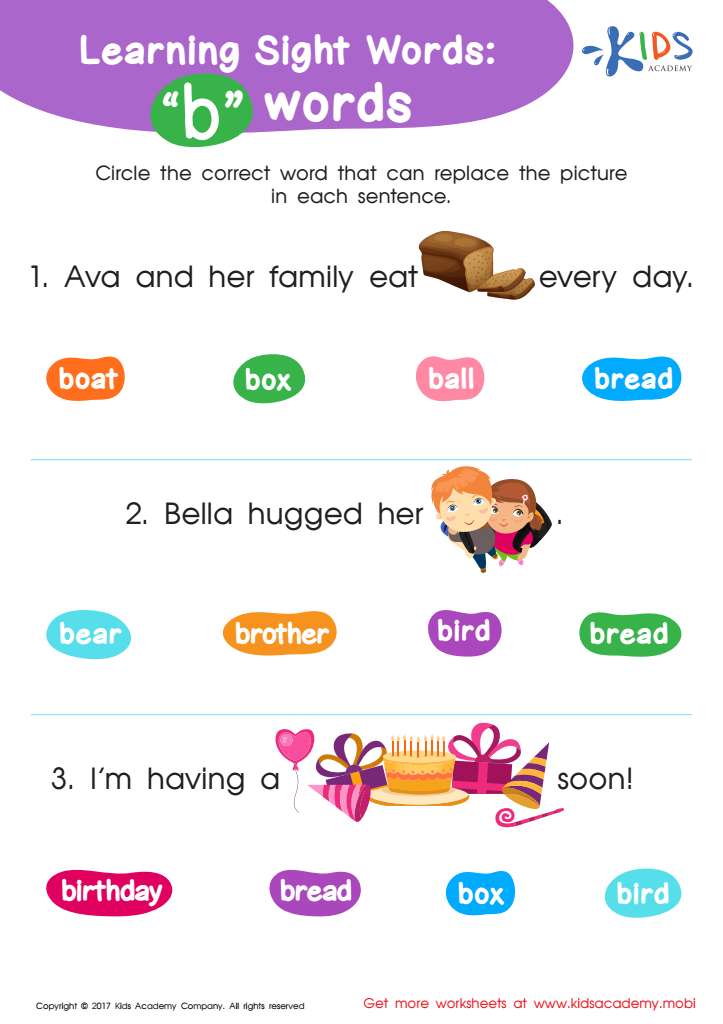
Sight Words Free Worksheet – B Words
This free 2nd grade sight words worksheet – b words – is a great way to help your child expand their sight word repertoire. They can read through each sentence, using the context and illustrations as clues to pick the right answer. Offer your child a quick practice session for even more learning!
 Assign to My Students
Sight Words Free Worksheet – B Words
Worksheet











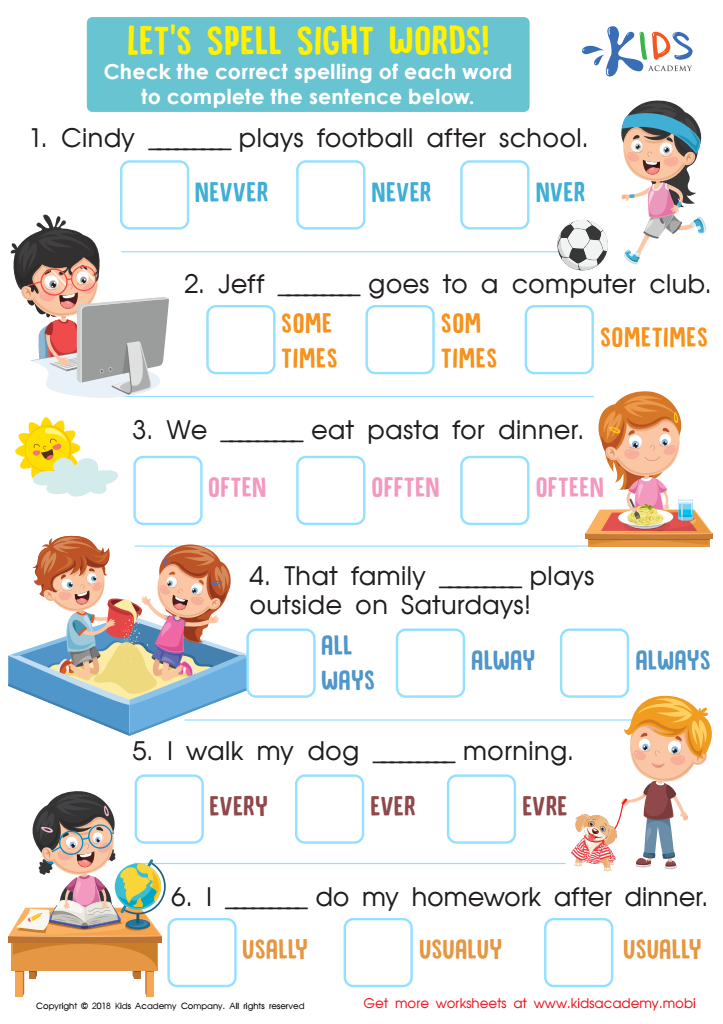
Let's Spell Sight Words Worksheet
Help your kids spell tricky sight words by asking them to spot differences in the sentences of activities they do regularly. This worksheet contains incomplete sentences, with the correct spelling of the word in the options for them to fill in. Get them to look out for words with the wrong spellings.
Let's Spell Sight Words Worksheet
Worksheet
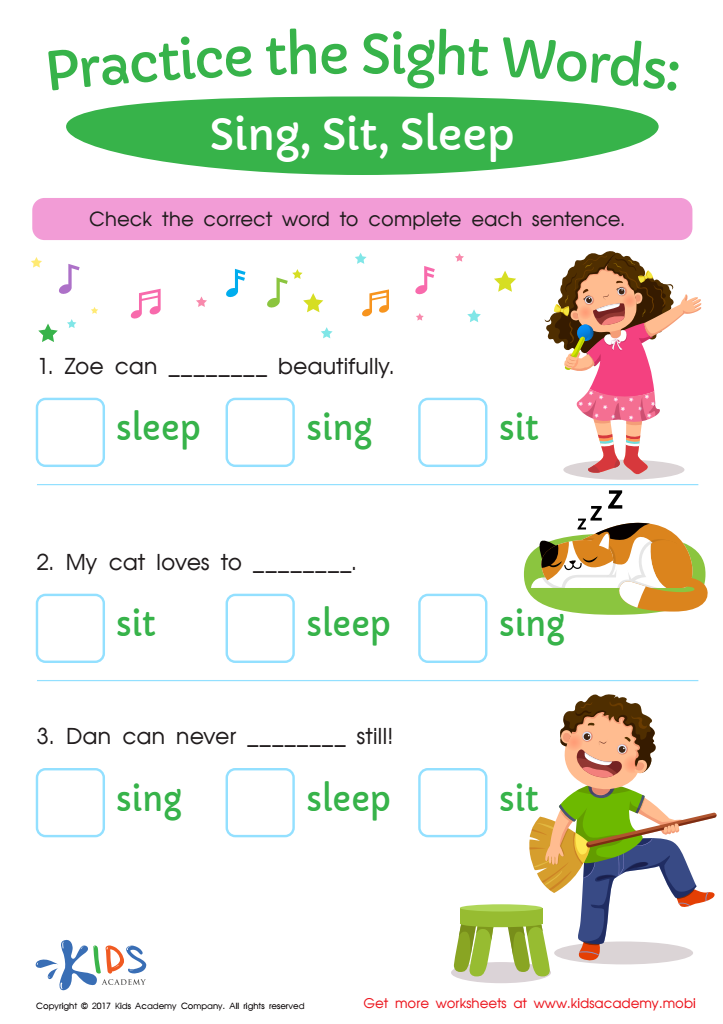
Sing, Sit, Sleep Sight Words Worksheet
Practice sight words with this printable worksheet featuring sing, sit, sleep! Confusing at first, these words can be mastered with the help of simple sentences and fun illustrations.
Sing, Sit, Sleep Sight Words Worksheet
Worksheet
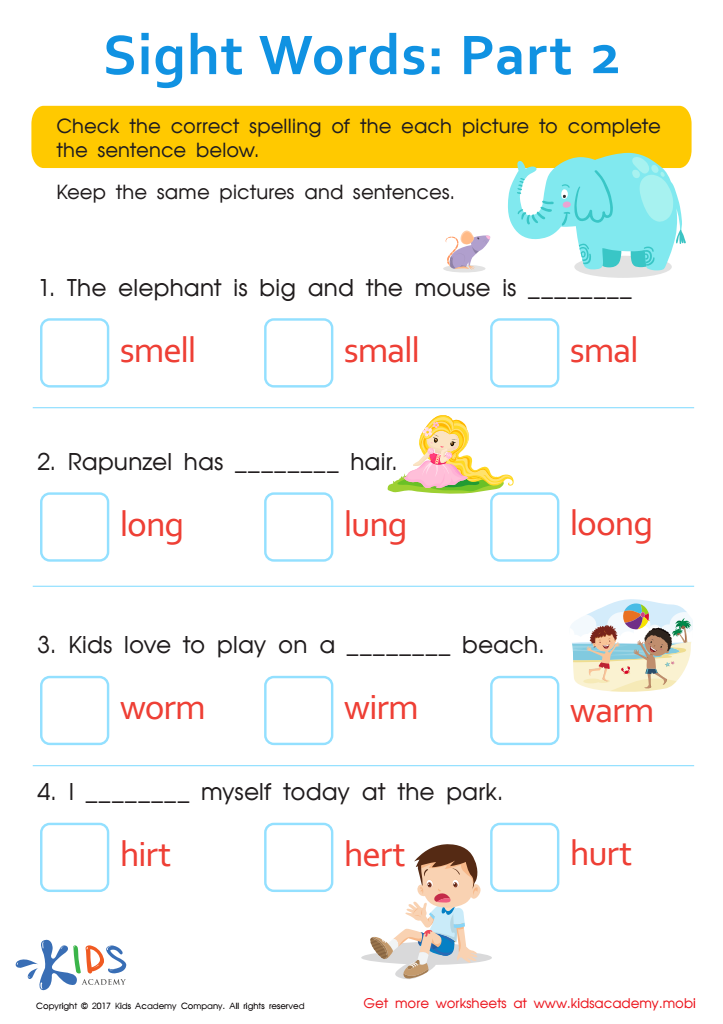
Sight Words Worksheet
This 3rd grade worksheet strengthens fluency and spelling in just a few minutes! Kids will read a sentence and fill in each blank with the correct sight word. Enjoy watching their skills grow!
Sight Words Worksheet
Worksheet
Join Kids Academy for Free
Who is primarily going to use this learning content?







Sight word recognition is critical to developing a child's reading fluency, making it an essential component for parents and teachers to focus on when nurturing early literacy skills in children aged 3-8. Sight words are commonly occurring words that often don't follow regular phonetic rules, so memorizing them by sight helps children read more quickly and effortlessly. This fluency enables young readers to focus on comprehension, rather than decoding each word. Without strong sight word recognition, children may struggle with reading speed and accuracy, leading to diminished confidence and reduced motivation to read.
Building a robust vocabulary from an early age also lays the foundation for academic success. Early vocabulary development is closely linked to reading comprehension and overall literacy skills. Engaging children in diverse vocabulary experiences helps them understand and use new words in context, enhancing their communication abilities and cognitive development. Moreover, a rich vocabulary allows children to express themselves more clearly and effectively, fostering better social interactions and intellectual engagement.
In sum, intentional efforts to strengthen sight word recognition and build vocabulary are indispensable for fostering a lifelong love of reading and learning. These foundational skills are critical not only in supporting individual academic achievements but also in preparing children to be competent, confident communicators in their everyday lives.








