Understanding suffixes Normal Building Vocabulary Worksheets for Ages 3-8
3 filtered results
-
From - To
Discover our "Understanding Suffixes" worksheets designed for children ages 3-8! These engaging activities help young learners enhance their vocabulary by exploring common suffixes. Each worksheet promotes language development through fun exercises that teach how suffixes can change the meaning of words. Easy to follow, our materials inspire creativity while reinforcing important reading skills. Tailored for early childhood education, these resources support individual learning paces, making vocabulary building an exciting adventure. Whether used in the classroom or at home, our worksheets are perfect for nurturing linguistic skills in young minds. Start your child's journey into effective communication today!
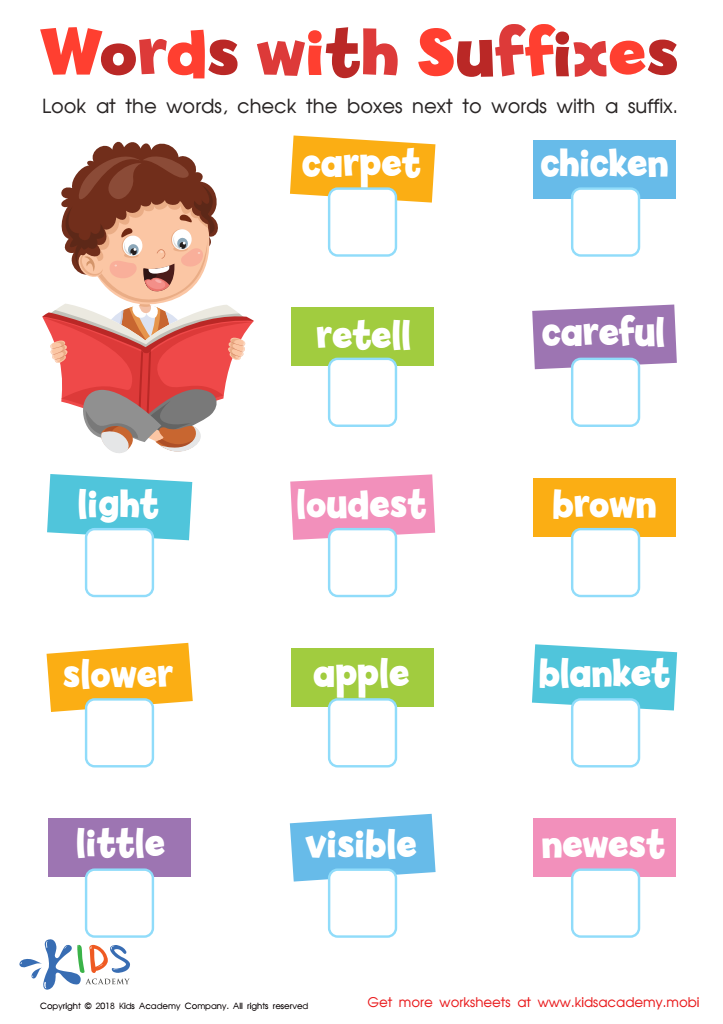
Reading: Words With Suffixes Worksheet
 Assign to My Students











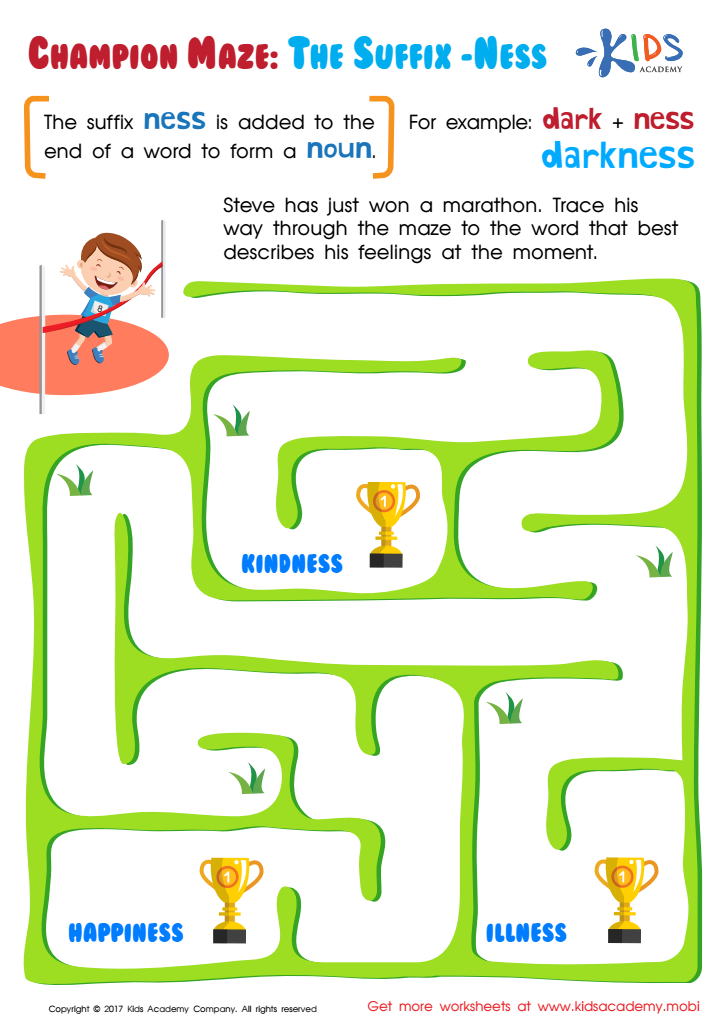
Suffix Ness Worksheet
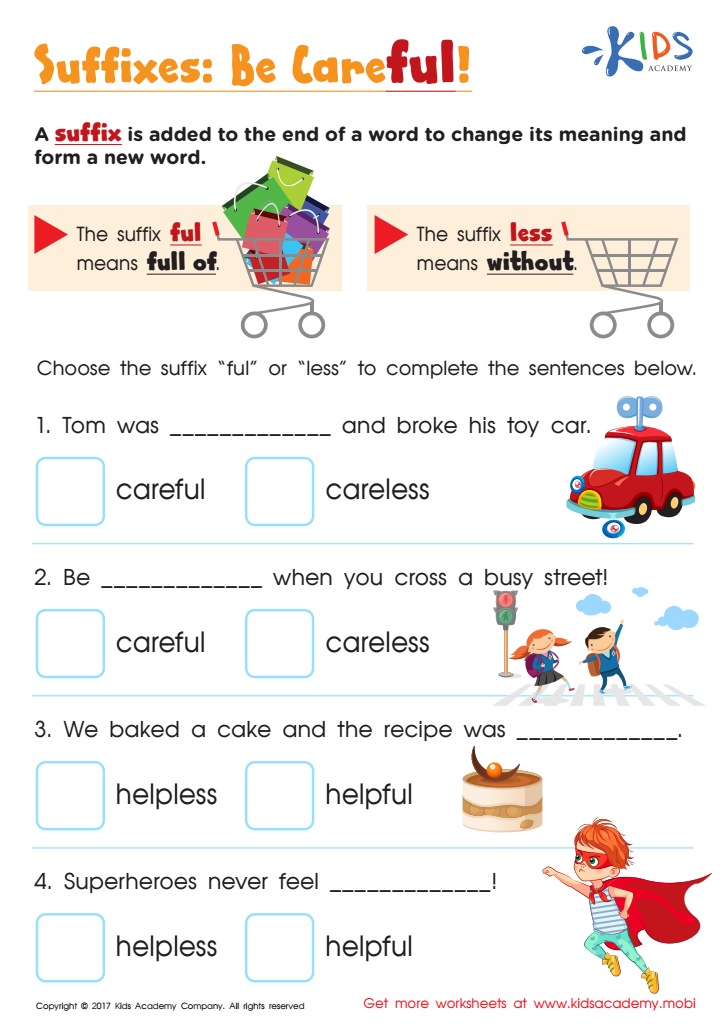
Suffixes Ful and Less Worksheet








Understanding suffixes is vital for vocabulary development in children aged 3-8. Suffixes are word endings that add meaning and modify root words, transforming them into new parts of speech. For instance, adding "-ing" to "play" creates "playing," indicating an action in progress. By teaching children the function of suffixes, parents and teachers help them unlock the potential to comprehend and produce a wider array of words, enhancing both their spoken and written language skills.
Early exposure to suffixes supports reading comprehension, allowing children to deduce meanings of unfamiliar words, thus building confidence in their literacy abilities. As children learn to recognize and use suffixes, they are better equipped to tackle more complex texts. This foundational understanding also fosters critical thinking and creativity, as they can manipulate words to express their ideas more effectively.
Moreover, a strong vocabulary is linked to academic success, facilitating learning across subjects. Parents and teachers can support this development by incorporating playful, engaging activities that highlight suffixes, such as games, storytelling, and word-building exercises. Ultimately, investing time in understanding suffixes cultivates a love for language, ensuring children are not only better communicators but lifelong learners.








