Categorization skills Normal Reading Worksheets for Ages 3-8
3 filtered results
-
From - To
Enhance your child's reading and reasoning abilities with our Categorization Skills Normal Reading Worksheets, designed for ages 3-8. These engaging worksheets help young learners organize and classify information, fostering critical thinking and improved comprehension. Through fun activities and visual aids, children will explore various categories, develop vocabulary, and boost their ability to recognize relationships between different items. Our age-appropriate exercises aim to make learning enjoyable while providing essential skill development. Perfect for homes or classrooms, these worksheets support early literacy growth and encourage lifelong learning habits. Explore our printable resources today and watch your child thrive in reading!
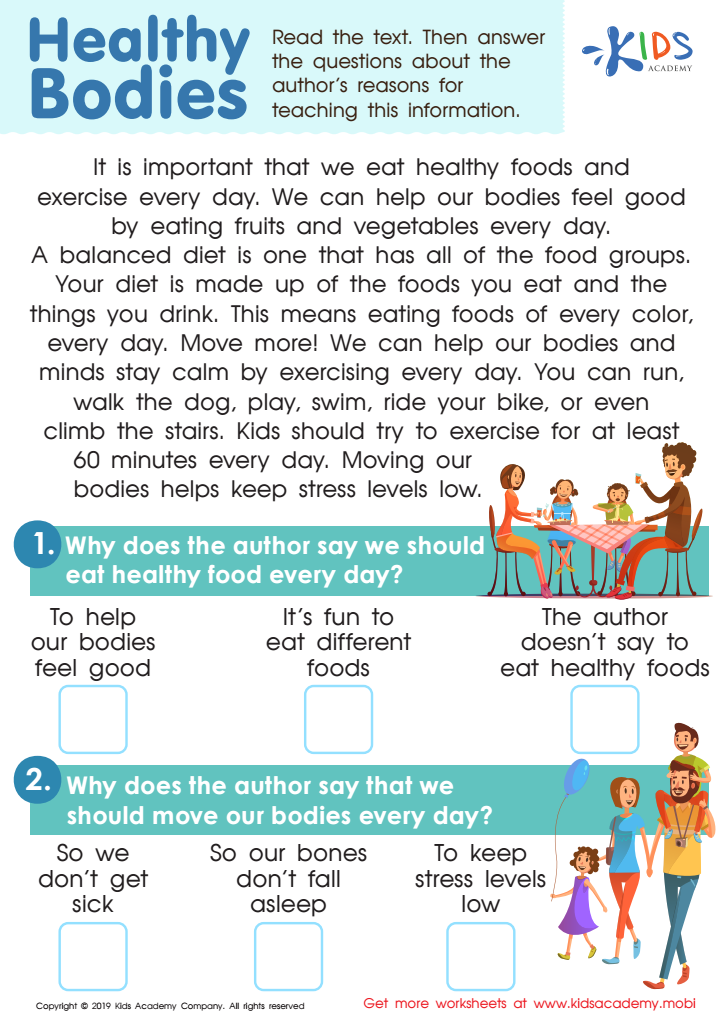
Healthy Bodies Worksheet
 Assign to My Students
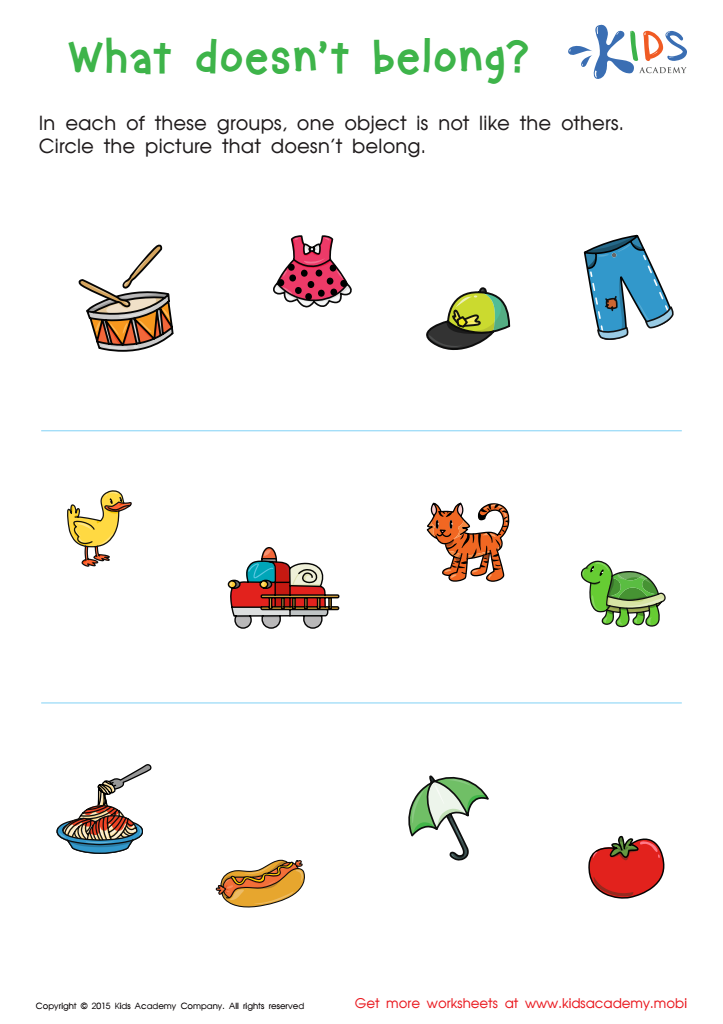
First Words: What Doesn't Belong Worksheet
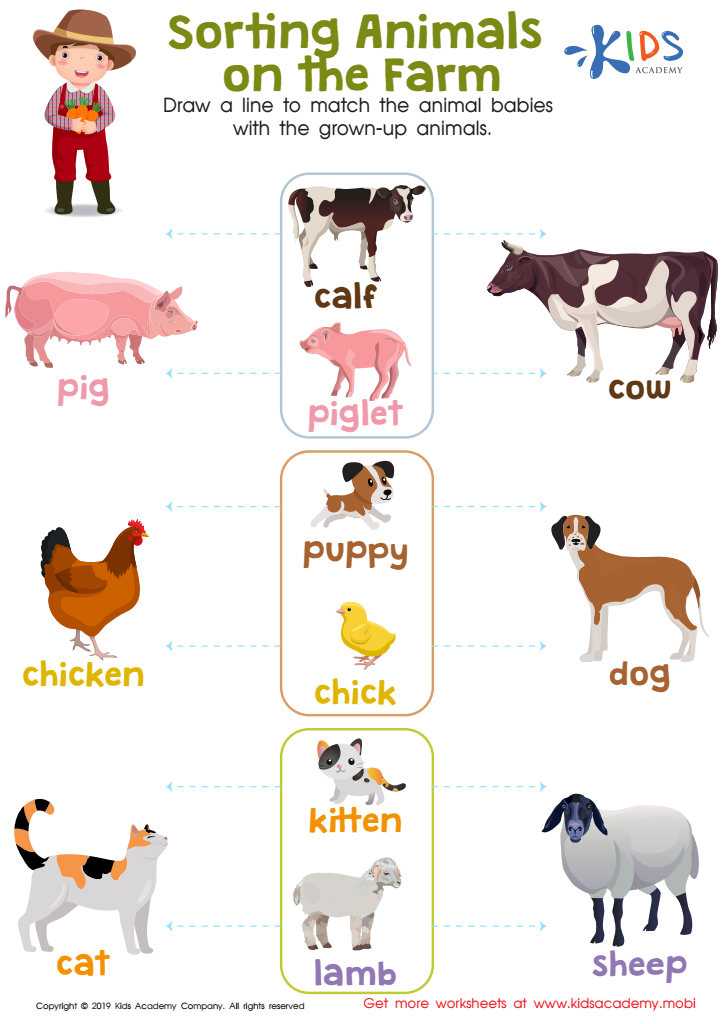
Sorting Animals on the Farm Worksheet







Categorization skills are fundamental for children aged 3-8 as they form the basis for many cognitive processes that underpin learning and language development. Teaching children to categorize helps them organize their thoughts and understand the world around them. For parents and teachers, fostering these skills enhances children's ability to classify objects, ideas, and information, which is crucial for effective communication and problem-solving.
At this age, children begin to encounter diverse concepts and experiences in both school and daily life. By developing categorization skills, they can better grasp similarities and differences, making it easier to navigate new knowledge and integrate it with what they already know. For instance, when children can classify animals, colors, or shapes, they can follow classroom discussions more effectively, enhancing their reading skills and comprehension.
Furthermore, strong categorization skills support early literacy. Engaging in activities that encourage children to sort items, identify patterns, and group similar concepts fosters critical thinking. Such abilities lay the groundwork for more complex skills in later grades. Ultimately, investing time in developing categorization skills is vital for parents and teachers, as it directly impacts children's academic success and supports their overall cognitive development.








