Detail identification Normal Reading Worksheets for Ages 3-8
3 filtered results
-
From - To
Introducing our "Detail Identification Normal Reading Worksheets for Ages 3-8" – a vital resource for honing reading comprehension skills in young learners. Our carefully crafted worksheets are designed to help children identify key details and promote attentive reading. Through engaging activities that focus on details in texts, children will develop critical thinking and improve their ability to understand and remember what they read. Ideal for both classroom and home learning, these worksheets lay a foundation for lifelong reading success. Start your child on the path to reading excellence today with our innovative and fun detail identification exercises.
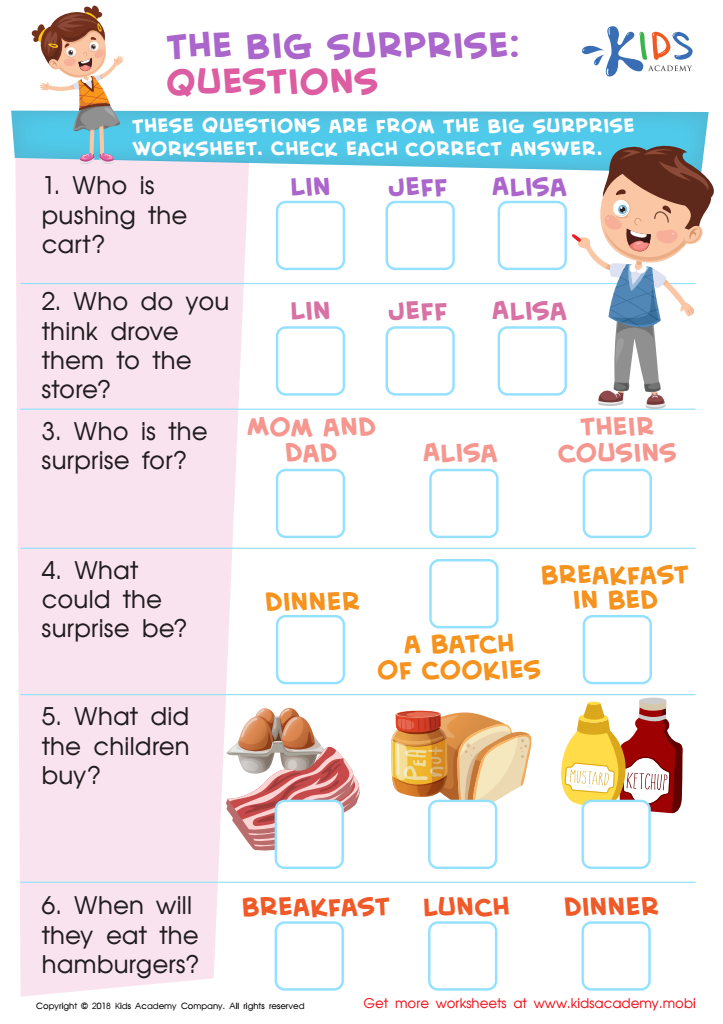
The Big Surprise: Questions Worksheet
 Assign to My Students
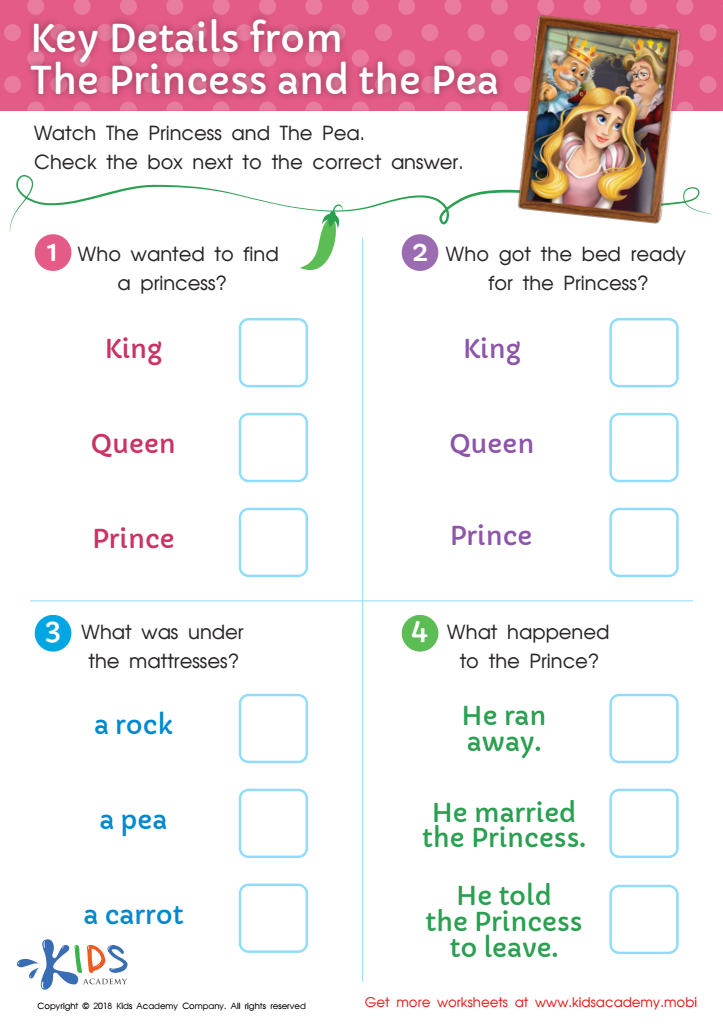
Key Details from the Princess and the Pea Worksheet
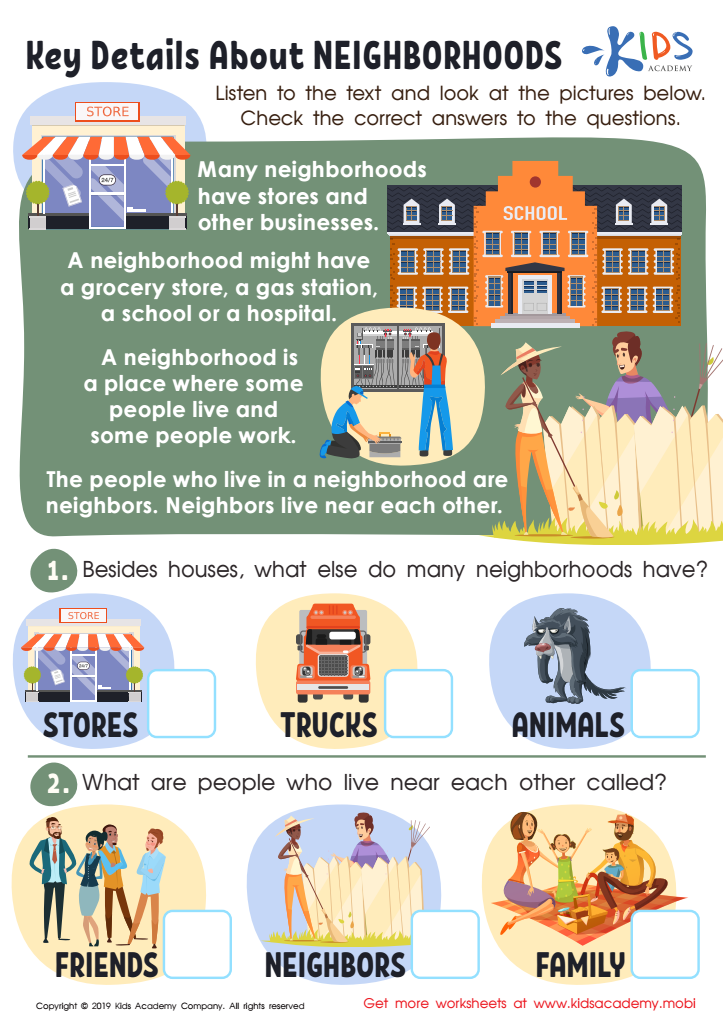
Key Details Neighborhoods Worksheet








Detail identification in normal reading for ages 3-8 is crucial for several reasons. First, it builds the foundation for strong reading comprehension skills, which are essential for academic success across all subjects. When children learn to identify details, they can better understand the main ideas and themes of a story or text, enabling them to grasp more complex concepts as they grow older.
Second, detail identification helps improve memory and cognitive skills. It encourages young minds to pay attention to specific pieces of information and remember them, which translates to better problem-solving and analytical abilities in other areas of learning and daily life.
Early development of this skill also fosters a love for reading. When children can follow and understand a story, they're more likely to enjoy it and look forward to reading, creating a positive feedback loop that encourages them to read more, further enhancing their proficiency and confidence.
Furthermore, being able to identify details aids in communication skills. It allows children to describe things accurately, ask more precise questions, and understand instructions better. Parents and teachers who prioritize this aspect of learning are setting their children or students up for a more successful and enriching educational journey and beyond.
By nurturing this skill early, we provide children with the tools they need to become informed, thoughtful, and engaged individuals.








