Historical Knowledge Normal Reading Worksheets for Ages 3-8
6 filtered results
-
From - To
Unlock the wonders of history with our Historical Knowledge Normal Reading Worksheets designed for ages 3-8. These engaging worksheets foster early literacy skills while introducing young learners to significant historical figures, events, and concepts. Through colorful illustrations and age-appropriate texts, children will develop reading comprehension and critical thinking skills. As they explore fascinating stories from the past, they will also cultivate a sense of curiosity and connection to history. Perfect for both classroom settings and home learning, our worksheets provide a fun and interactive way for kids to enrich their knowledge of the world around them. Start your child's historical adventure today!
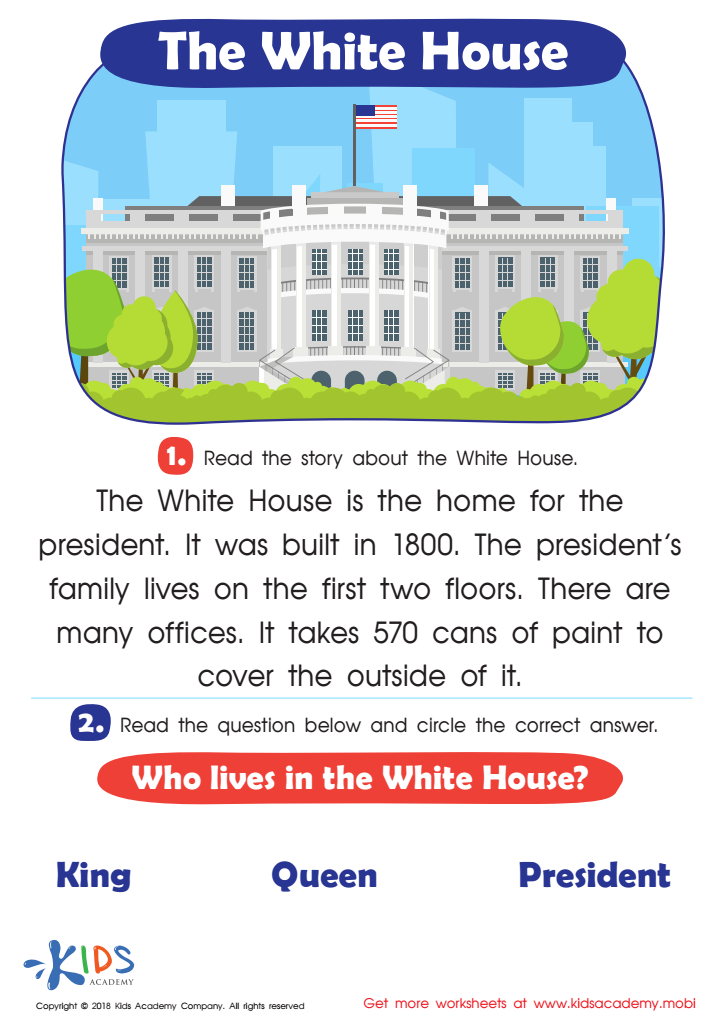
White House Worksheet
 Assign to My Students
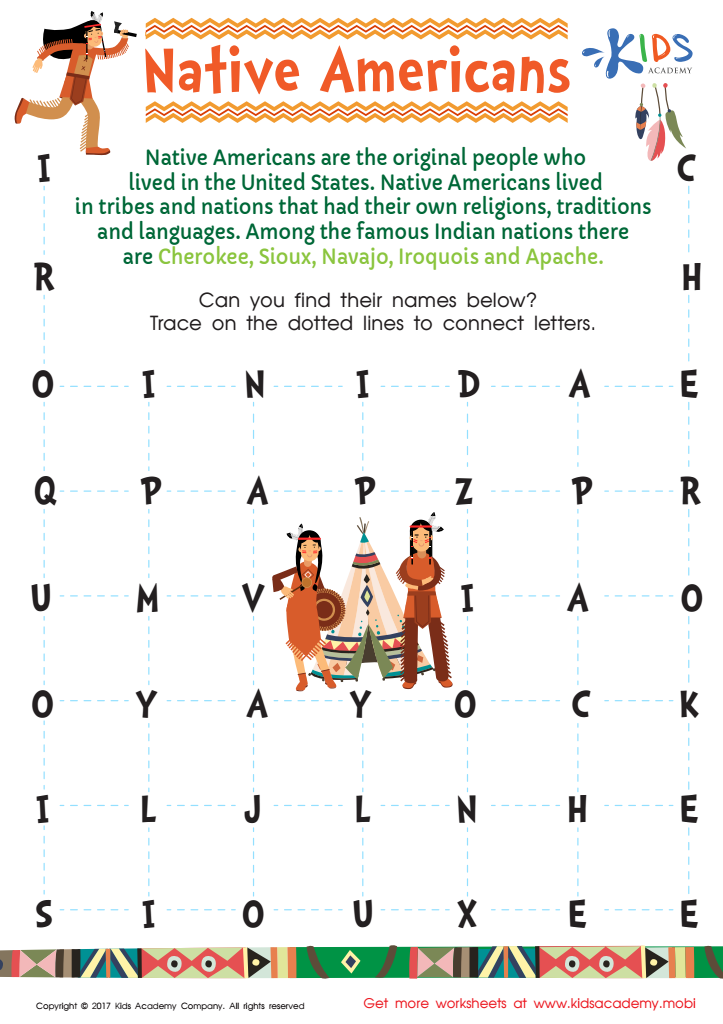
Native American Word Search Printable
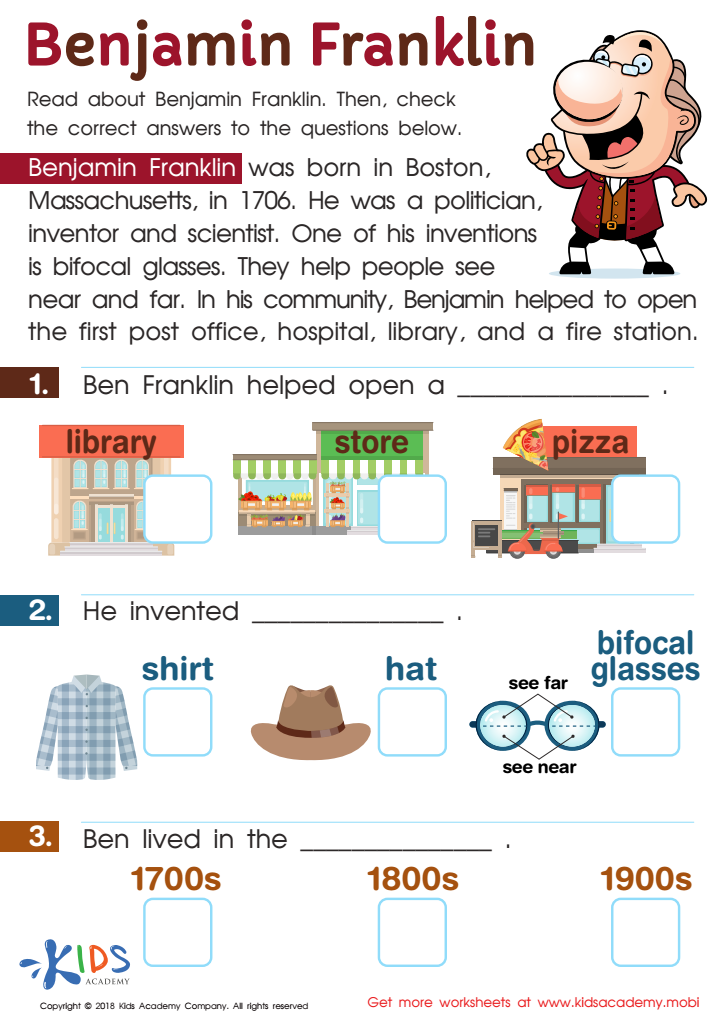
Benjamin Franklin Worksheet
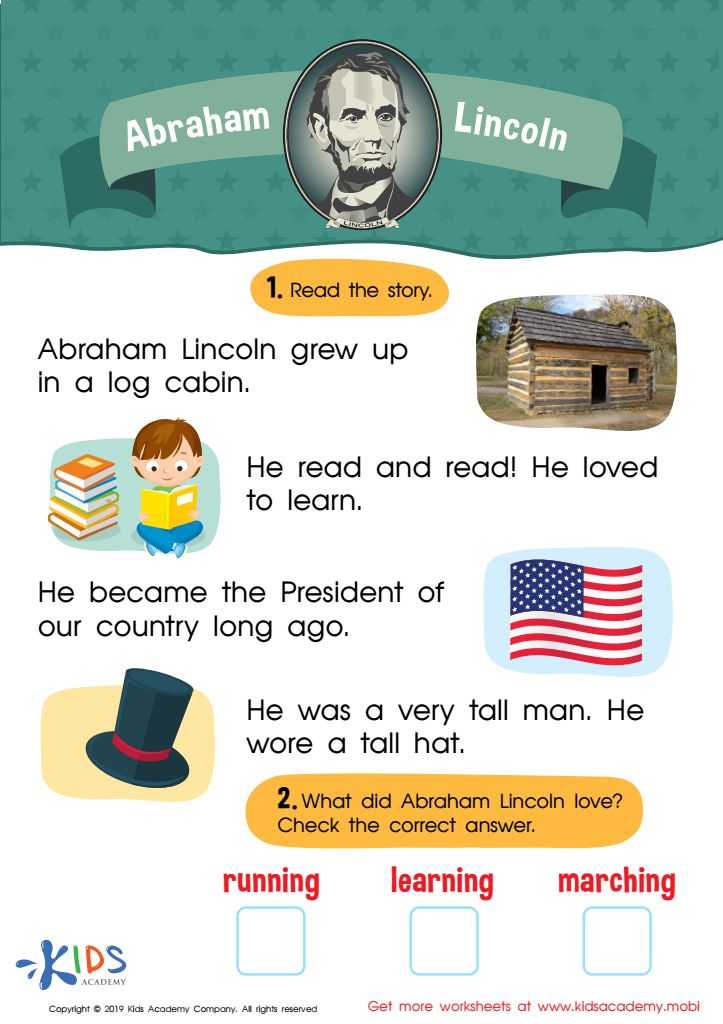
Abraham Lincoln Worksheet
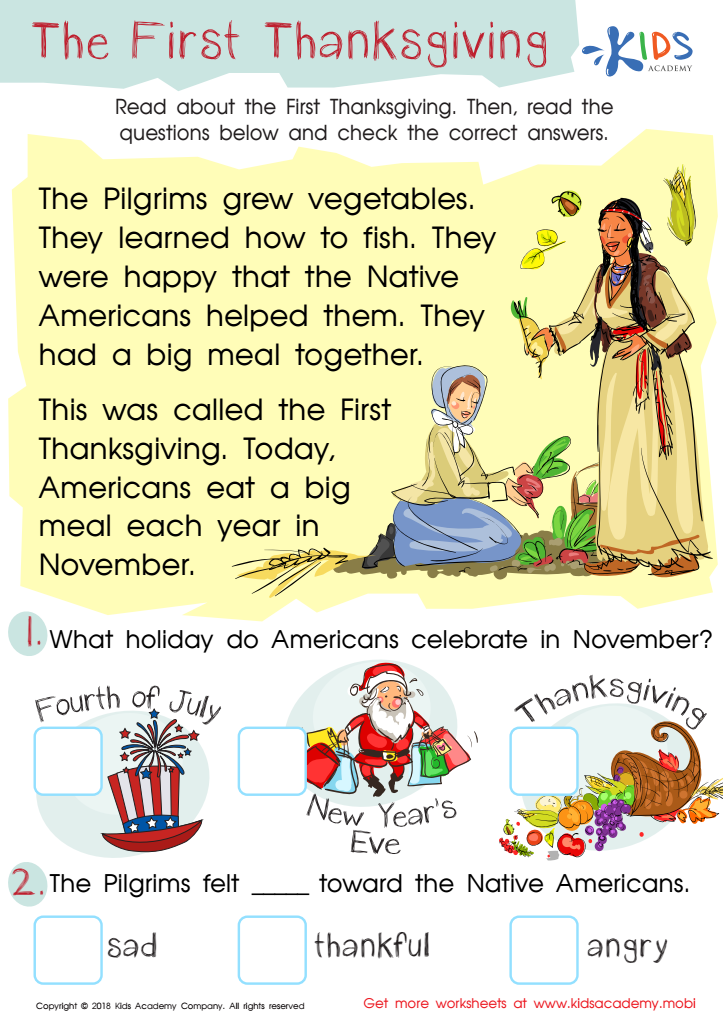
Assessment: First Thanksgiving Worksheet
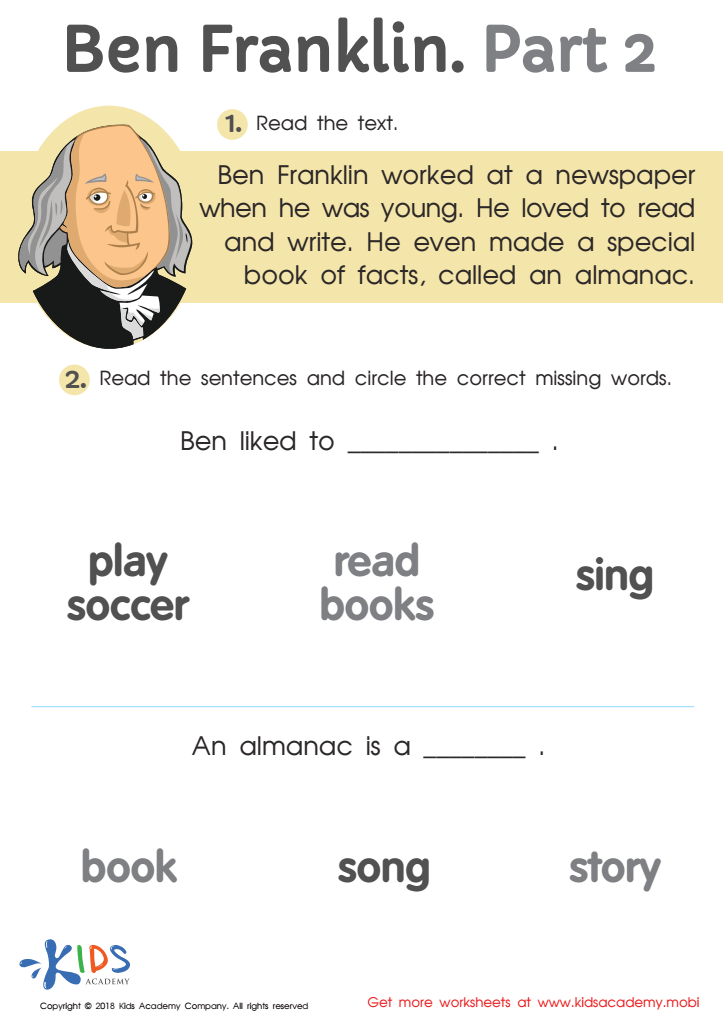
Ben Franklin Part 2 Worksheet







Parents and teachers should prioritize historical knowledge for children aged 3-8, as it lays the foundation for critical thinking, empathy, and an understanding of the world. At this age, children are highly curious and receptive to stories about the past, helping them make connections between themselves and different cultures, experiences, and ideas. By integrating historical narratives and discussions into learning, adults encourage an appreciation for diversity and an understanding of how history shapes our present.
Moreover, early exposure to history enhances language skills through the vocabulary and concepts embedded in historical tales. It boosts cognitive development by engaging children in sequencing events and identifying cause-and-effect relationships. This early grounding in historical context also fosters a sense of identity and belonging, as children learn about their own heritage and the contributions of various communities.
Additionally, critical social skills, such as cooperation and respect for different perspectives, can be nurtured through exploring historical figures and events. Teaching history engages children’s imaginations, equipping them with the tools they need to become informed, open-minded, and compassionate individuals. Therefore, the incorporation of historical knowledge is essential in early childhood education as it strengthens both cognitive and social-emotional development.








