Rhyming skills development Normal Reading Worksheets for Ages 3-8
3 filtered results
-
From - To
Enhance your child’s literacy journey with our Rhyming Skills Development Reading Worksheets, specifically designed for ages 3-8. These engaging resources are instrumental in helping young learners recognize and produce rhymes, fostering phonemic awareness and language development. Our worksheets feature vibrant illustrations and fun activities that make learning enjoyable and interactive. Perfect for both classroom use and home study, they encourage children to explore sounds and patterns in words, building a strong foundation for reading proficiency. Give your child the tools they need to succeed with our expertly crafted rhyming worksheets—where fun meets learning in every rhyme!
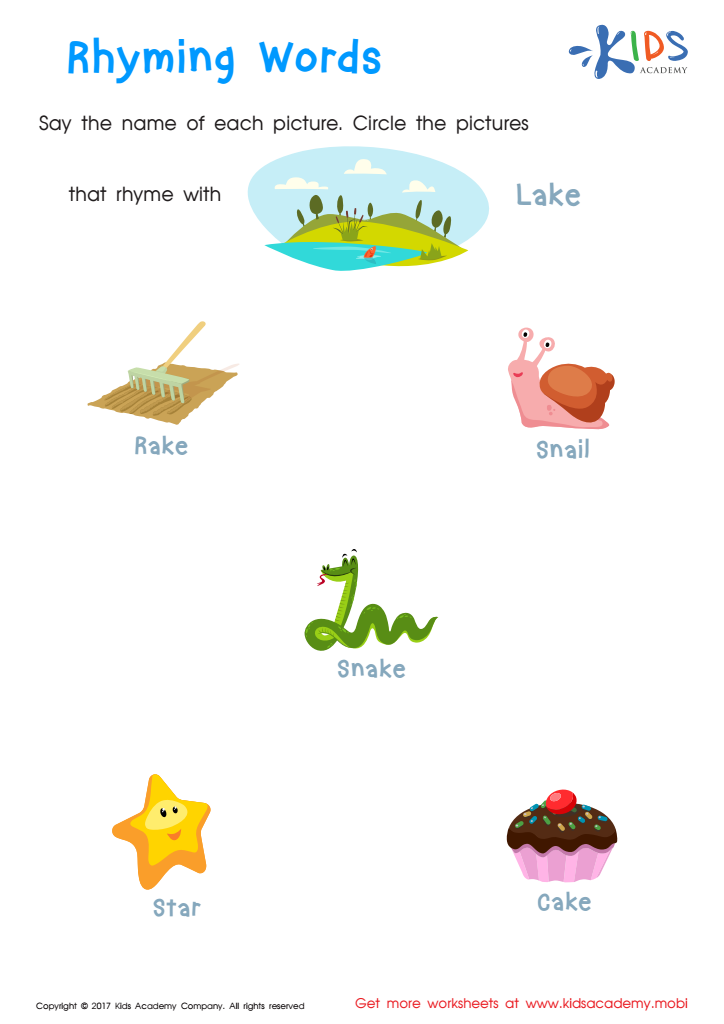
Rhyming Words Rhyming Worksheet
 Assign to My Students
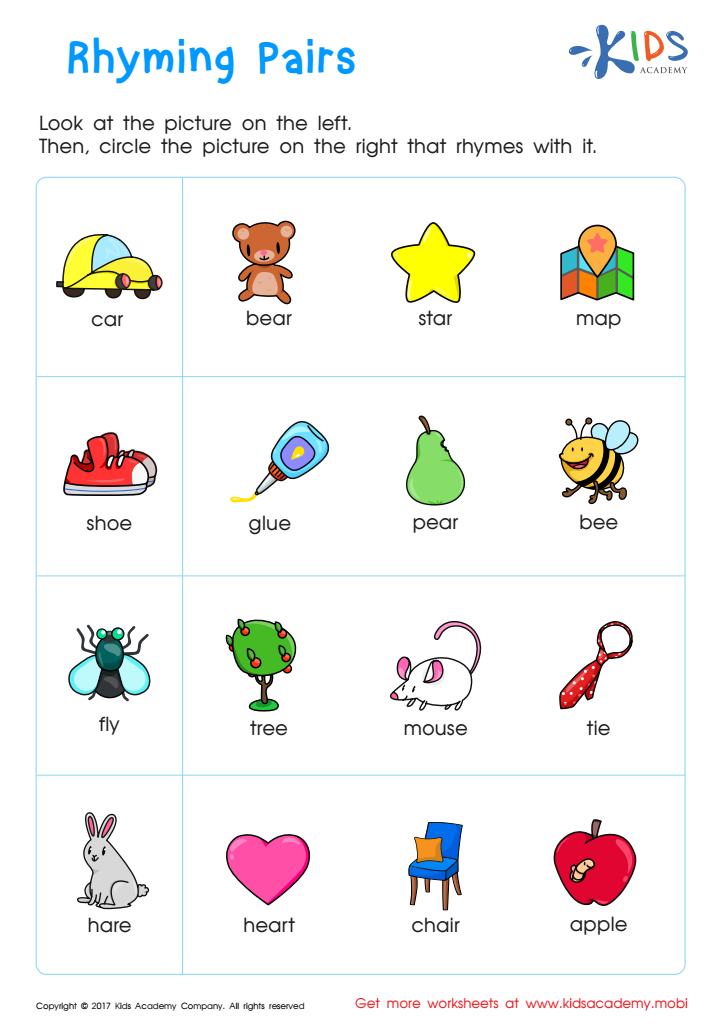
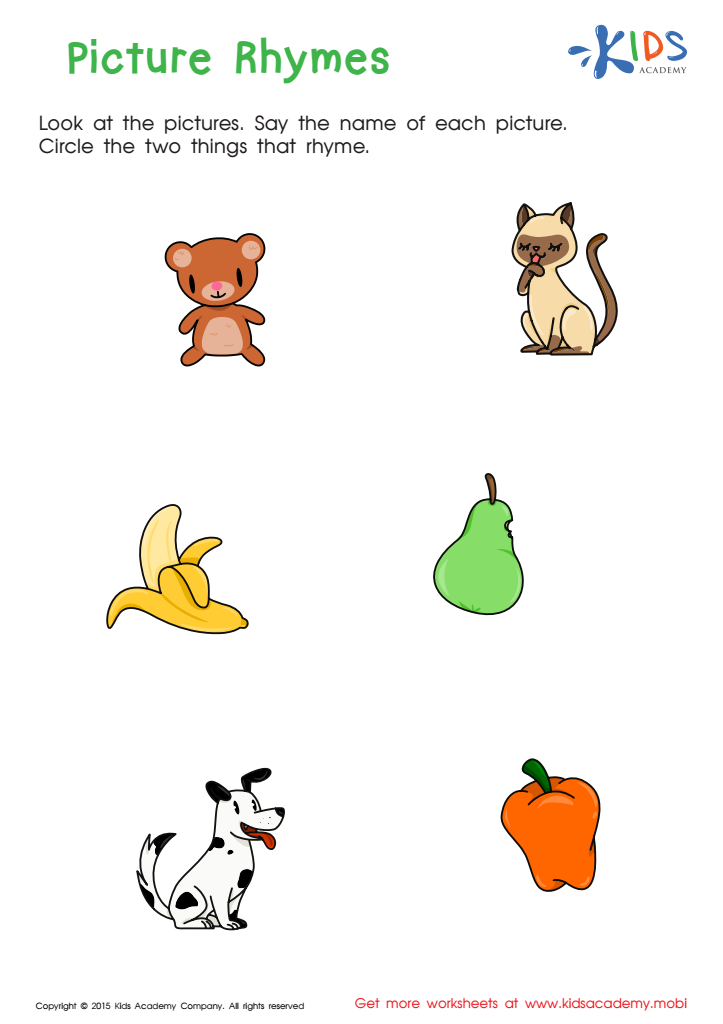
First Words: Picture Rhymes Worksheet







Rhyming skills development is a crucial aspect of early literacy for children aged 3-8, and both parents and teachers should prioritize it for several reasons. Firstly, rhyming enhances phonemic awareness, which is the ability to hear and manipulate sounds in words. This skill is foundational for reading success, as it helps children decode and spell new words. When children recognize and produce rhymes, they become more adept at identifying similar sounds, which facilitates their reading development.
Moreover, rhyming activities, such as nursery rhymes, songs, and word games, make learning engaging and enjoyable. They capture children's attention and encourage active participation, creating a positive association with reading. This intrinsic motivation fosters a love for books and enhances vocabulary as children encounter new words in playful contexts.
Additionally, rhymes support memory and listening skills, as children learn to recall sequences and patterns. This development enhances their overall language capabilities, enabling them to communicate more effectively. Ultimately, fostering rhyming skills in young children sets the stage for strong reading abilities and academic success, making it an essential focus for parents and educators alike.








