
Shape Recognition Normal Reading Worksheets for Ages 3-8
3 filtered results
Difficulty Level
Grade
Age
-
From - To
Subject
Activity
Standards
Enhance your child's learning journey with our Shape Recognition Normal Reading Worksheets for Ages 3-8! These fun, engaging, and educational worksheets are designed to help young learners identify and understand different shapes while progressing their reading skills. Through vibrant illustrations and interactive games, children can enjoy hands-on learning, improve their visual-spatial awareness, and build a solid foundation for future academic success. Ideal for both classroom and home use, our expertly crafted activities ensure each child has fun while mastering key developmental milestones. Discover a world of shapes and reading today with our comprehensive printable worksheets!
Favorites
With answer key
Interactive
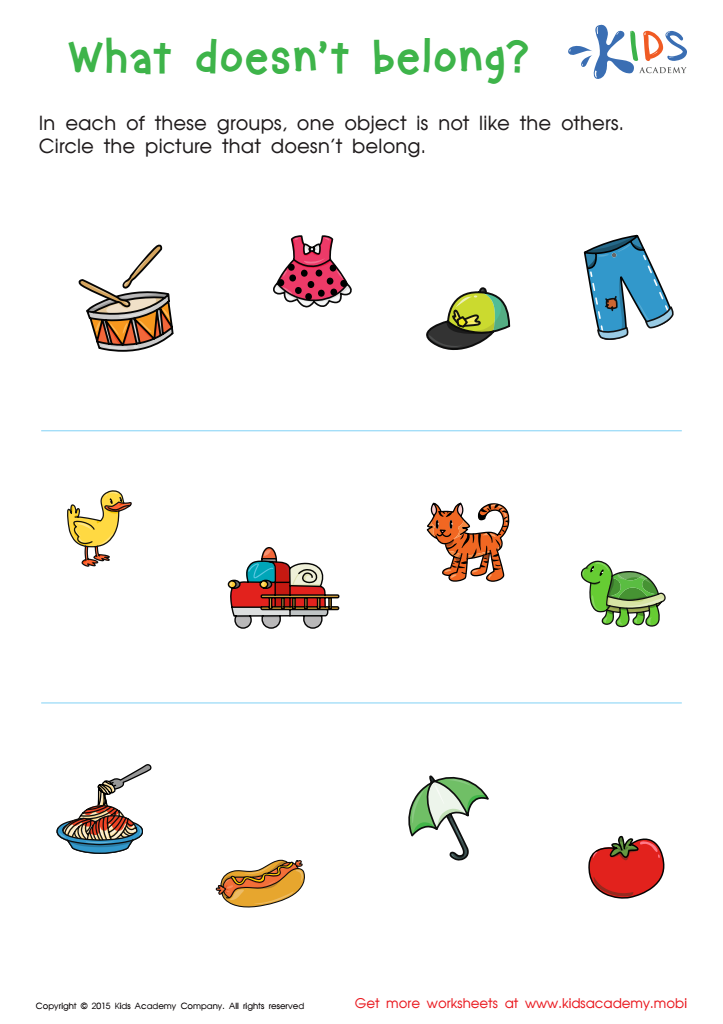
First Words: What Doesn't Belong Worksheet
Categorizing items is an important skill for little learners. Sorting and classifying objects helps kids make sense of the world. With this "what doesn't belong" worksheet, your child will practice problem-solving, strengthen categorization and improve logical reasoning skills. It's perfect for toddlers and preschoolers, with bright and exciting images giving their minds a challenging workout!
 Assign to My Students
First Words: What Doesn't Belong Worksheet
Worksheet
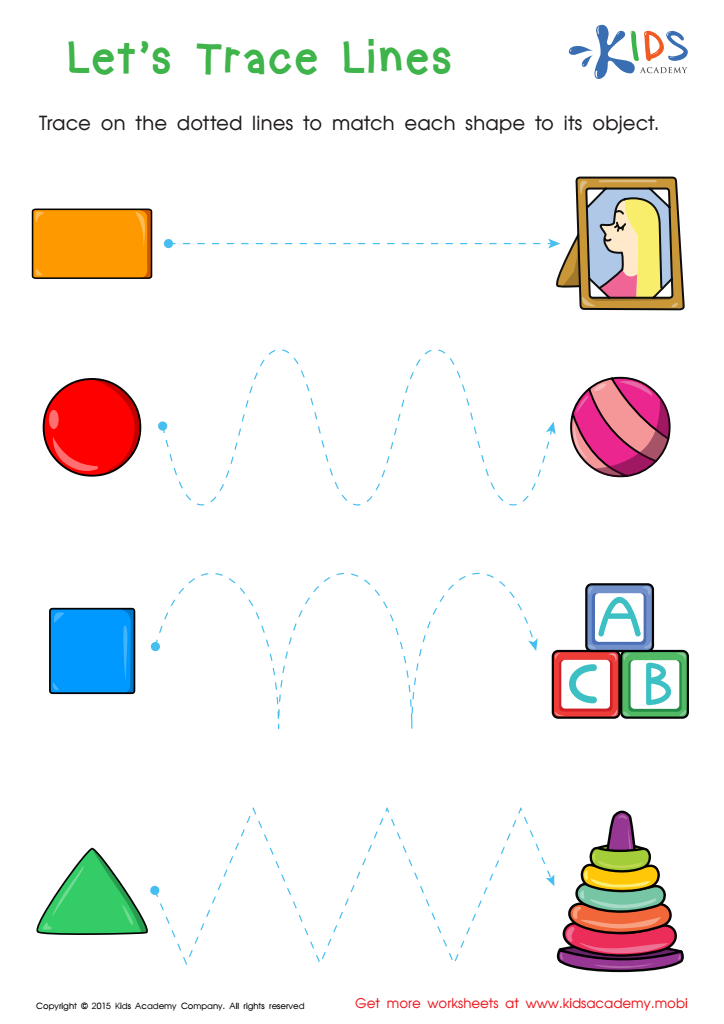
First Words: Let's Trace Lines Worksheet
Printable tracing lines for toddlers will provide your little one with the skills needed for future handwriting success. Proper grip, fine motor skills, and hand-to-eye coordination are key. Let's get their writing journey off to a great start!
First Words: Let's Trace Lines Worksheet
Worksheet
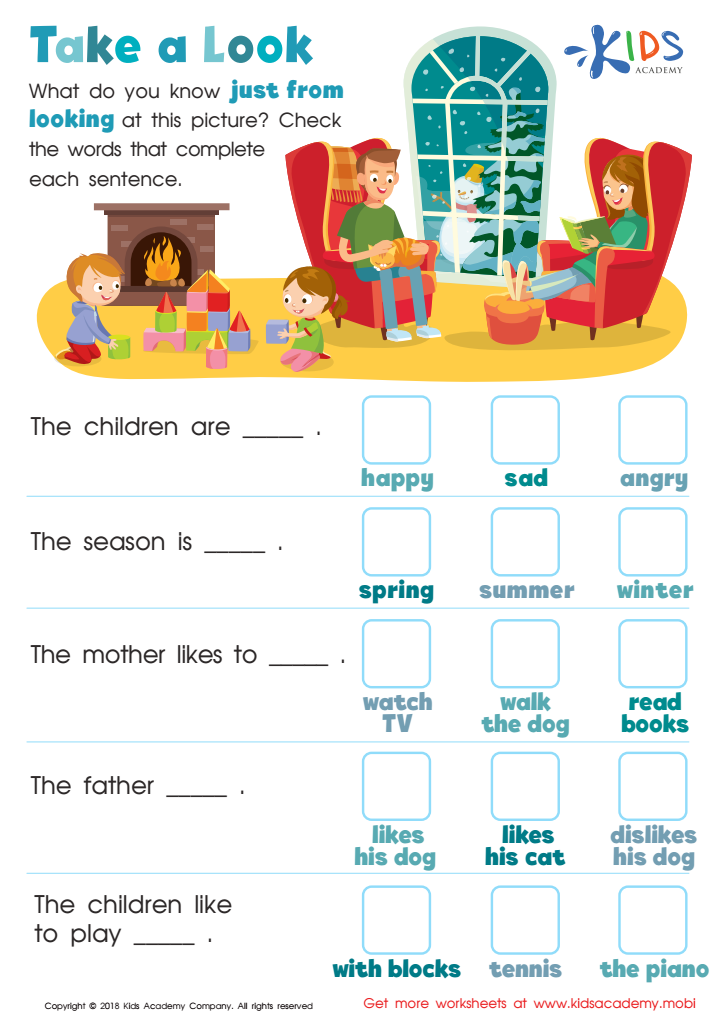
Take a Look - Part 1 Worksheet
Young learners gain understanding when using picture clues when reading. Looking at illustrations can help students learn the meaning of key vocabulary when reading fiction or informational text. Ask your students to look at the worksheet and observe what they can learn from the picture. It's a great comprehension strategy for early readers.
Take a Look - Part 1 Worksheet
Worksheet
Join Kids Academy for Free
Who is primarily going to use this learning content?







Shape recognition and normal reading skills are foundational elements in early childhood development that significantly impact a child's future learning. For children ages 3-8, mastery in these areas serves as a crucial building block for both academic success and everyday functioning.
Shape recognition involves the ability to identify and differentiate between various shapes such as circles, squares, triangles, and rectangles. This skill is essential not only for mathematical understanding but also for developing spatial awareness and fine motor skills. Shapes form the basis of letters, numbers, and other symbols, thereby directly influencing a child's ability to read and write.
Normal reading skills, which include phonemic awareness, decoding, and comprehension, set the stage for academic success. Children who develop strong reading skills early are more likely to excel in subjects across the curriculum, as reading is fundamental to learning in nearly every academic area—from understanding word problems in math to comprehending science texts.
When parents and teachers nurture these skills through engaging activities and consistent practice, they create a robust educational foundation. Encouraging shape recognition and early reading prepares children for the more complex tasks they will encounter in higher grades, ensuring they are more confident, capable, and ready to tackle future challenges. Hence, prioritizing these skills is an investment in a child’s overall cognitive development and lifelong learning journey.








