Detail identification Normal Reading Comprehension Worksheets for Ages 3-8
3 filtered results
-
From - To
Discover our comprehensive collection of Normal Reading Comprehension Worksheets for children ages 3-8, designed to enhance detail identification skills. These engaging worksheets encourage young learners to focus on key details within texts, fostering critical thinking and comprehension abilities. Perfect for early grade teachers and parents, our resources cater to various reading levels, ensuring every child can excel. Each activity combines fun and learning, featuring vibrant illustrations and accessible language. Empower your students with the tools they need to succeed in reading comprehension while instilling a love for learning. Explore our worksheets today and watch your child's reading skills flourish!
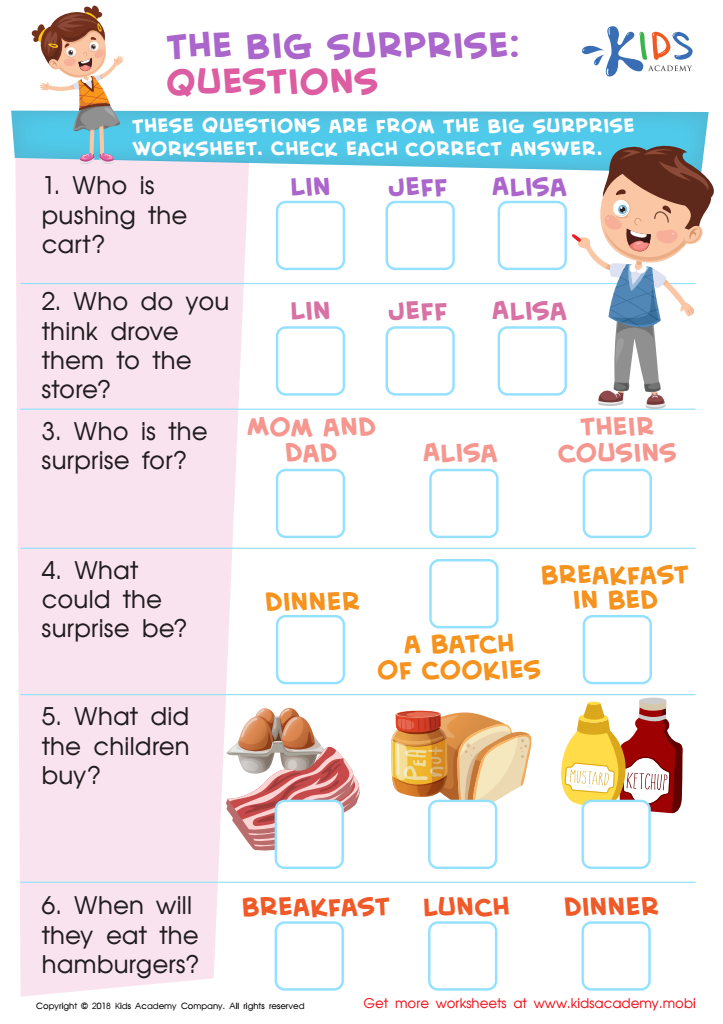
The Big Surprise: Questions Worksheet
 Assign to My Students
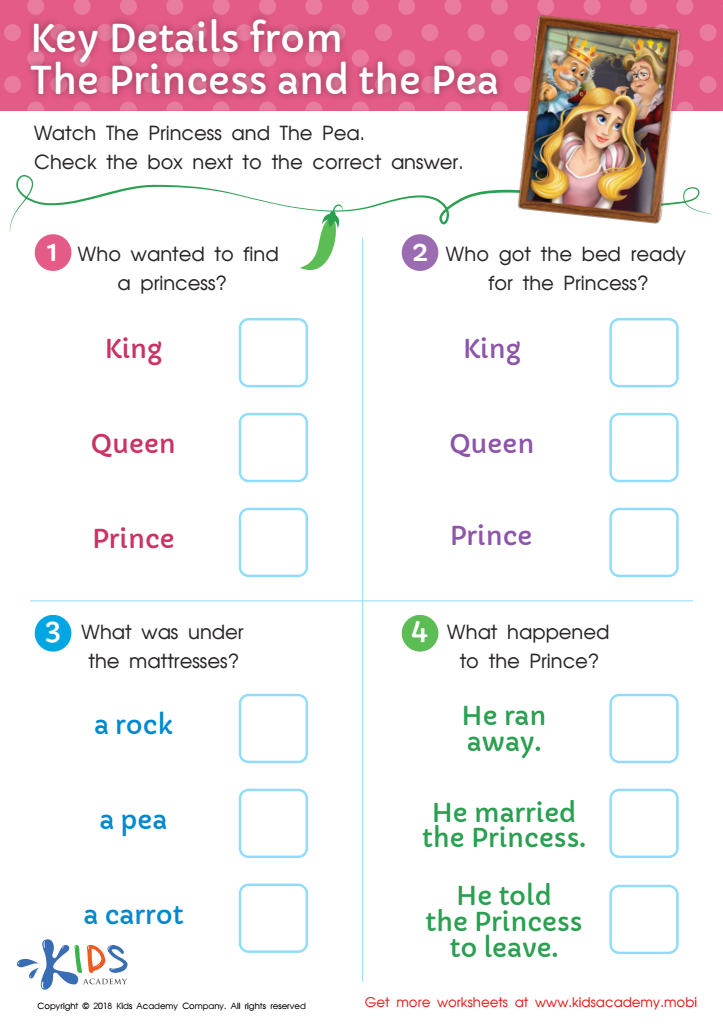
Key Details from the Princess and the Pea Worksheet
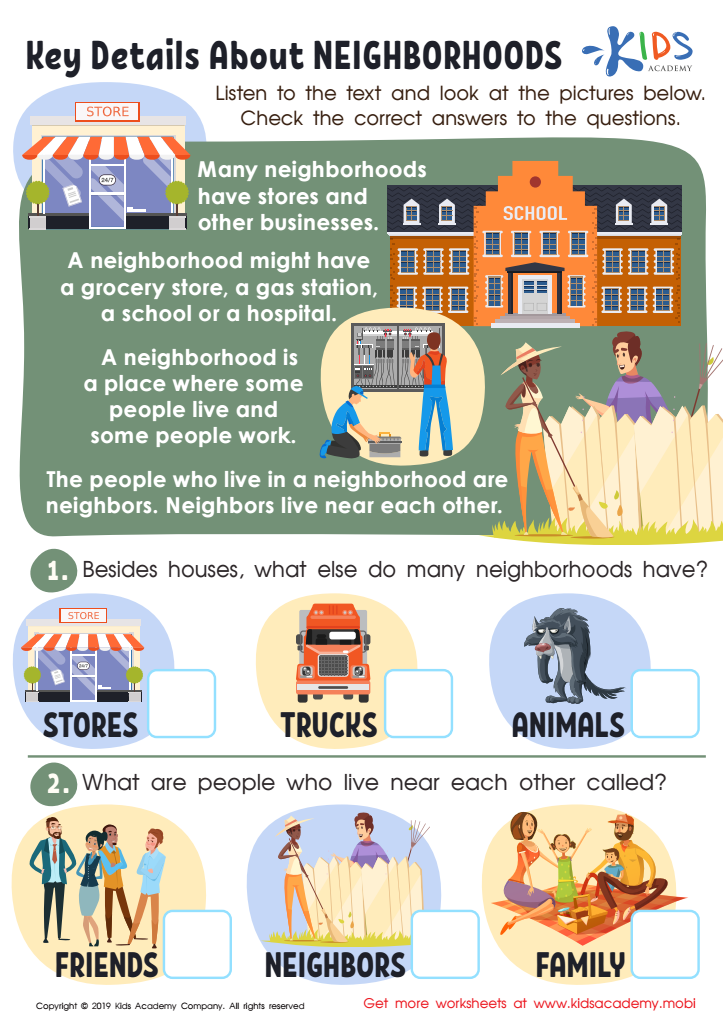
Key Details Neighborhoods Worksheet








Detail identification in reading comprehension is crucial for children aged 3-8 as it lays the foundation for effective literacy skills. At this developmental stage, children are beginning to understand narratives and the structure of stories. Identifying details helps them grasp the main ideas and concepts within the text, enhancing their ability to recall information and make connections to their own experiences.
Parents and teachers should care about this aspect of reading comprehension because it fosters critical thinking skills. When children learn to pick out specific details, they become more analytical readers, able to engage in deeper discussions about the content. This skill enhances vocabulary development, as recognizing details often involves encountering new words in context, which supports language acquisition.
Moreover, a strong ability in detail identification contributes to greater self-confidence in reading. As children improve, they are more likely to develop a love for reading, which is linked to their future academic success. Encouraging this skill not only benefits children in their early education but also prepares them for more complex text comprehension in later grades. Ultimately, a focus on detail identification can promote a lifelong appreciation for literature and learning.








