Historical Knowledge Normal Reading Comprehension Worksheets for Ages 3-8
5 filtered results
-
From - To
Enhance your early learners' reading skills with our engaging Historical Knowledge Reading Comprehension Worksheets, designed specifically for ages 3-8. These worksheets combine fun and educational content, introducing young students to significant historical figures, events, and achievements. With age-appropriate exercises, children will improve their reading comprehension while exploring fascinating stories from the past. Our resources foster critical thinking and vocabulary development, ensuring a well-rounded learning experience. Dive into history with captivating visuals and easy-to-understand text. Perfect for classrooms or at-home learning, these worksheets make historical knowledge accessible and enjoyable for young readers. Unleash your child's curiosity and love for learning today!
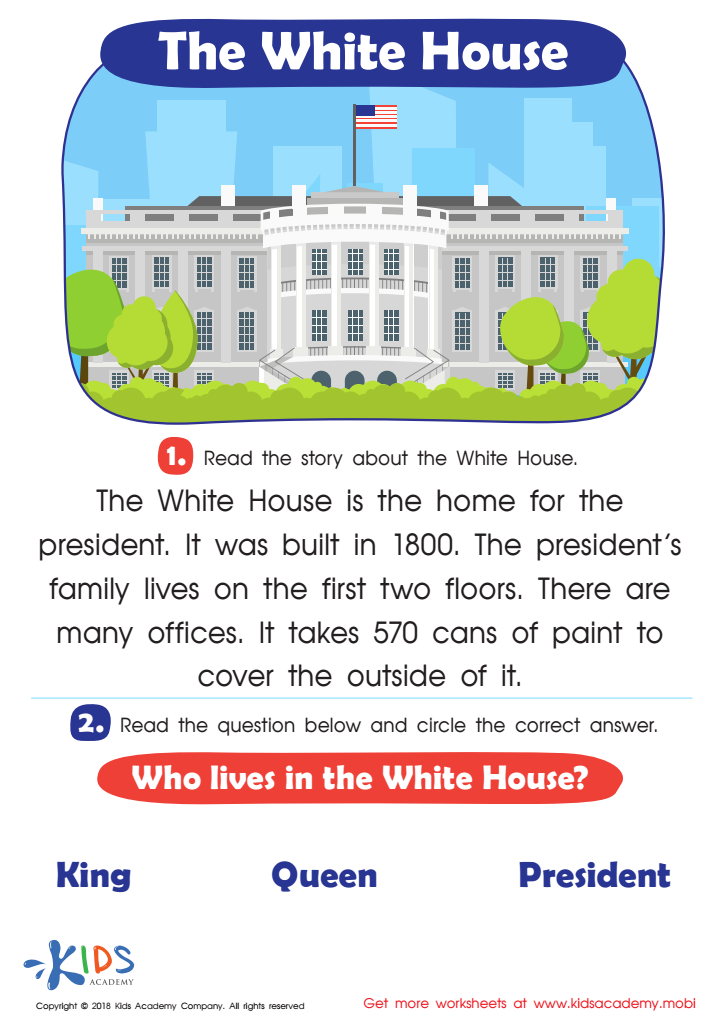
White House Worksheet
 Assign to My Students
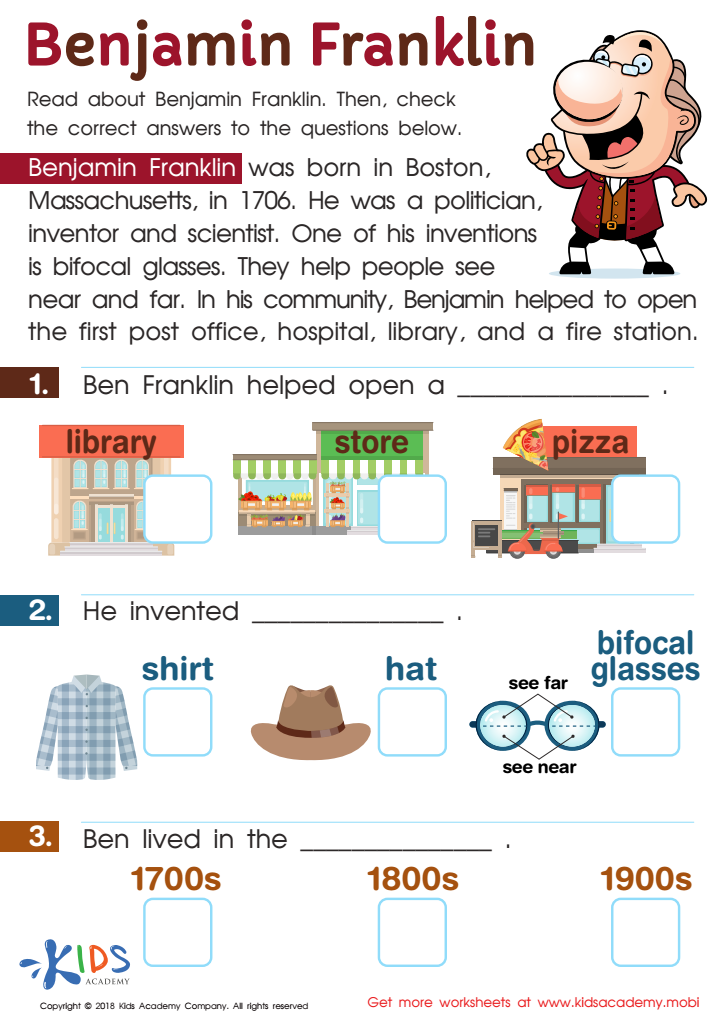
Benjamin Franklin Worksheet
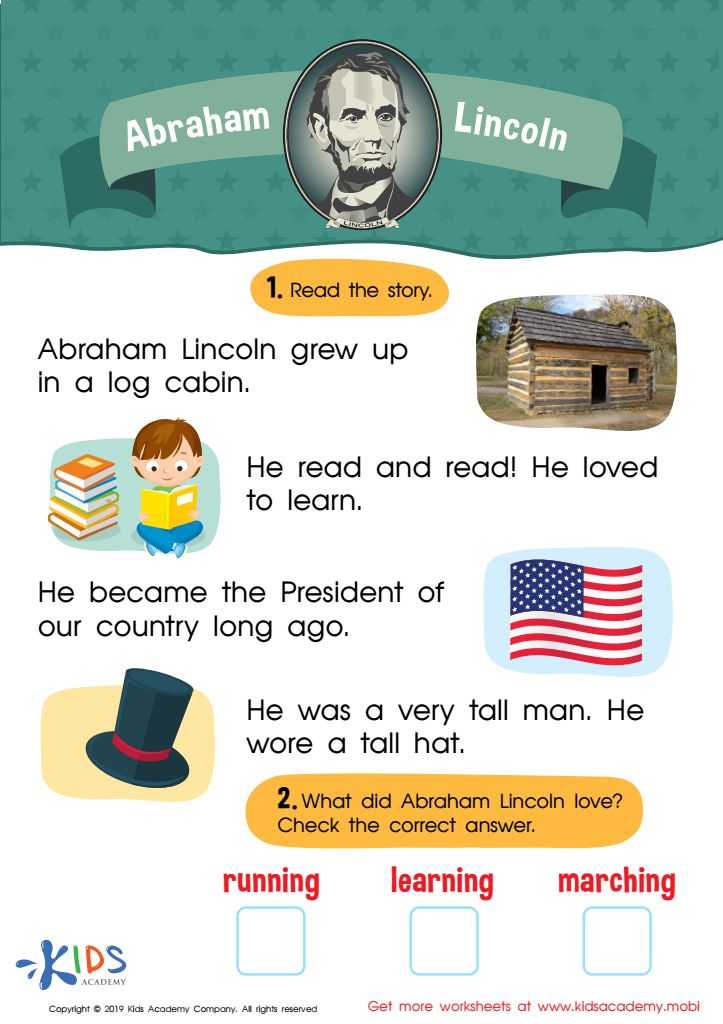
Abraham Lincoln Worksheet
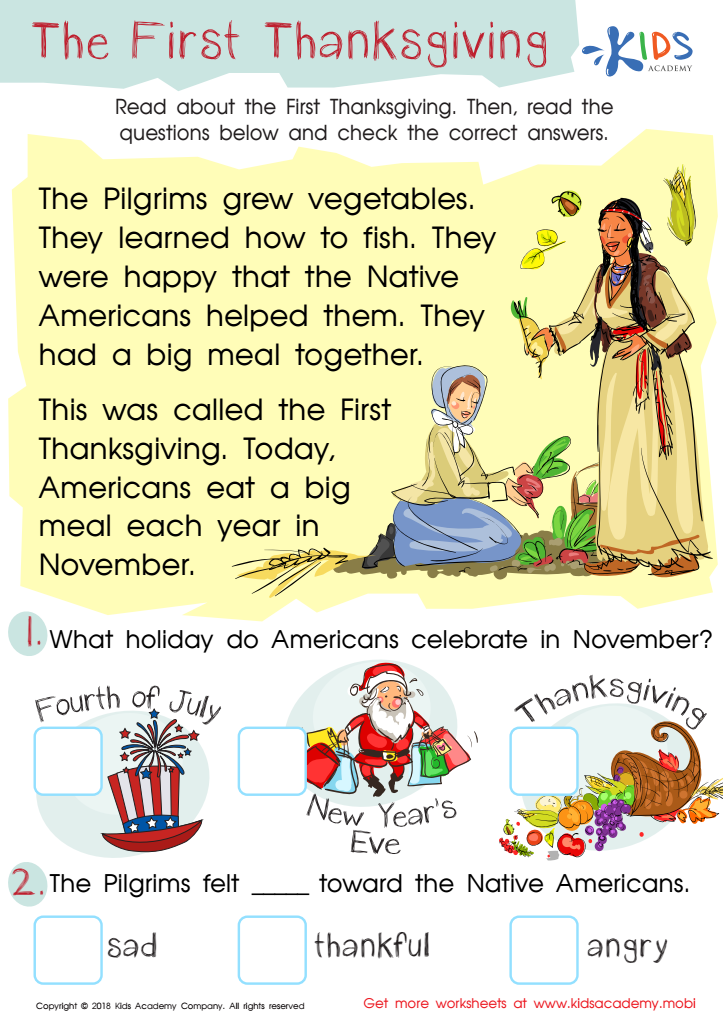
Assessment: First Thanksgiving Worksheet
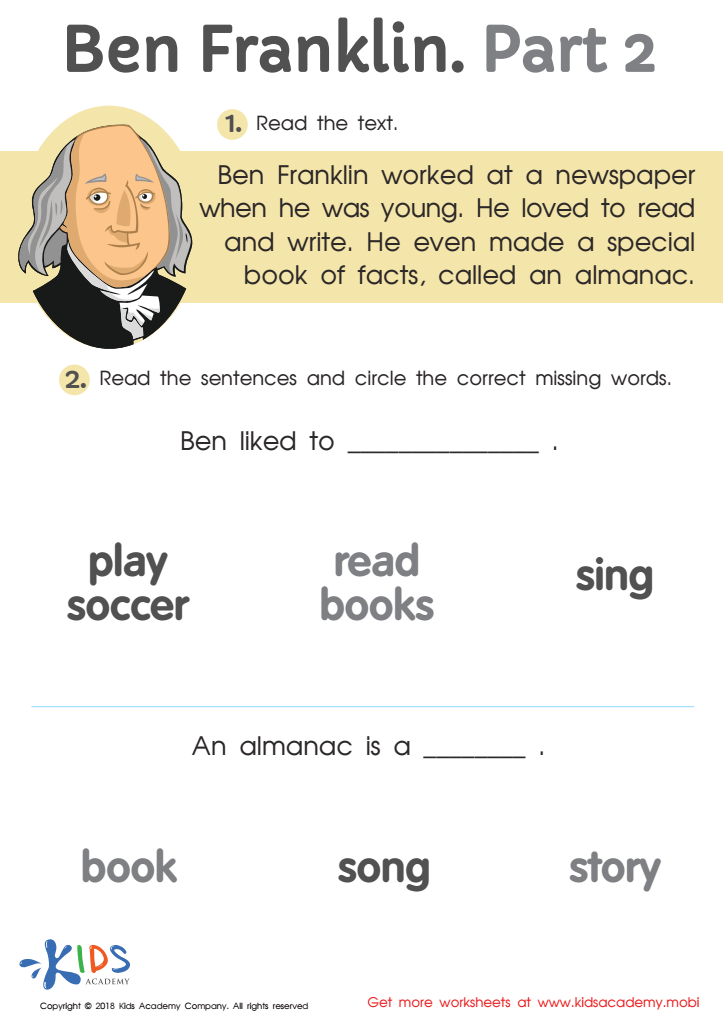
Ben Franklin Part 2 Worksheet








Historical knowledge plays a crucial role in developing reading comprehension for children aged 3-8. Understanding history helps young learners contextualize the stories they read, enriching their engagement with texts. When children are aware of historical events, figures, and societal developments, they can make meaningful connections between the narrative and the world around them. This background knowledge enhances their ability to infer, predict, and comprehend the nuances of a story.
Moreover, historical knowledge promotes critical thinking skills. Children learn to analyze different perspectives and recognize bias, fostering a more profound understanding of not just literature but also their environment. When educators and parents incorporate historical themes into reading materials, they stimulate curiosity and encourage children to ask questions, leading to deeper learning.
Additionally, fostering historical awareness supports cultural literacy. As children encounter diverse narratives from various eras and backgrounds, they develop empathy and an appreciation for differences, crucial skills in our interconnected world.
Thus, emphasizing historical knowledge alongside reading comprehension strategies equips young learners with the tools needed for academic success and civic engagement, making it essential for parents and teachers alike to prioritize this aspect of educational development.








