Sequencing events Normal Reading Comprehension Worksheets for Ages 3-8
3 filtered results
-
From - To
Welcome to our Sequencing Events Normal Reading Comprehension Worksheets designed for children ages 3-8! These engaging worksheets focus on teaching young learners the essential skill of sequencing events, which is crucial for enhancing their reading comprehension. Each activity is tailored to be age-appropriate, encouraging children to enjoy the process of storytelling while improving their understanding of narrative structure. With vibrant illustrations and simple prompts, our worksheets foster critical thinking, organizational skills, and creativity. Ideal for classrooms or at-home learning, these resources help your child master sequencing in a fun and interactive way. Start your journey to becoming a confident reader today!
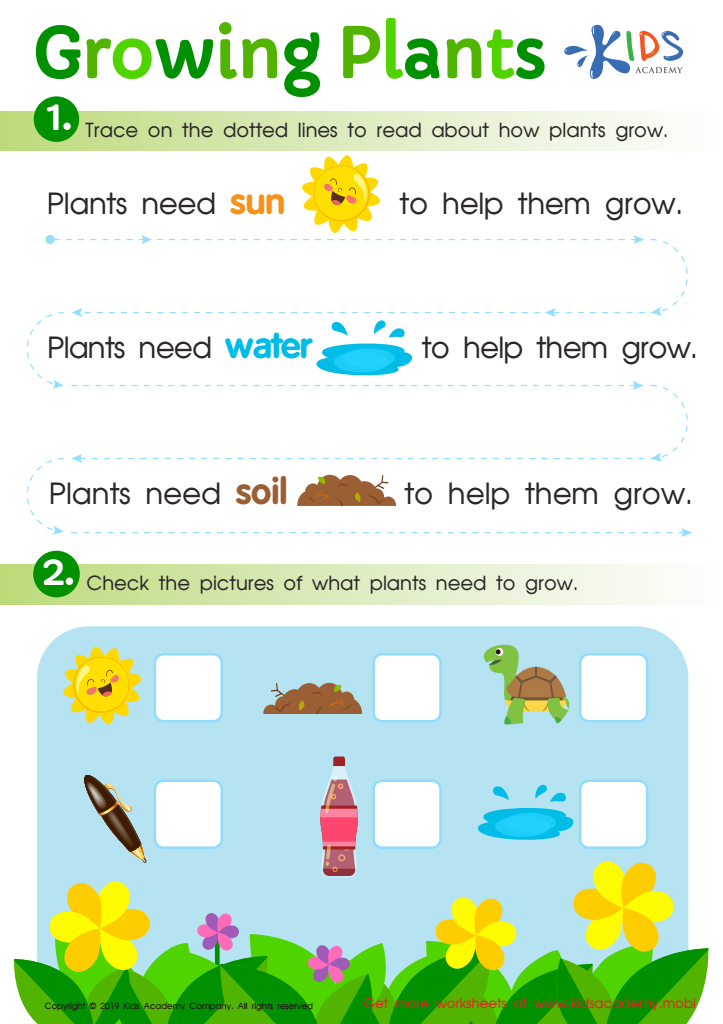
Growing Plants Worksheet
 Assign to My Students
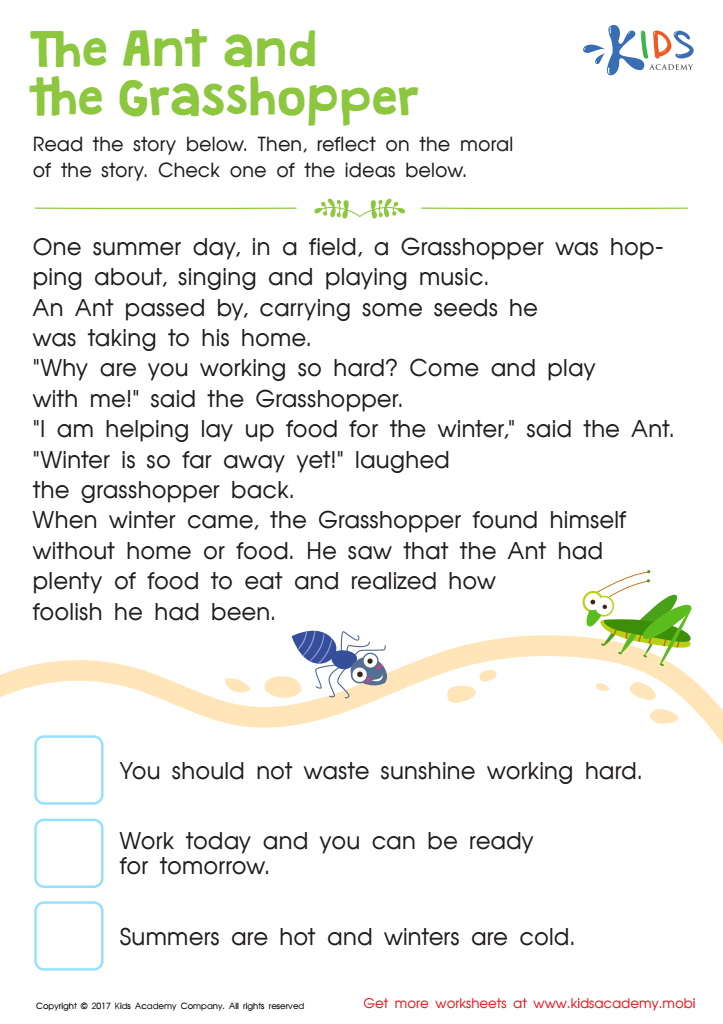
The Ant and The Grasshopper Printable
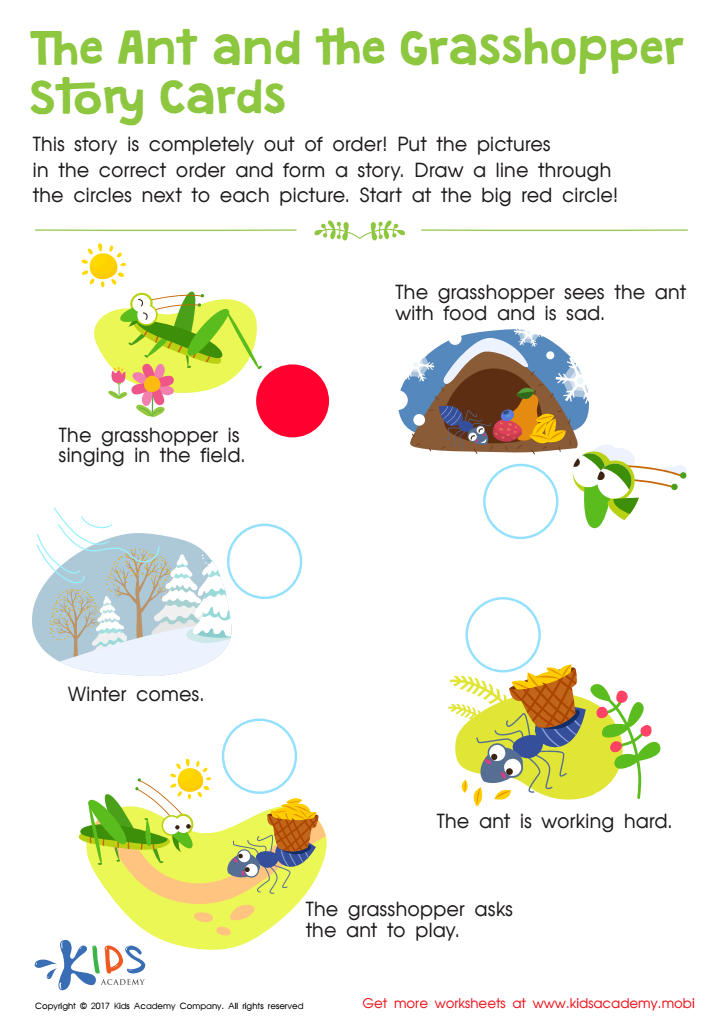
The Ant and The Grasshopper Worksheet








Sequencing events is a vital aspect of reading comprehension, especially for children aged 3 to 8. Understanding sequencing helps young learners grasp the structure of stories and narratives, making it easier for them to follow plots and predict outcomes. When parents and teachers emphasize sequencing, they enhance a child's cognitive development, fostering logical thinking and memory skills. This foundation is crucial for future reading and writing proficiency.
Additionally, sequencing skills support language development by helping children organize their thoughts and articulate ideas clearly. By learning to identify the order of events—first, next, and last—children not only improve their comprehension but also gain tools to express themselves effectively.
In educational settings, activities like story retelling, picture sequencing, and using transition words not only engage children but also solidify their understanding of cause-and-effect relationships. For parents, encouraging these skills during shared reading time can make for enriching, interactive experiences that strengthen family bonds.
Overall, investing time and effort in developing sequencing abilities lays the groundwork for better academic performance and lifelong learning. Ultimately, prioritizing this skill equips children with the tools they need to navigate both literature and the world around them.








