Understanding Sequences Normal Reading Comprehension Worksheets for Ages 3-8
3 filtered results
-
From - To
Discover "Understanding Sequences" reading comprehension worksheets designed for ages 3-8 at Kids Academy. Perfectly crafted to enhance your child's learning skills, these worksheets focus on aiding young readers in grasping the concept of sequencing in stories and events. Through engaging exercises, kids can improve their ability to follow narrative structures, boosting both reading and cognitive abilities. These printable worksheets are an excellent resource for educators and parents aiming to build a strong foundation in reading comprehension for early learners. Equip your child with essential skills to understand and enjoy the magic of storytelling. Explore now!
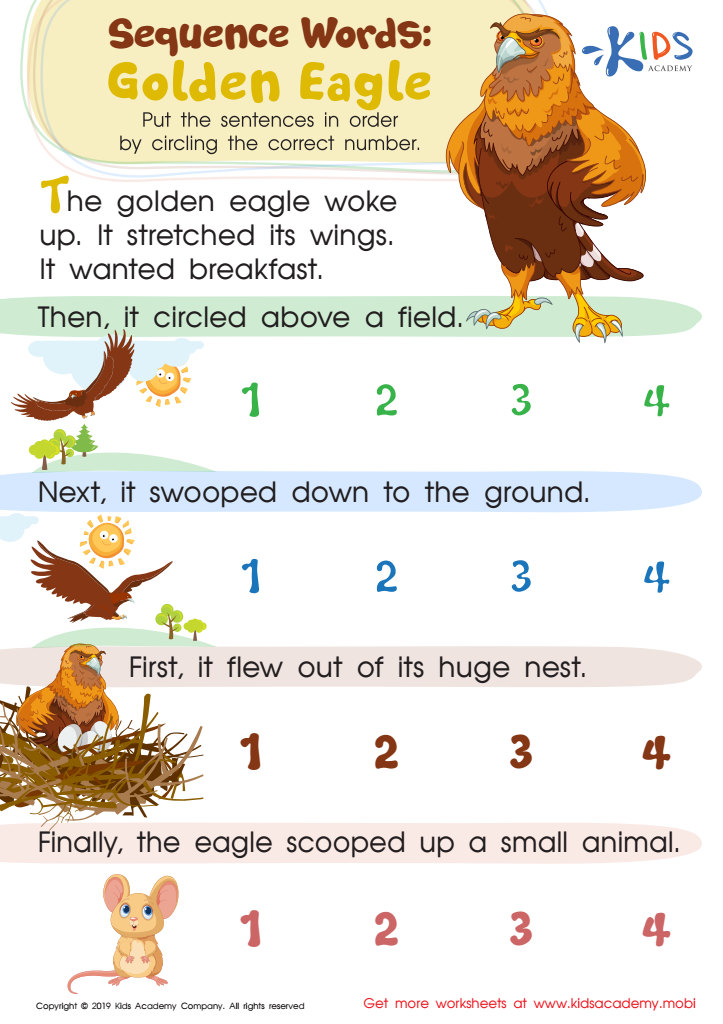
Sequence Word Eagle Worksheet
 Assign to My Students
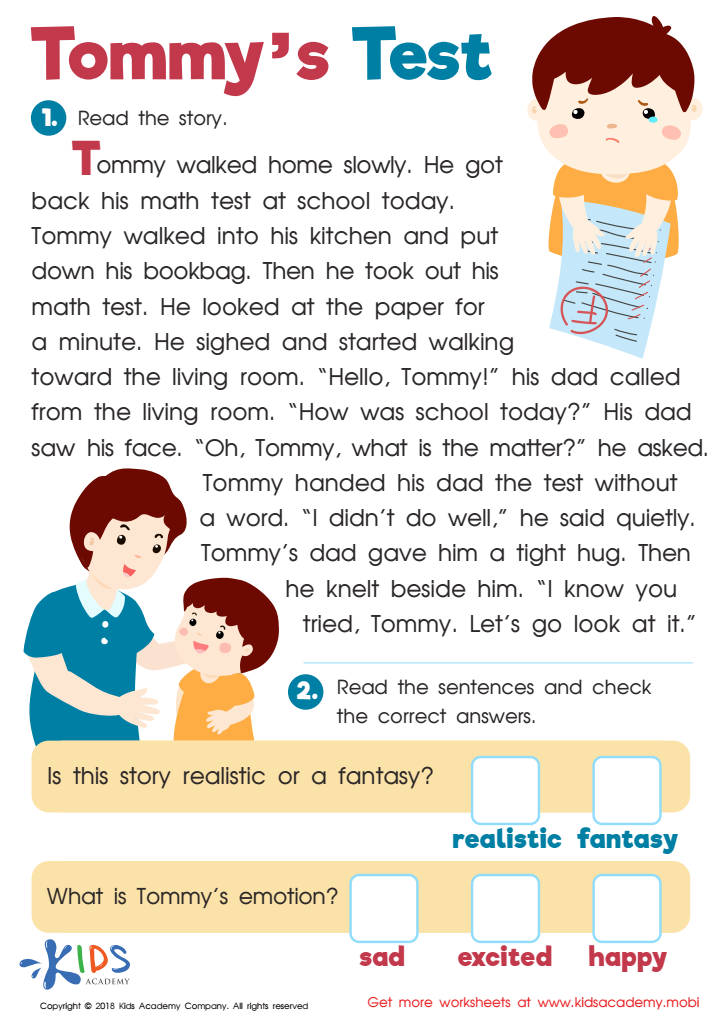
Tommys Test Worksheet
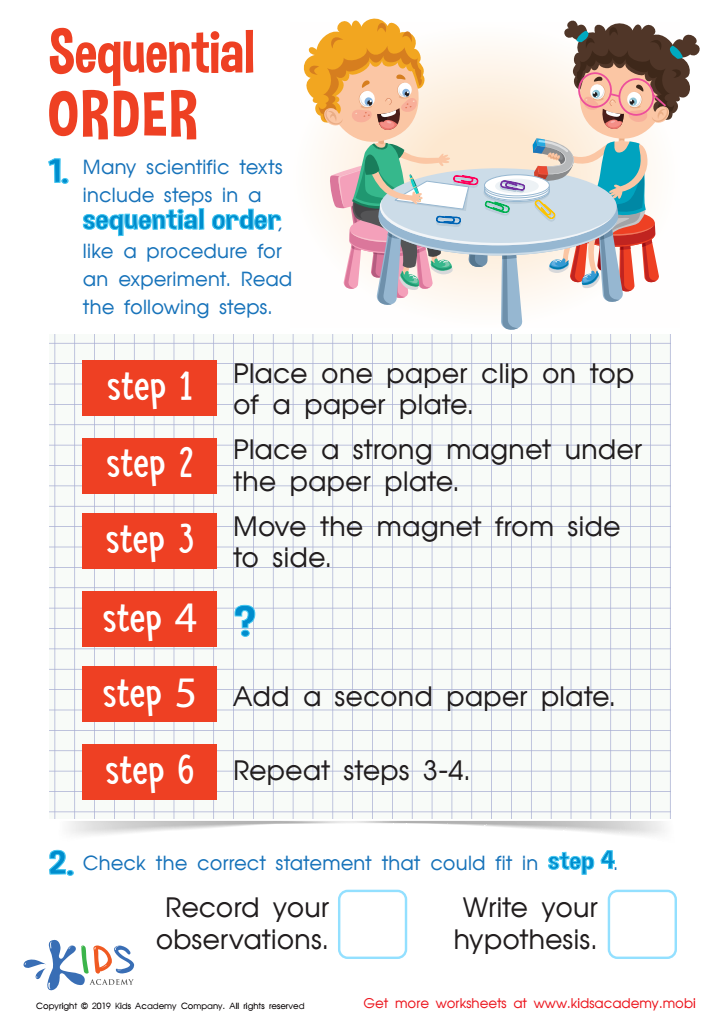
Sequencential Order Worksheet








Understanding sequences in reading comprehension is crucial for young children's cognitive development and literacy skills, making it essential for parents and teachers to focus on this area. Sequencing involves recognizing the order in which events occur, which is foundational for making sense of a narrative, following instructions, and predicting outcomes. When children grasp the concept of sequences, they can better understand stories, recall details, and develop critical thinking skills.
For ages 3-8, this ability helps in building essential communication skills. Young learners who comprehend sequences can more effectively retell stories, reinforcing their understanding of beginning, middle, and end—a critical component of narrative structure. As these children grow and encounter more complex texts, strong sequencing skills enable them to analyze and synthesize information more adeptly.
In the classroom or at home, fostering sequencing skills can be achieved through activities like reading aloud, using picture books, and engaging children in discussions about the story's events. Parents and teachers can also encourage children to create their own stories, thus reinforcing their understanding and enjoyment of narratives.
Cultivating this comprehension skill early on sets a solid foundation, ensuring children become proficient readers and effective communicators, prepared for future academic challenges and everyday problem-solving.








