Visual interpretation Normal Reading Comprehension Worksheets for Ages 3-8
5 filtered results
-
From - To
Visual Interpretation Normal Reading Comprehension Worksheets for Ages 3-8 are designed to help young learners enhance their reading and comprehension skills through engaging visual activities. These worksheets encourage children to interpret images, improve critical thinking, and develop a deeper understanding of texts in a fun, interactive way. Our resources cover a variety of themes to captivate young minds and foster a love for reading. Perfect for classroom or at-home learning, these activities provide a comprehensive foundation in literacy that aligns with early educational standards. Boost your child’s confidence and ensure a solid start in their reading journey with our expertly crafted worksheets.
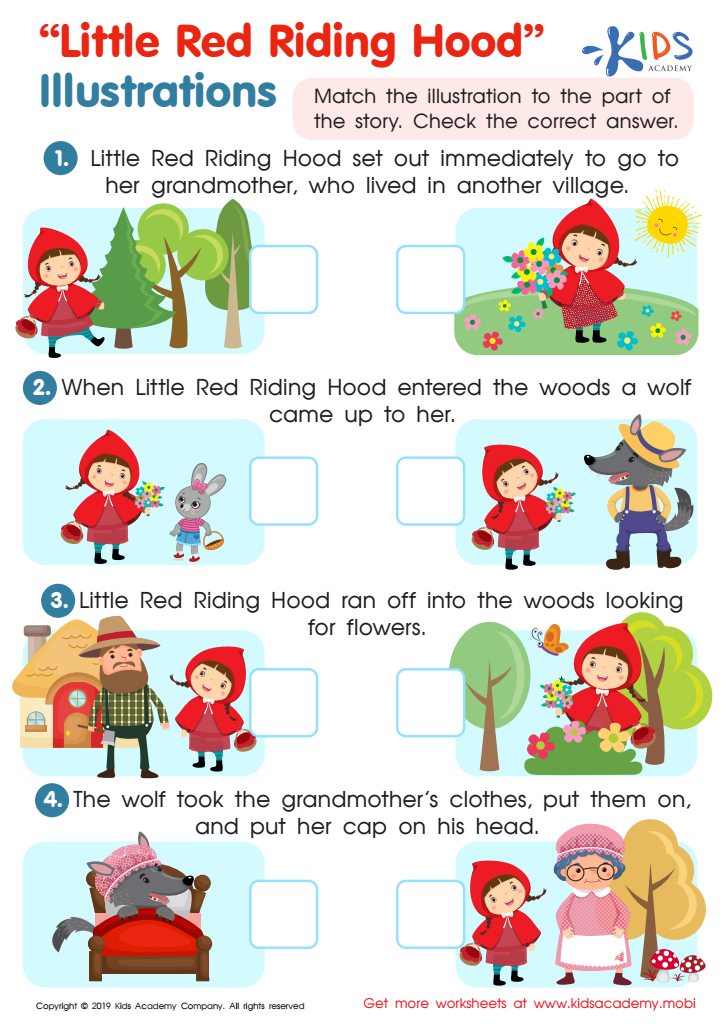
Little Red Riding Hood: Illustrations Worksheet
 Assign to My Students
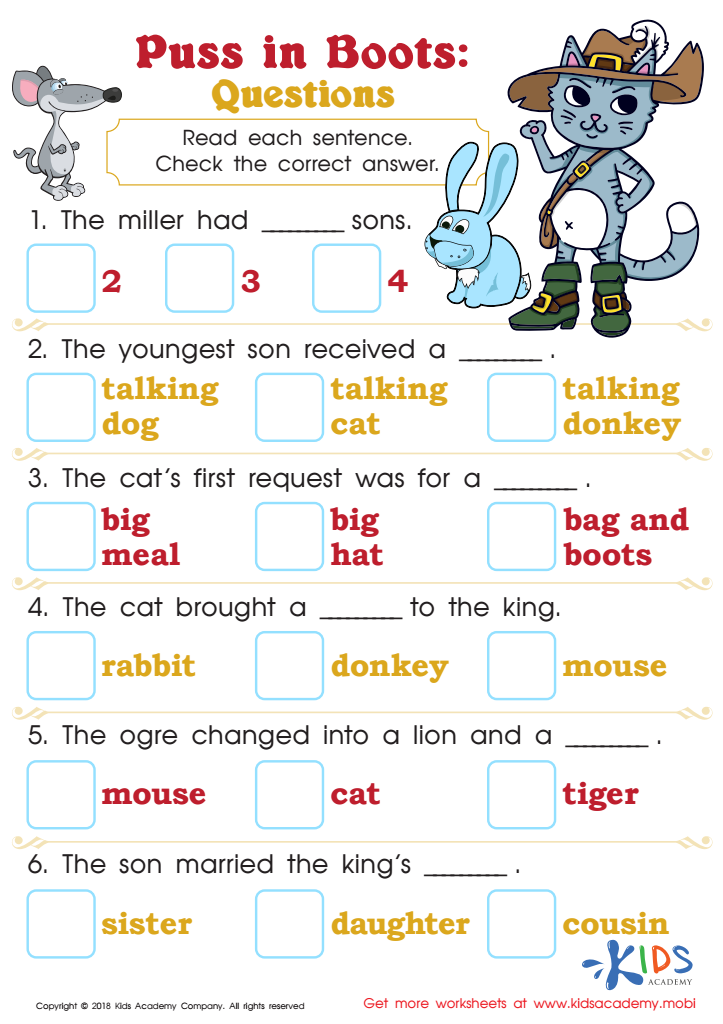
Puss in Boots: Questions Worksheet
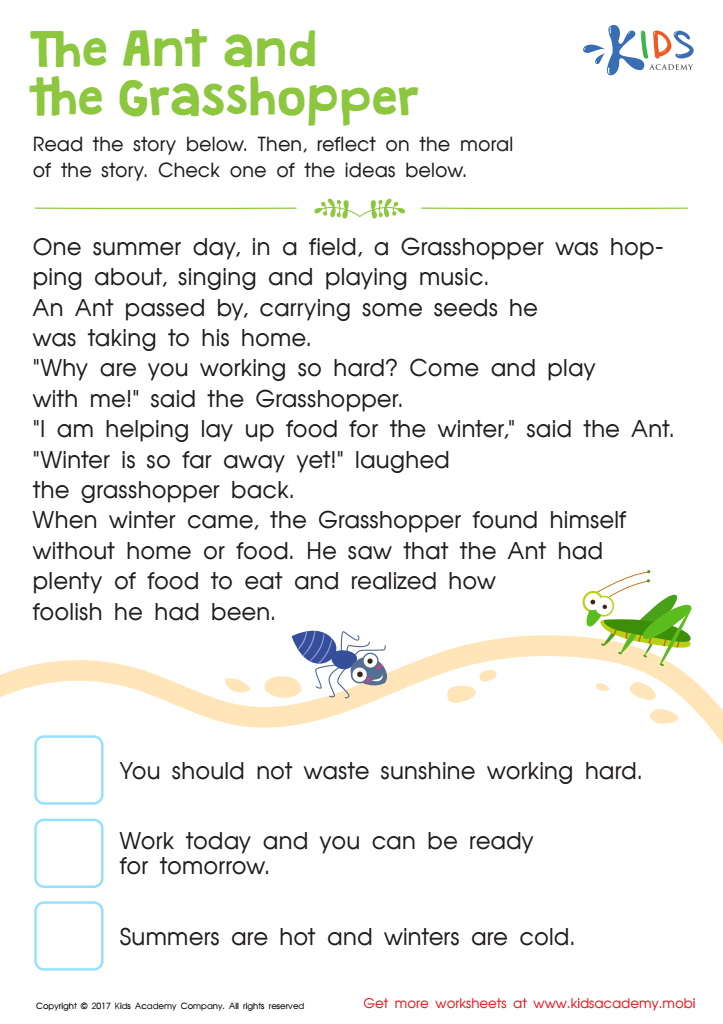
The Ant and The Grasshopper Printable
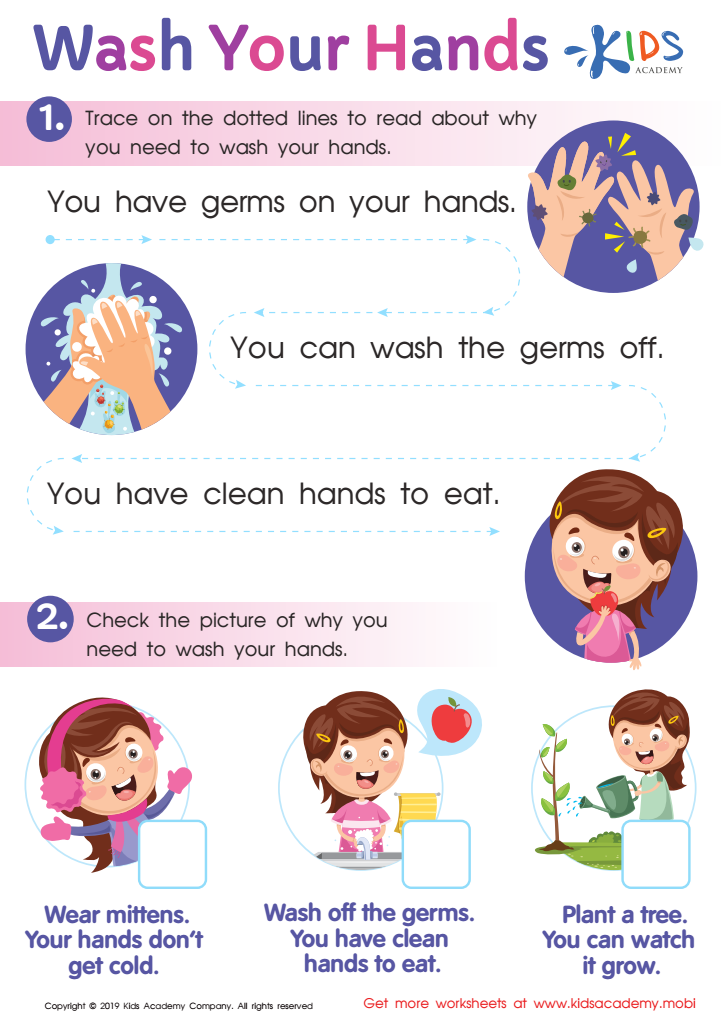
Wash Your Hands Worksheet
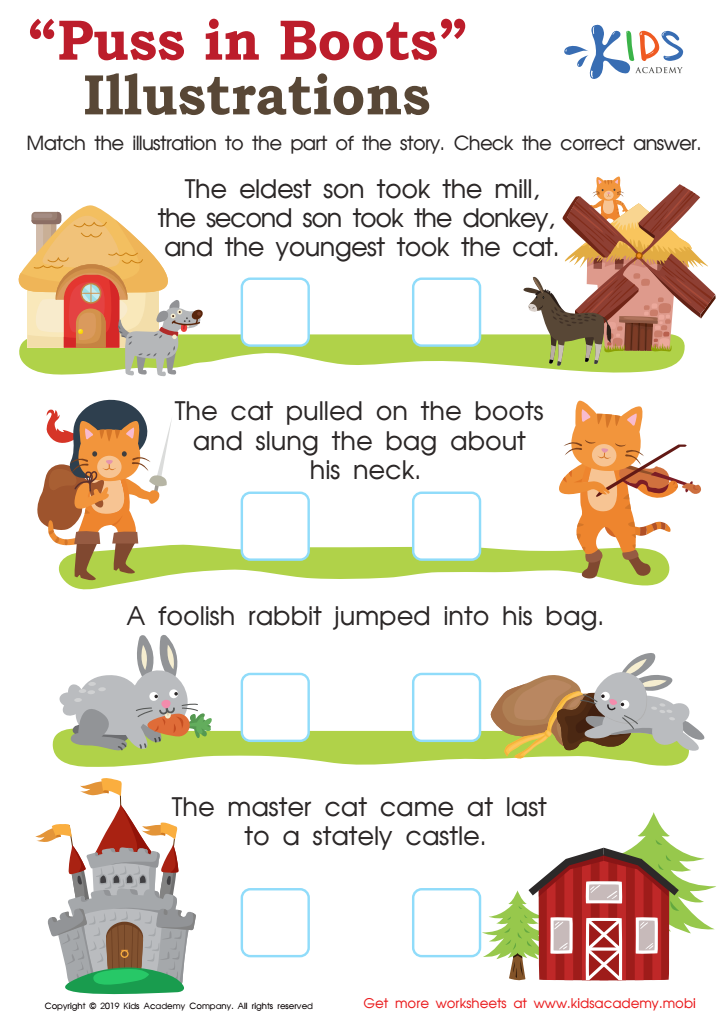
Puss in Boots Illustrations Worksheet








Parents and teachers should prioritize visual interpretation and normal reading comprehension for children aged 3-8 because these foundational skills are essential for their cognitive, language, and social development. Young children's brains are incredibly receptive to learning during this period. Visual interpretation skills, such as recognizing shapes, colors, and patterns, are critical for brain development and aid in their ability to understand and process information. It enhances their literacy by helping them make sense of pictures associated with words, fostering imagination, and boosting storytelling ability.
Normal reading comprehension goes beyond the mechanical act of decoding text; it involves understanding, interpreting, and deriving meaning from the written words. These skills are fundamental for later academic success and personal growth. A strong grasp of reading comprehension contributes to enhanced vocabulary, better understanding of language structures, and improved critical thinking.
Moreover, children with a solid foundation in visual and reading skills are generally more confident and engaged learners. They are better equipped to follow instructions, participate in classroom discussions, and express themselves effectively. This early focus lays the groundwork for lifelong learning and helps prevent future learning difficulties. Thus, investing time and resources in fostering these skills is a pivotal step in supporting children's all-around development and setting them up for success.








